CNC workholding is the way a part is held, located, and supported during machining. It may look like a small setup detail, but it often decides whether a CNC part can be machined accurately, repeatedly, and without deformation.
When customers receive a CNC machining quote, they may sometimes see a setup cost, fixture cost, or tooling charge. This does not always mean the part needs a complex tool. In many cases, it means the machine shop must prepare a reliable way to hold the part before cutting can begin.
A good CNC fixture keeps the workpiece stable, controls the datum surfaces, reduces vibration, protects critical surfaces, and helps each part stay consistent from prototype to production. Without proper workholding, even a high-precision CNC machine may produce parts with poor hole position, visible chatter marks, thin wall deformation, or inconsistent dimensions.
What Is CNC Workholding?
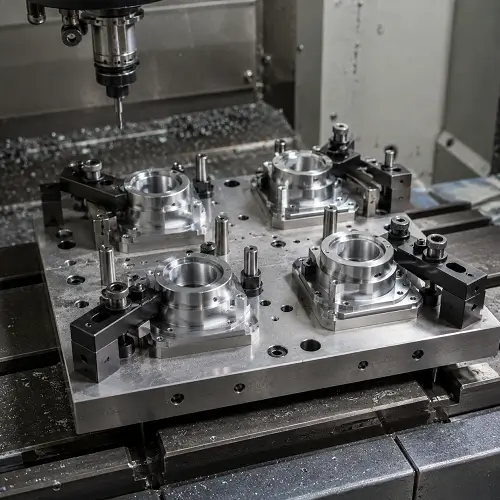
CNC workholding means securing a workpiece on a CNC machine so it stays in the correct position while the cutting tool removes material. The workholding setup must hold the part firmly, locate it from the correct datum, support weak areas, and still leave enough space for the cutting tool to reach the required features.
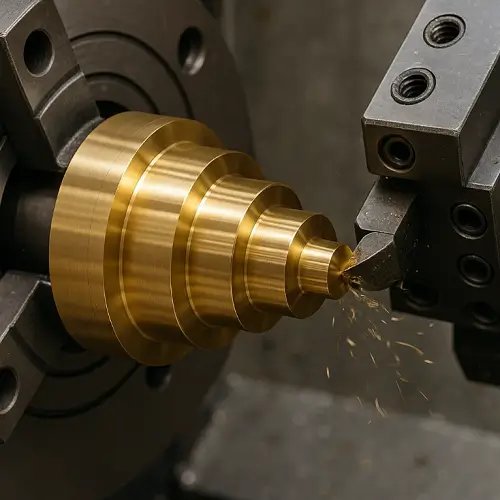
In CNC milling, workholding may use vises, clamps, fixture plates, soft jaws, vacuum plates, modular fixtures, or custom fixtures. In CNC turning, common methods include chucks, collets, mandrels, and special turning fixtures.
The purpose is not only to clamp the part. Good workholding controls accuracy. It helps the machine cut from the correct reference surfaces, keeps the part from shifting under cutting force, and reduces small variations between different parts.
Why Fixture Cost Appears in CNC Machining Quotes
Fixture cost usually appears when a part cannot be held reliably with a simple vise or standard clamp. The machine shop may need to design, machine, or adjust a fixture before production starts.
This cost may include fixture design, fixture plate preparation, soft jaw machining, locating pin setup, support block machining, clamp planning, test cutting, and setup verification.
For a very simple block-shaped part, the fixture cost may be low or unnecessary. For a thin wall part, irregular casting, multi-sided part, or high-tolerance assembly component, fixture planning can take more time than customers expect.
Fixture cost is not always related to part size. A small precision part can need a fixture if the hole position, flatness, or assembly relationship is difficult to control. A large simple plate may only need standard clamps if the tolerance is loose and the geometry is easy to access.
The key point is simple: fixture cost pays for a stable and repeatable way to machine the part, not just for a piece of hardware.
What Does a CNC Fixture Do?
A CNC fixture does several important jobs during machining. Its main role is to keep the part stable, positioned, and supported while the tool removes material.
It locates the part from the correct datum.
If a drawing has critical holes, mating faces, or assembly surfaces, the fixture helps position the part based on those references. This prevents the machine from cutting accurately in the wrong location.
It prevents part movement.
Cutting forces can push, pull, or lift the workpiece. A fixture keeps the part from moving during roughing, drilling, pocketing, or side milling.
It supports weak areas.
Thin walls, long parts, plastic parts, and soft metals can bend under cutting force or clamping pressure. A fixture can support these areas so the part does not deform during machining.
It improves repeatability.
For batch production, every blank must sit in the same position. A fixture reduces manual alignment and helps different operators load parts in the same way.
It protects important surfaces.
Some parts have cosmetic surfaces, sealing faces, sliding areas, or assembly faces that cannot have clamp marks. Fixture planning helps avoid holding the part on those surfaces.
It can reduce machining time.
A stable fixture may allow faster loading, fewer manual adjustments, safer cutting parameters, and fewer rejected parts.
Common CNC Workholding Methods
Different CNC parts need different workholding methods. The right choice depends on geometry, tolerance, material, quantity, and machining direction.
| Workholding Method | Best For | Main Limitation |
|---|---|---|
| Machine vise | Simple blocks, plates, and prototype parts | Limited access to side faces |
| Soft jaws | Irregular parts, round parts, finished surfaces | Need extra jaw machining |
| Clamps and fixture plates | Large plates, castings, forgings | Clamps may block tool access |
| Chucks | Turned parts and round stock | May create runout if not controlled |
| Collets | Small precision round parts | Limited size and shape range |
| Vacuum fixtures | Thin flat plates and plastic sheets | Not suitable for heavy cutting |
| Modular fixtures | Prototype and low-volume parts | Less efficient than dedicated fixtures |
| Custom CNC fixtures | High-tolerance, thin wall, multi-sided, or repeat parts | Higher upfront cost |
A standard vise is usually enough for simple prototype parts. It is rigid, fast to use, and suitable for many block-shaped or plate-shaped parts. The limitation is that the jaws may block some surfaces, and the part may need more than one setup if several sides must be machined.
Soft jaws are useful when the workpiece has an irregular shape, round profile, finished surface, or weak clamping area. The jaws are machined to match the part shape, which gives better support and more repeatable positioning than standard hard jaws.
Clamps and fixture plates are common for large parts, flat plates, castings, and forgings. They give more flexibility than a vise, but the clamp position must be planned carefully. Poor clamp placement can block the cutting tool, bend the part, or leave marks on important surfaces.
Chucks and collets are mainly used in CNC turning. A chuck is flexible and can hold different diameters or rough blanks. A collet provides more even gripping force and better repeatability for small round parts.
Vacuum fixtures are used for thin flat parts when mechanical clamps would block the cutting area. They work best when the part has a large flat contact surface. They are not suitable for heavy cutting, small contact areas, or rough stock surfaces.
Modular fixtures use standard plates, pins, blocks, and clamps. They are useful for prototypes and low-volume production because they can be adjusted for different parts. Custom CNC fixtures are better when the part needs higher stability, faster loading, or repeatable positioning across many pieces.
The 3-2-1 Locating Principle
The 3-2-1 locating principle is a common fixture design method used to control the position of a workpiece.
A part can move in six ways: along the X, Y, and Z axes, and around those three axes. A fixture must restrict these movements without bending or over-constraining the part.
A basic 3-2-1 setup uses:
- 3 points to support the primary datum surface
- 2 points to locate the secondary datum surface
- 1 point to locate the third datum surface
This creates a repeatable position for the workpiece. When the same part is loaded again, it contacts the same locating points and sits in the same machining position.
For CNC machining, this matters when hole positions, flatness, perpendicularity, profiles, or assembly fits must be controlled. If the fixture uses the wrong reference surface, the part may pass some size checks but still fail during assembly.
Why Poor Workholding Causes CNC Part Problems
Many CNC quality issues are not caused by the machine itself. They come from weak clamping, poor support, wrong datum selection, or unstable loading.
Part movement
If the holding force is not enough, the workpiece can move slightly during cutting. This can cause oversized holes, wrong profiles, poor slot width, or inconsistent dimensions.
Tool chatter
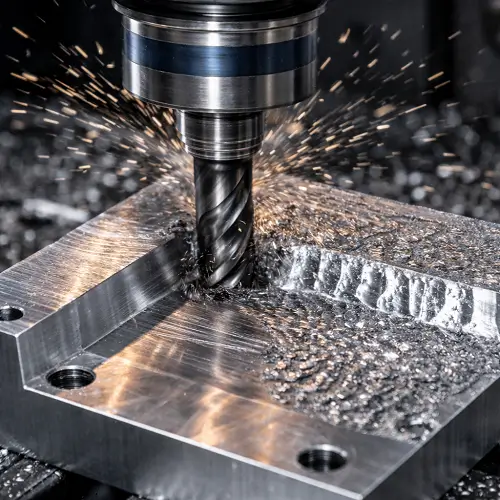
Unstable workholding can make the part vibrate during cutting. Chatter marks may appear on the surface, and the tool may wear faster. This is common when the part has weak support, a long overhang, thin walls, or heavy cutting force.
Thin wall deformation
Thin wall parts can bend when clamped too strongly. The machine cuts the part while it is distorted, and the part may spring back after the clamp is released. This can lead to flatness errors, uneven wall thickness, and assembly problems.
Poor hole position
If the part is not located from the correct datum, holes may shift between parts. This is a major problem for dowel holes, press-fit holes, bearing seats, and assembly components.
Clamp marks
Hard jaws or clamps can leave marks on aluminum, brass, copper, plastic, or cosmetic surfaces. Fixture planning helps choose safer holding areas and protect visible or functional surfaces.
Inconsistent batch quality
Without a repeatable fixture, one part may be loaded slightly differently from the next. This can create small dimensional differences across the order, even when the same CNC program and machine are used.
When Does a Part Need a Custom CNC Fixture?
Not every CNC part needs a custom fixture. For simple one-off parts, standard workholding may be enough. A custom fixture becomes useful when standard clamping cannot hold the part safely, accurately, or repeatedly.
A custom CNC fixture is often needed for thin wall parts, high-tolerance parts, multi-sided parts, irregular shapes, castings, forgings, plastic parts, cosmetic parts, and repeat production orders.
It may also be needed when several features must be machined from the same datum. If the part has tight relationships between holes, slots, faces, or assembly surfaces, fixture planning becomes part of quality control.
For prototype machining, a simple fixture, soft jaws, or modular setup may be enough. For production machining, a dedicated fixture can reduce setup time, improve repeatability, and lower the risk of scrap.
The decision should be based on the part structure, tolerance, quantity, material, and function. A custom fixture is not always required, but when the part is difficult to hold, it can be the reason the final parts are stable and usable.
Why Fixture Cost Can Save Money in Production
Fixture cost may increase the first quote, but it can reduce problems later.
A stable fixture can reduce scrap, rework, inspection failures, operator adjustment time, and dimensional variation. For repeat orders, it can also shorten loading time and make production more consistent.
For example, machining 5 prototype parts may not justify a complex fixture. Machining 200 thin wall parts with tight hole position may need one. Without a proper fixture, the cheaper setup may lead to more rejected parts, slower machining, and unstable quality.
Fixture cost is also important when the material is expensive or the part has many machining hours. If one part is scrapped near the final operation, the loss may be higher than the cost of a simple fixture.
This is why the lowest machining quote is not always the best option. If the part is difficult to hold, a fixture charge may be the difference between parts that are only cut and parts that actually fit.
CNC Fixture Design Tips for Better Machining Results
Good fixture design should hold the part firmly without damaging or distorting it. The fixture must support the part, control the datum, and allow enough tool access for machining.
Use stable datum surfaces whenever possible. If critical holes or assembly faces depend on a certain reference surface, the part should be located from that surface or from a controlled machining datum.
Avoid clamping on thin walls, weak ribs, small edges, or cosmetic faces. These areas may bend, mark, or shift under pressure. Soft jaws, support blocks, pads, or extra stock can help reduce the risk.
Leave enough material for holding when designing CNC parts. For some parts, small tabs, sacrificial stock, or temporary bosses can make machining more stable. These areas can be removed in later operations.
Keep tool access in mind. A fixture that holds the part firmly but blocks the cutter will create extra setups and longer machining time. Good fixture design balances clamping strength, datum control, and cutting access.
For repeat production, loading speed also matters. A fixture should help the operator place the part quickly and consistently. This improves production efficiency and reduces the chance of human setup errors.
Prototype vs Production Workholding
Prototype CNC machining often uses flexible workholding because the design may still change. Standard vises, clamps, soft jaws, and modular fixtures are common for prototypes and low-volume orders.
Production CNC machining usually needs more repeatability. When the same part must be made many times, a dedicated fixture can help each blank sit in the same position. This reduces variation between parts and improves machining efficiency.
A prototype fixture does not always need to be perfect for long-term production. It only needs to support the current test requirement. A production fixture should be more stable, repeatable, safe, and easy to load.
The best choice depends on the project stage. If the design is still changing, flexible workholding may be better. If the design is fixed and the quantity is higher, fixture investment may be more practical.
Get CNC Machined Parts with Proper Fixture Planning
CNC workholding is part of machining quality. A good fixture helps control accuracy, prevent movement, reduce vibration, protect critical surfaces, and keep batch parts consistent.
If your CNC part has thin walls, tight tolerances, multiple machining faces, cosmetic surfaces, or repeat production requirements, fixture planning should be considered before machining starts.
JeekRapid supports CNC machining for prototypes and production parts with engineering review, material selection, machining process planning, fixture planning, and inspection control. Upload your 3D CAD file and 2D drawing, and let us know the critical tolerances, assembly surfaces, cosmetic areas, and required quantity. Our team will review the part structure and workholding method before quoting and production.