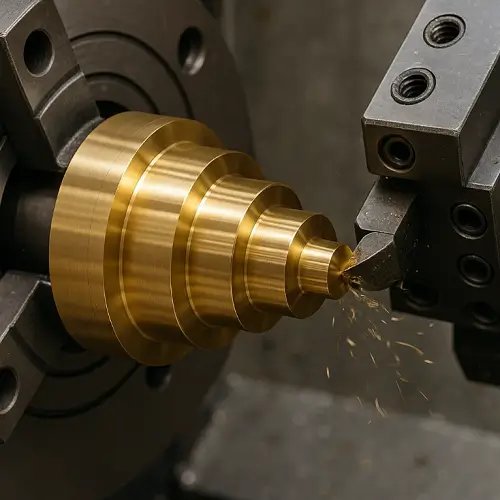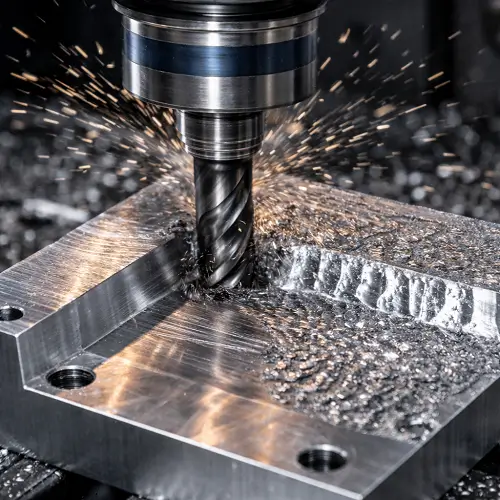
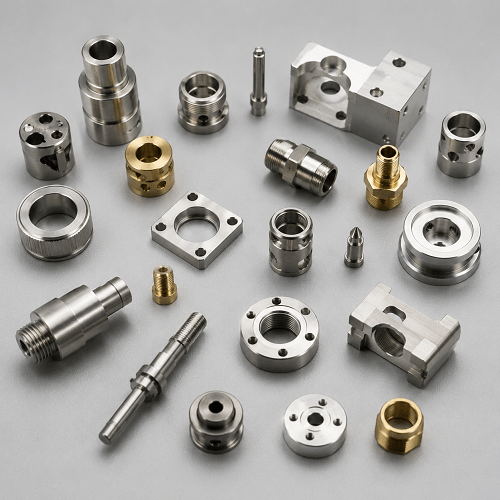
Small parts CNC machining is used to produce compact metal or plastic components such as pins, shafts, bushings, sleeves, threaded parts, connectors, sensor housings, small brackets, and precision spacers. These parts may be physically small, but they often have demanding requirements for hole position, thread quality, burr control, surface finish, and repeatability.
Small CNC machined parts are widely used in electronics, automation, robotics, medical devices, laboratory instruments, communication equipment, energy systems, and industrial assemblies. A small part may need to fit inside a compact enclosure, align with another component, carry a bearing, support a sensor, or make an electrical or mechanical connection. In these applications, material choice and manufacturing control matter more than the overall size of the part.
CNC turning, CNC milling, and combined turning and milling operations can all be used for small precision parts. The right process depends on whether the part is mainly round, mainly flat or block-shaped, or combines cylindrical features with holes, slots, threads, or side details.
What Is Small Parts CNC Machining?
Small parts CNC machining is the production of compact custom components by removing material from metal or engineering plastic. It is commonly used when standard hardware cannot meet the required dimensions, material grade, thread specification, hole layout, or assembly function.
A small CNC part does not automatically mean micro machining. Many small parts are normal production components with compact dimensions rather than micron-scale features. What makes them difficult is often not their size alone, but the need to hold them securely, machine small details cleanly, remove burrs, inspect critical features, and produce repeatable results across a batch.
For prototypes, small parts machining allows a design to be tested in the intended material before a larger production run. For repeat production, the same process can support consistent shafts, sleeves, spacers, connectors, threaded components, and small housings when the machining setup is properly controlled.
What Parts Can Be Made with Small Parts CNC Machining?
Small parts CNC machining is often used for components that are too specific for off-the-shelf hardware or too important to be made with loose tolerances.
Small Shafts, Pins, Bushings, and Sleeves
Small shafts, CNC machined pins, precision bushings, and sleeves are common in motion systems, fixtures, connectors, laboratory equipment, sensor assemblies, and automation components. A shaft may need a precise diameter, shoulder, groove, flat, cross-hole, or thread. A bushing or sleeve may need a controlled internal bore so it can fit a pin, bearing, fastener, or mating shaft correctly.
These parts are often produced by CNC turning because the process is efficient for diameters, bores, grooves, and threads. When a shaft also needs a flat, side hole, keyway, or slot, milling can be added after the turning operation.
Small Threaded Parts and Connectors
Small threaded parts include threaded spacers, adapters, cable fittings, retaining components, connector bodies, and custom fastener-like parts. The challenge is not simply producing a thread. The thread must be clean, strong enough for the application, and correctly positioned relative to the other features.
Brass, stainless steel, aluminum, and certain engineering plastics are commonly selected for small threaded components depending on the required strength, corrosion resistance, conductivity, or weight. Fine threads, shallow threaded holes, and small internal threads may require more careful machining and inspection than ordinary hardware.
Sensor Housings, Brackets, and Electronic Parts
Small sensor housings, aluminum brackets, compact flanges, connector blocks, and electronic mounting parts are usually more suitable for CNC milling or turning and milling. These parts may include mounting holes, connector openings, internal pockets, sensor bores, cable passages, locating features, or small flanges.
They are often used in robotics, industrial controls, battery systems, testing equipment, and custom electronic assemblies. Small parts CNC machining can also support miniature flanges, retaining rings, small valve components, cable fittings, bearing spacers, actuator parts, and other custom mechanical components used in compact assemblies.
Medical and Precision Instrument Parts
Small medical device parts and precision instrument components can be machined from stainless steel, titanium, aluminum, POM, PEEK, and other engineering materials. These parts may require close control of edges, holes, surface finish, and assembly fit.
The machining plan should match the actual function of the part. A small medical or instrument component may need corrosion resistance, low weight, non-magnetic properties, a smooth surface, or a controlled fit with another component. Not every small part needs the same material, tolerance, or finishing process.
CNC Turning vs Milling for Small Parts
The main process choice usually comes down to part geometry. Round parts are often more efficient to produce by CNC turning, while parts with flat faces, pockets, slots, or complex side features are usually better suited to CNC milling.
| Process | Best For | Main Advantage | Main Limitation |
|---|---|---|---|
| CNC Turning | Small shafts, pins, bushings, sleeves, threaded parts, and round connectors | Efficient for diameters, bores, threads, grooves, and rotational features | Less suitable for complex flat or multi-sided geometry |
| CNC Milling | Small brackets, sensor housings, flanges, blocks, and parts with holes or pockets | Suitable for flats, slots, pockets, connector cutouts, and mounting features | Can require more setups for round or long slender parts |
| Turning and Milling | Parts with both round and non-round features | Combines turned diameters with flats, holes, slots, and side details | More complex programming and setup may increase cost |
CNC turning is usually the first choice for a small shaft, sleeve, bushing, pin, or threaded round part. It can produce consistent outer diameters, internal bores, grooves, shoulders, and threads efficiently. Small turned parts are common in connectors, medical devices, instruments, motion systems, and industrial assemblies.
CNC milling is more appropriate when the part has prismatic geometry. A small aluminum bracket, sensor housing, mini flange, connector block, or electronics component may need flat faces, drilled holes, internal cavities, slots, and mounting patterns that cannot be made efficiently by turning alone.
Some custom small parts need both methods. A part may begin as a turned cylindrical component and then require a milled flat, cross-hole, keyway, side slot, or connector feature. This approach can reduce handling between operations and help keep important features aligned.
Materials for Small CNC Parts
Material choice affects machining speed, thread quality, strength, corrosion resistance, weight, electrical performance, and cost. For small parts, the material also affects how easily the component can be held during machining and how likely it is to develop burrs or marks.
Aluminum and Brass Small Parts
Aluminum is a practical choice for lightweight brackets, sensor housings, electronics components, spacers, and non-heavy-duty mechanical parts. It machines efficiently and works well when a project needs a low-weight custom component with anodizing or bead blasting.
Brass is often useful for small threaded parts, electrical connectors, fittings, bushings, and precision adapters. It machines cleanly, resists corrosion, and can produce reliable thread quality. Brass is heavier than aluminum, but it is often a strong choice when the part needs electrical conductivity, a clean machined surface, or consistent small threads.
Stainless Steel and Titanium Small Parts
Stainless steel is commonly used for small precision parts that need strength, wear resistance, or corrosion resistance. It is suitable for shafts, pins, threaded parts, medical components, outdoor equipment, and industrial assemblies. The material is tougher to machine than aluminum or brass, especially when the part includes small holes, narrow grooves, or long slender features.
Titanium can be used for high-strength, lightweight, corrosion-resistant small parts when the application justifies the added cost. It is often selected for aerospace, medical, high-performance equipment, and specialized assemblies. Titanium machining needs more controlled cutting conditions, so a small titanium part may cost more than a similar aluminum or stainless steel component.
Plastic Small Parts
POM, nylon, ABS, PC, and PEEK can be machined into small plastic parts when electrical insulation, low weight, chemical resistance, or low-friction performance is needed. Plastic bushings, spacers, sensor bodies, small housings, and insulating components are common examples.
Plastic parts need careful support because thin walls and small features can flex during machining. A plastic component may be easy to cut, but holding it without deformation can be more difficult than machining a simple metal part.
Why Small CNC Parts Are Difficult to Machine
Small parts often create challenges that larger components do not. The material cost may be low, but the time required for setup, clamping, machining, deburring, inspection, and handling can still be significant.
Workholding is one of the main challenges. A small part has less surface area available for clamping, and important features may be close to the edges. If the part is held too tightly, it can deform or show clamp marks. If it is held too lightly, it may move during cutting. Proper CNC workholding and fixtures help support small components and keep them positioned consistently during repeat production.
Small holes, fine threads, narrow slots, and thin walls also need more control. Small cutting tools can wear quickly, deflect under cutting force, or break if the machining conditions are not stable. Deep small holes can be difficult to clear of chips, while narrow internal features can make burr removal more complicated.
Burr control is especially important for small precision parts. A small burr around a hole, thread, bore, or mating edge can prevent assembly, damage another component, or affect electrical contact. The deburring process should be considered before production starts, especially when the part has many small holes or sharp intersections.
Inspection can also take more time than customers expect. Measuring a small bore, thread, groove, pin diameter, or closely positioned hole may require suitable gauges, optical measurement, or controlled inspection methods. This is one reason why small parts do not always cost less simply because they use less material.
Small Parts CNC Machining Tolerances
Small parts can achieve close tolerances, but size alone does not guarantee extremely high precision. The practical tolerance depends on the material, geometry, feature length, tool access, machining process, measurement method, and assembly requirement.
A short, well-supported bore may be easier to control than a long, thin shaft with a small diameter. A simple turned pin may be easier to make consistently than a small milled bracket with several threaded holes and connector cutouts. Tight dimensions should be applied where they affect assembly, motion, sealing, electrical contact, or final function rather than being added to every feature on the drawing.
For small parts with several related features, machining them from the same datum or in the same setup can reduce position variation. This is especially important for holes, threads, bores, and mounting faces that need to align with another part. For more detail on how accuracy is planned in CNC work, link CNC machining tolerances here.
Small Parts CNC Machining Cost Factors
Small parts CNC machining cost is driven more by process complexity than material volume. A tiny component may use very little metal, but it can still need programming, setup, special tools, controlled clamping, deburring, and inspection.
A simple small turned part with a single diameter, bore, and thread is usually more efficient than a part with several cross-holes, narrow grooves, tiny threads, milled flats, or multiple machining sides. Small features increase the need for fine tools and careful cutting. Materials such as stainless steel, titanium, copper, and PEEK can also increase machining time compared with aluminum, brass, or standard plastics.
Quantity changes the cost structure. A one-piece prototype carries more setup cost because programming, tool selection, inspection planning, and first-part verification are spread across a single component. In a repeat order, those steps can be reused, and a stable fixture or setup can improve consistency and reduce unit cost.
The final CNC machining cost also depends on material grade, critical tolerances, surface finish, thread specifications, inspection requirements, and whether the part needs additional processes such as anodizing, passivation, bead blasting, polishing, or coating.
Small Parts CNC Machining for Prototypes and Production
Small parts CNC machining is useful at both prototype and production stages, but the machining strategy may change as the quantity increases.
For prototypes, CNC machining allows engineers to test part fit, thread engagement, shaft diameter, connector access, sensor position, and assembly function in the intended material. This is valuable when an early design still needs adjustments before a larger order is released.
For low-volume production, a stable process becomes more important. The same part needs to be loaded in a repeatable way, machined from the correct datum, deburred consistently, and inspected against the same critical dimensions. A simple fixture or controlled setup may be worth using even for small components when the part has tight holes, thin walls, or a demanding assembly relationship.
For repeat orders, the most useful approach is not always the cheapest first setup. A stable machining process can reduce scrap, improve consistency, and make the next batch more predictable in both lead time and cost.
Get a Small Parts CNC Machining Quote
Small parts should be quoted based on what they need to do in the final assembly, not only on their outside size. A 3D CAD model and 2D drawing should show the material, quantity, critical dimensions, threads, holes, surface requirements, and any mating features that affect fit.
JeekRapid provides CNC machining services for custom small metal and plastic parts, including shafts, pins, bushings, sleeves, threaded parts, connectors, sensor housings, brackets, spacers, and precision components. Upload your CAD file and drawing for a review of the machining process, material choice, tolerance requirements, deburring needs, and production approach.