
Injection Molding Services
JeekRapid provides custom plastic injection molding services for prototype parts, low-volume production, and mass production. Our team supports mold design review, DFM feedback, material selection, mold manufacturing, trial molding, and molded part production for plastic components that require stable quality and repeatable dimensions.
What is Injection Molding?
Injection molding is a manufacturing process that melts plastic resin and injects the material into a closed mold cavity under pressure. After cooling, the molded part is ejected from the mold and can be used for functional prototypes, production parts, housings, clips, covers, connectors, and many other plastic components.
The process is suitable for projects that need repeatable dimensions, stable surface quality, complex part geometry, and efficient production after tooling is completed. Mold design, material choice, wall thickness, gate location, cooling, and shrinkage control all affect final part quality.
Its core equipment is the injection molding machine, which mainly includes a barrel, a screw, a mold, and a control system. By precisely controlling temperature, pressure, and time, the consistency of each part can be ensured.
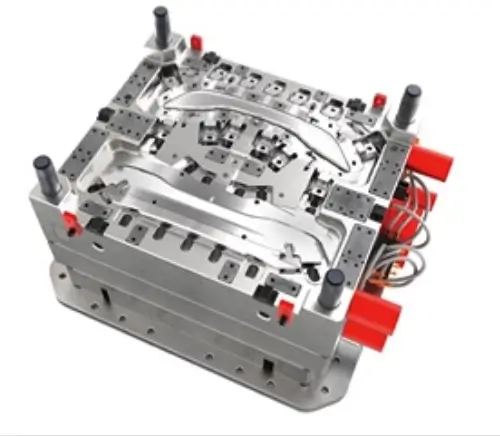
DFM review for injection molding starts before mold manufacturing. The goal is to check whether the plastic part design can be molded cleanly, held to the required tolerance, and produced without repeated mold changes. Key points include wall thickness, draft angle, ribs, bosses, undercuts, gate location, parting line, ejector layout, shrinkage, cooling balance, and material behavior.
A good injection molding DFM review helps reduce common molding problems such as sink marks, warpage, flash, short shots, weld lines, and difficult part ejection. For customers, this step makes the project easier to quote, easier to tool, and more stable during trial molding and production.
Injection molding
Basic functions
In the field of injection molding, we focus on solving complex design and high-precision manufacturing problems, achieving optimal results in every link from mold development to finished product production, and providing customers with high-quality injection molding solutions.
We provide efficient thermoplastic injection molding services for a wide range of applications from consumer products to industrial parts. Through precision molds and advanced processes, we ensure high quality and consistency of each part to meet diverse needs.
Liquid Silicone Rubber (LSR) molding is one of our specialties, especially suitable for medical and food grade applications. Its excellent biocompatibility and high temperature resistance make it an ideal choice for manufacturing precision medical devices and seals.
Metal Injection Molding (MIM) technology focuses on the mass production of small complex metal parts with high material utilization and cost-effectiveness. It is suitable for fields such as electronics, automobiles and medical devices, providing solutions with high precision and complex geometries.
We provide efficient and reliable injection molding services.
Rapid Injection Molding
Simple prototype molding projects can often move quickly after drawing review, depending on part geometry, material, mold complexity, quantity, and finishing requirements. For production tooling, lead time is confirmed after DFM review and mold design evaluation.
Let's look at the SPI mold classification
An SPI Class 101 mold is built for high-volume injection molding, usually for production runs above one million cycles. These molds normally use hardened tool steel, high-quality mold components, precise machining, and strong cooling and ejection systems. Class 101 tooling is used for long-term production programs where mold life, dimensional stability, part consistency, and maintenance planning are critical.
An SPI Class 102 mold is designed for medium-to-high production volume, often up to about one million cycles depending on part design, material, maintenance, and molding conditions. These molds usually use quality steel, durable mold components, and reliable construction for repeated production runs. Class 102 tooling is often selected when customers need stable injection molded parts without the full cost of a Class 101 mold.
An SPI Class 103 mold is commonly used for medium-volume injection molding, often for production runs below about 500,000 cycles. This mold class can support many commercial plastic parts, housings, covers, brackets, and functional molded components. Class 103 tooling gives a practical balance between mold cost, tool life, delivery time, and production quality.
An SPI Class 104 mold is usually used for low-volume production, prototype molding, or shorter production programs. These molds are often built with less expensive tooling materials and simpler construction than higher-class molds. Class 104 tooling is suitable when the project requires molded plastic parts for testing, market validation, bridge production, or limited production demand.
An SPI Class 105 mold is mainly used for prototype injection molding and very short production runs. Tooling cost and lead time are usually more important than long mold life. Class 105 molds help customers test part design, material selection, fit, function, and molding feasibility before investing in higher-class production tooling.
Injection Molding Other Types
Secondary molding
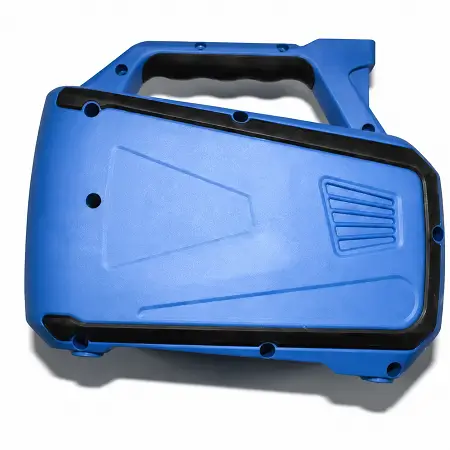
Overmolding is an injection molding process that combines two different materials together. First, one material is molded as a base, and then the second material is injected into the same mold or another mold to make it tightly bonded to the base.
This process is often used to make soft and hard parts, such as toothbrush handles (hard plastic + soft rubber) or tool grips, which can enhance functionality and improve user experience.
Insert molding
Insert molding is the process of placing a metal or plastic insert into a mold in advance, and then wrapping the plastic material around the insert through injection molding to form an integrated part.
This process is widely used in electronic connectors, automotive parts, and medical devices, and can achieve high-strength, multifunctional designs while reducing assembly steps and improving production efficiency.
Custom Plastic Injection Molding
Custom Plastic Injection Molding
Custom plastic injection molding is suitable for parts that require consistent dimensions, repeatable production quality, and stable material performance. Projects may include housings, covers, brackets, clips, connectors, mechanical components, and other molded plastic parts.
Injection molding support can include mold design review, material selection, tooling, trial molding, dimensional inspection, surface finish control, and production planning. For low-volume and production projects, early DFM review helps reduce mold changes, sink marks, warpage, flash, short shots, and other avoidable molding problems.
Surface treatment and molding materials
Mold tools and molding materials
Mold tools are the core of injection molding, and their design and manufacturing directly affect the precision and quality of the product. We provide mold development services that meet SPI standards, covering the entire process from prototype molds to mass production molds. Molding materials include a variety of engineering plastics (such as ABS, PC, PP, PA, POM, PEEK, etc.), which can meet the functional and appearance requirements of different industries. Whether it is a simple two-plate mold or a complex hot runner mold, we can customize it according to customer needs to ensure efficient production and high-quality finished products.
Surface Finishing
Surface finishes for injection molded parts may include mold polishing, matte texture, SPI finish, VDI texture, painting, pad printing, silk screening, laser marking, plating for suitable plastics, and assembly-related finishing. The right finish depends on part appearance, material, mold surface, wear requirements, and production cost.
Learn more about injection molding
Injection molding is an efficient and flexible manufacturing process widely used in industries such as automotive, electronics, medical, and consumer goods. It injects molten plastic into the mold cavity and forms parts of the desired shape after cooling. Our injection molding services cover the entire process from mold design, material selection to production delivery, supporting small batch trial production and large-scale mass production. If you want to know more about the technical details, application cases or customized services of injection molding, please feel free to contact us, we will provide you with professional answers and solutions.
Injection Molding FAQs
Shrinkage or sinking is usually caused by uneven cooling or insufficient holding pressure. Solutions include optimizing the cooling system, increasing holding time and pressure, or adjusting material temperature.
Flash is usually caused by loose mold closure or too high injection pressure. It can be solved by checking mold wear, adjusting mold clamping force or reducing injection pressure.
The key to improving dimensional accuracy lies in optimizing mold design, controlling injection molding process parameters (such as temperature, pressure, cooling time) and selecting suitable materials.
JeekRapid ensures fast delivery from design to finished product through efficient mold design, advanced injection molding equipment, and optimized production processes, and prototypes can usually be completed within 7 working days.
JeekRapid supports a variety of engineering plastics and special materials, including ABS, PC, nylon, PEEK, etc., which can meet the diverse needs from consumer products to medical devices.
Get started quickly
Production of your parts
We ensure that all information provided and uploaded content is kept strictly confidential and secure.