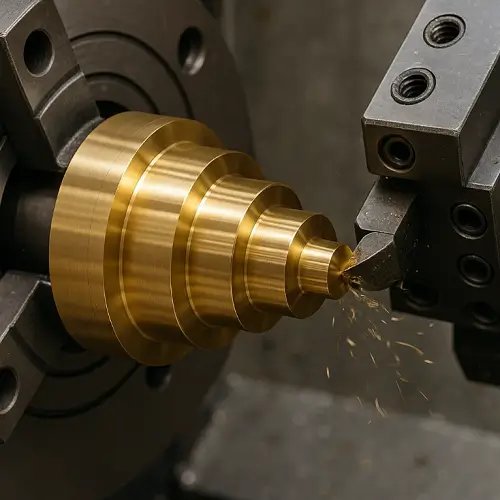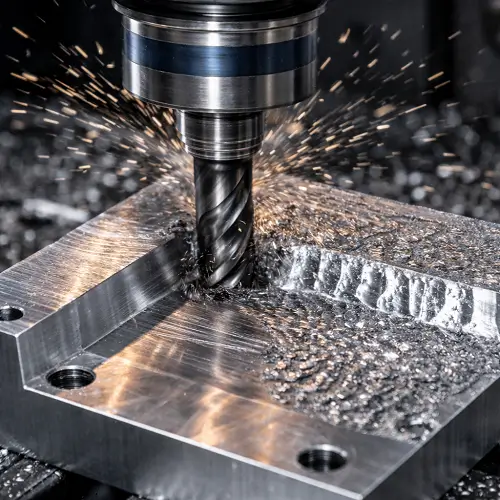
Stainless steel CNC machining is used to produce custom metal parts that need strength, corrosion resistance, clean appearance, wear resistance, and long-term durability. Compared with aluminum or mild steel, stainless steel is harder to cut, generates more heat near the cutting edge, and can work-harden during machining. The material choice, tool selection, coolant, workholding, tolerance, and finishing method all affect the final result.
A 304 stainless steel bracket, a 316 stainless steel marine component, a 303 stainless steel threaded fitting, and a 17-4 PH stainless steel precision part can behave very differently in CNC machining. Some grades are easier to cut. Some grades resist corrosion better. Some can be heat treated for higher strength. Some are selected because the part must survive saltwater, chemicals, cleaning fluids, heat, or heavy mechanical load.
For CNC machined stainless steel parts, the best grade should be chosen from the working environment, mechanical requirement, corrosion exposure, surface finish, and cost target. Choosing the right grade early can reduce tool wear, machining time, burr problems, surface defects, and unnecessary cost.
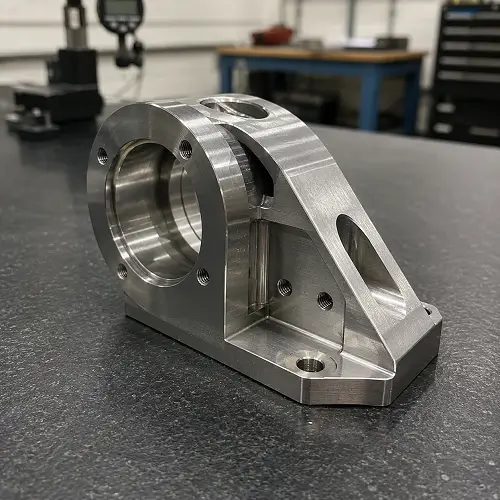
What Is Stainless Steel CNC Machining?
Stainless steel CNC machining is a subtractive manufacturing process that uses CNC mills, CNC lathes, turning centers, and multi-axis machines to cut stainless steel into finished parts. The process may include milling, turning, drilling, boring, tapping, thread milling, reaming, chamfering, polishing, passivation, and inspection.
Stainless steel CNC machining is common for shafts, fittings, brackets, housings, medical components, marine parts, valve components, pump parts, food equipment components, fixtures, fasteners, threaded parts, and precision mechanical parts.
The main challenge is that stainless steel does not machine like aluminum. Stainless steel has higher cutting resistance, lower thermal conductivity, and stronger work-hardening behavior. A poor cutting process can create tool wear, chatter marks, heavy burrs, poor surface finish, broken taps, or unstable dimensions.
Good stainless steel machining depends on a stable process. The cutting tool must stay sharp. The feed rate must prevent rubbing. Coolant must control heat and chip flow. The workholding must be rigid enough to handle higher cutting force. Critical features such as bores, threads, sealing surfaces, and tight tolerance areas need proper finishing and inspection.
What Is Stainless Steel?
Stainless steel is an iron-based alloy that contains chromium. The chromium forms a thin passive oxide layer on the surface, which helps protect the metal from corrosion. This protective layer is the main reason stainless steel performs better than ordinary carbon steel in wet, corrosive, clean, or industrial environments.
Stainless steel does not mean the material can never rust. If the surface is contaminated, damaged, exposed to chlorides, or used in the wrong environment, corrosion can still occur. The correct stainless steel grade and surface condition matter.
Most stainless steels also contain other alloying elements. Nickel improves toughness and corrosion resistance in many austenitic grades. Molybdenum improves resistance to chloride corrosion, which is why 316 stainless steel is often selected for marine, chemical, and outdoor applications. Sulfur can improve machinability in grades such as 303 stainless steel. Carbon affects hardness, weldability, and heat treatment response.
From a CNC machining point of view, stainless steel is stronger and tougher than aluminum. Stainless steel also conducts heat poorly compared with many metals, so more heat stays near the cutting edge. This is one reason stainless steel usually costs more to machine than aluminum or mild steel.
Common Stainless Steel Grades for CNC Machining
Most stainless steel CNC machined parts are made from a few common grades. The right grade depends on corrosion resistance, machinability, strength, hardness, heat treatment, cost, and final application.
| Grade | Type | Machinability | Corrosion Resistance | Common CNC Machined Parts |
|---|---|---|---|---|
| 303 | Austenitic | Good | Moderate | Shafts, fittings, threaded parts, small precision parts |
| 304 | Austenitic | Medium | Good | Brackets, housings, covers, food equipment parts, general components |
| 316 | Austenitic | Medium to difficult | Very good | Marine parts, medical parts, chemical equipment, corrosion-resistant components |
| 410 | Martensitic | Medium | Moderate | Shafts, valves, fasteners, mechanical parts |
| 420 | Martensitic | Medium | Moderate | Hardened parts, wear parts, tools, precision components |
| 430 | Ferritic | Medium | Moderate | Covers, panels, lower-cost corrosion-resistant parts |
| 17-4 PH | Precipitation hardening | Medium | Good | Aerospace, medical, high-strength precision parts |
| Duplex stainless steel | Duplex | Difficult | Very good | Marine, chemical, pressure, and high-strength corrosion-resistant parts |
303 is usually the easiest common stainless steel grade to machine, but the corrosion resistance is lower than 304 or 316. 304 is a balanced grade for general use. 316 is selected when corrosion resistance is more important. 17-4 PH is selected when the part needs higher strength and controlled mechanical performance.
There is no best stainless steel grade for every CNC project. A part used indoors as a mounting bracket may not need 316. A part used near saltwater should not be chosen only by material price. A small threaded fitting may benefit from 303. A high-strength precision shaft may be better suited for 17-4 PH.
Main Types of Stainless Steel
Stainless steel is usually grouped by microstructure. The main families are austenitic, ferritic, martensitic, duplex, and precipitation-hardening stainless steel. Each family has different properties and machining behavior.
| Stainless Steel Type | Common Grades | Main Characteristics | CNC Machining Notes |
|---|---|---|---|
| Austenitic stainless steel | 303, 304, 316 | Good corrosion resistance, good toughness, widely used | Can work-harden, needs sharp tools and steady cutting |
| Ferritic stainless steel | 430 | Magnetic, moderate corrosion resistance, lower nickel content | Often lower cost, but less tough than austenitic grades |
| Martensitic stainless steel | 410, 420, 440C | Can be hardened, higher strength and wear resistance | Hardness affects tool wear and machining strategy |
| Duplex stainless steel | Duplex 2205 and similar grades | High strength, good chloride corrosion resistance | More difficult to machine, higher cutting forces |
| Precipitation-hardening stainless steel | 17-4 PH | High strength, heat treatable, good dimensional stability | Common for precision and high-strength machined parts |
Austenitic Stainless Steel
Austenitic stainless steel is the most widely used stainless steel family. Common grades include 304, 316, and 303. These grades are known for good corrosion resistance, toughness, and general availability.
304 stainless steel is the common general-purpose grade. It is used for brackets, housings, fittings, food equipment parts, medical-related components, enclosures, shafts, and structural parts. 304 offers a good balance between corrosion resistance, strength, cost, and availability.
316 stainless steel contains molybdenum, which improves resistance to chloride corrosion. This makes 316 a better choice for marine environments, chemical exposure, medical parts, and outdoor applications where 304 may not be enough. The tradeoff is higher material cost and slightly more difficult machining.
303 stainless steel is designed for better machinability. It contains sulfur, which helps chips break and improves cutting performance. 303 is often used for shafts, fittings, fasteners, threaded parts, and small precision components. The tradeoff is lower corrosion resistance compared with 304 or 316, especially in demanding environments.
Austenitic stainless steels can work-harden during machining. If the tool rubs instead of cutting, the surface can become harder and more difficult to machine. This is one reason tool sharpness, feed rate, coolant, and rigid workholding matter.
Ferritic Stainless Steel
Ferritic stainless steel contains chromium and little or no nickel. 430 stainless steel is a common ferritic grade. It is magnetic, lower in cost than many austenitic grades, and used in applications that need moderate corrosion resistance.
Ferritic stainless steel is often found in decorative parts, appliance components, covers, panels, kitchen equipment, and general corrosion-resistant parts. It does not have the same toughness or corrosion resistance as 304 or 316, but it can be suitable when cost and appearance matter more than severe corrosion performance.
For CNC machining, ferritic stainless steel can be more stable than some austenitic grades in certain conditions, but grade, thickness, and part geometry still matter. If the part requires forming, welding, or high corrosion resistance, ferritic stainless steel may not be the best choice.
Martensitic Stainless Steel
Martensitic stainless steel can be heat treated to higher hardness and strength. Common grades include 410, 420, and 440C. These materials are used when the part needs wear resistance, hardness, or higher mechanical strength.
410 stainless steel is used for shafts, valves, fasteners, and mechanical components. 420 stainless steel can be hardened and is used for tools, cutting-related parts, wear components, and precision parts. 440C offers high hardness and wear resistance but can be more difficult to machine, especially after hardening.
Martensitic stainless steel usually has lower corrosion resistance than 304 or 316. The grade may still resist corrosion better than plain carbon steel, but the selection should be based on the environment. If the part needs both high hardness and strong corrosion resistance, the grade and heat treatment should be reviewed carefully.
Duplex Stainless Steel
Duplex stainless steel has a mixed austenitic and ferritic structure. It offers higher strength than many common austenitic grades and better resistance to chloride stress corrosion cracking. Duplex grades are used in marine, chemical, oil and gas, pressure equipment, and high-strength corrosion-resistant applications.
The machining difficulty is higher. Duplex stainless steel has higher strength, higher cutting forces, and more demanding tool wear behavior. Cutting parameters, coolant, tool rigidity, and chip control are important. Duplex stainless steel is not usually selected for simple parts unless the working environment requires its performance.
Precipitation-Hardening Stainless Steel
Precipitation-hardening stainless steel can be heat treated to reach high strength while keeping useful corrosion resistance. 17-4 PH stainless steel is the most common example.
17-4 PH is used for aerospace parts, medical components, precision shafts, valves, pump parts, fixtures, and high-strength machined components. It can offer better strength than 304 or 316 and better corrosion resistance than many martensitic stainless steels.
For CNC machining, 17-4 PH is often selected when the part needs strength, dimensional stability, and reliable mechanical performance. Heat treatment condition matters. H900, H1025, H1150, and other aging conditions can change hardness, strength, and machining behavior.
Is Stainless Steel Difficult to Machine?
Stainless steel is generally more difficult to machine than aluminum and mild steel. The material is tougher, cuts slower, generates more heat near the cutting edge, and can work-harden if the cutting process is not stable. Tool wear is usually higher, especially in 304, 316, duplex grades, and hardened stainless steels.
Stainless steel machines well when the process is planned correctly. The key is to match the grade, tool, cutting parameters, coolant, workholding, and inspection method to the part requirement.
A simple 303 stainless steel fitting may machine efficiently. A 316 stainless steel part with deep holes, thin walls, and tight tolerances will need more care. A 17-4 PH part after heat treatment will need a different strategy than a soft 304 bracket. The grade and part design both matter.
Stainless steel parts also tend to cost more than aluminum parts. The reason is not only material price. Slower cutting speed, higher tool wear, longer cycle time, more burr control, and more inspection can all increase cost.
Stainless Steel Properties That Matter in CNC Machining
Stainless steel properties affect both part performance and machining difficulty. The same properties that make stainless steel useful in service can also make the material harder to machine.
Corrosion Resistance
Corrosion resistance is one of the main reasons stainless steel is selected. 304 is suitable for many general environments. 316 performs better in chloride, marine, chemical, or outdoor environments. Duplex stainless steel offers even stronger chloride resistance in certain applications. 17-4 PH provides useful corrosion resistance while also offering high strength.
Corrosion resistance also depends on surface condition. Machining marks, embedded iron particles, heat tint, scratches, or contamination can reduce corrosion performance. Passivation is often used after machining to improve the stainless steel surface condition.
Strength and Hardness
Stainless steel is stronger than aluminum and many plastics. This makes stainless steel useful for load-bearing parts, shafts, brackets, fasteners, pump components, valve parts, and precision mechanical components.
Higher strength also increases machining forces. Tooling must be rigid, sharp, and suitable for the grade. Harder stainless steels or heat-treated grades may need slower cutting speeds, more stable workholding, and stronger tooling.
Work Hardening
Work hardening is a major issue in stainless steel CNC machining, especially for 304 and 316. When the cutting tool rubs the surface instead of cutting cleanly, the material can harden at the surface. After that, the next pass becomes harder, tool wear increases, and the surface finish can suffer.
Machinists usually avoid this by using sharp tools, proper feed, suitable cutting speed, enough coolant, and a stable setup. Light rubbing cuts are not always safer. In stainless steel, rubbing can make the material harder and create more problems.
Heat Resistance and Low Thermal Conductivity
Stainless steel does not move heat away from the cutting zone as quickly as aluminum. More heat stays near the tool edge, which can increase tool wear, built-up edge, surface damage, and poor finish.
Coolant and cutting strategy are important. For many stainless steel parts, flood coolant or proper lubrication helps control heat and chip flow. Tool coating and tool geometry also matter.
Surface Finish
Stainless steel can produce clean, attractive machined surfaces, but the process needs control. Dull tools, poor chip evacuation, vibration, or wrong cutting parameters can leave tearing, burrs, tool marks, or heat discoloration.
If the part needs a visible surface, sealing surface, sliding surface, or medical-related finish, the drawing should define the surface finish requirement. Polishing, bead blasting, brushing, or passivation may also be required after machining.
CNC Machining Tips for Stainless Steel
Stainless steel machining is more stable when the process prevents rubbing, controls heat, and keeps the tool engaged properly.
Use Sharp Carbide Tools
Sharp carbide tools are commonly used for stainless steel CNC machining. The tool must cut cleanly rather than rub. A dull tool can work-harden the surface and make the next cut more difficult.
Tool coating may help in certain grades and cutting conditions. The best choice depends on the stainless steel grade, operation type, coolant, and machine rigidity.
Maintain Steady Feed
A steady feed helps the cutting edge stay under the work-hardened layer. Feeding too lightly can cause rubbing. Feeding too aggressively can increase tool load, deflection, and vibration.
For stainless steel, the process should avoid hesitation, rubbing, and repeated light passes over the same surface.
Control Heat With Coolant
Heat control is important because stainless steel holds heat near the cutting zone. Coolant helps reduce tool wear, improve chip evacuation, and protect the machined surface.
Deep holes, slots, and internal features need extra attention because chips and heat can build up quickly.
Use Rigid Workholding
Rigid workholding helps reduce vibration and tool chatter. Stainless steel creates higher cutting forces than aluminum, so weak clamping or long tool overhang can affect surface finish and tolerance.
Thin-walled stainless steel parts need careful clamping. Too much pressure can distort the part. Too little support can allow vibration.
Plan Roughing and Finishing Separately
For stainless steel parts with tight tolerances or better surface finish requirements, roughing and finishing should be separated. Roughing removes most material. Finishing removes a lighter cut to improve dimension and surface quality.
This approach is especially useful for pockets, bores, sealing faces, shafts, and precision mounting features.
Watch Burrs and Edge Quality
Stainless steel can produce tough burrs. Burrs around holes, threads, slots, and edges can affect assembly and appearance. Chamfering, deburring, and edge break requirements should be defined clearly when the part needs clean handling or assembly.
Consider Passivation After Machining
Machining can leave free iron contamination or disturbed surface areas. Passivation helps improve the corrosion-resistant surface condition of stainless steel parts. It is common for medical, food equipment, marine, and corrosion-sensitive components.
Passivation is not always required, but it should be considered when corrosion resistance matters.
Stainless Steel vs Aluminum in CNC Machining
Stainless steel and aluminum are both common CNC materials, but they are selected for different reasons. Aluminum is lighter, easier to cut, and usually more cost-effective for prototypes, brackets, housings, plates, and lightweight structures. Stainless steel is heavier and slower to machine, but stainless steel offers higher strength, better wear resistance, and stronger corrosion resistance in many working environments.
For CNC machining, aluminum usually allows faster cutting speeds and lower tool wear. Stainless steel needs more heat control, sharper tooling, stronger workholding, and closer attention to burrs and work hardening. This is why stainless steel machined parts often cost more than aluminum parts.
Price should not be the only reason for choosing a material. If the part needs low weight and fast machining, aluminum may be better. If the part needs corrosion resistance, strength, clean appearance, wear resistance, or long-term durability, stainless steel may be worth the higher machining cost.
How to Choose the Right Stainless Steel Grade for CNC Machining
Grade selection should start with the working environment and part function. A part used in a dry indoor machine does not need the same grade as a part used near saltwater, cleaning chemicals, high load, or repeated wear.
304 Stainless Steel: General Corrosion Resistance
304 stainless steel is a practical choice for many general CNC machined parts. It is used for brackets, housings, plates, covers, fittings, and food equipment components. It offers good corrosion resistance and availability at a reasonable cost compared with more specialized grades.
316 Stainless Steel: Marine and Chemical Exposure
316 stainless steel is better when the part faces chlorides, saltwater, chemicals, or more aggressive corrosion conditions. It costs more and can be more difficult to machine, but the stronger corrosion resistance may justify the higher cost.
303 Stainless Steel: Better Machinability
303 stainless steel is often selected when machinability matters and the environment is not too corrosive. It is suitable for shafts, threaded parts, fittings, spacers, and small precision components. If corrosion resistance is more important, 304 or 316 may be a better choice.
17-4 PH Stainless Steel: High Strength
17-4 PH stainless steel is used when the part needs higher strength, good mechanical properties, and useful corrosion resistance. It is common in aerospace, medical, pump, valve, and precision machinery applications. Heat treatment condition should be specified clearly.
Martensitic Stainless Steel: Hardened Wear Parts
410, 420, and 440C can be used when the part needs higher hardness or wear resistance. These grades are useful for shafts, valves, wear parts, tools, and mechanical components. Corrosion resistance is usually lower than 304 or 316, so the working environment should be checked.
Duplex Stainless Steel: Strength and Chloride Resistance
Duplex stainless steel can be selected for high-strength corrosion-resistant parts in marine, chemical, oil and gas, or pressure-related applications. Machining is more difficult, so cost and process risk should be reviewed before production.
Applications of Stainless Steel CNC Machined Parts
Stainless steel CNC machined parts are used across industries where corrosion resistance, strength, cleanliness, wear resistance, or long-term durability matters.
Medical Devices and Instruments
Stainless steel is used for surgical instruments, medical device components, housings, fixtures, shafts, and precision parts. 316 and 17-4 PH are common choices depending on strength, corrosion resistance, and cleaning requirements. Surface finish and passivation are often important.
Food and Beverage Equipment
304 and 316 stainless steel are common in food and beverage equipment because the material can handle cleaning, moisture, and repeated use. CNC machined parts may include fittings, nozzles, brackets, plates, housings, and machine components.
Marine and Outdoor Components
316 stainless steel is often used for marine and outdoor components because it resists chloride exposure better than 304. Parts may include fittings, brackets, housings, shafts, fasteners, and corrosion-resistant hardware.
Aerospace and Precision Machinery
17-4 PH, 304, 316, and other stainless grades are used in aerospace-style parts, precision machinery, high-strength brackets, shafts, valve parts, and fixtures. These parts often need tight tolerances, stable mechanical performance, and inspection control.
Industrial Equipment
Stainless steel parts are used in pumps, valves, automation equipment, chemical equipment, machinery, sensors, and production systems. CNC machining is often used for threaded features, bores, sealing faces, grooves, mounting surfaces, and custom shapes.
Automotive and Energy Parts
Stainless steel is used in automotive, power, and energy systems where heat, corrosion, or mechanical load is a concern. Parts may include housings, fittings, shafts, valve components, brackets, and custom precision components.
What to Provide Before Requesting a Stainless Steel CNC Machining Quote
A stainless steel CNC machining quote needs more than a part name or material grade. The supplier needs to understand how the part will be used, which surfaces are critical, what tolerance needs to be held, and whether the part requires finishing such as passivation, polishing, bead blasting, or heat treatment.
The most useful files are a 3D CAD model and a 2D drawing. The CAD model helps with toolpath planning, while the drawing defines stainless steel grade, quantity, tolerances, threads, critical bores, surface finish, heat treatment, inspection requirements, and functional surfaces. If the stainless steel grade is not fixed yet, the working environment should be explained. A part used indoors, near saltwater, in food equipment, or in a high-strength assembly may need different stainless steel grades.
For complex stainless steel parts, the drawing should mark critical surfaces clearly. Tight tolerances should be used where the function requires them, such as sealing faces, bearing bores, dowel holes, threaded features, or assembly datums. This helps control machining cost while keeping the important features accurate.
Stainless Steel CNC Machining at JeekRapid
JeekRapid supports stainless steel CNC machining for prototypes and custom production parts, including 303, 304, 316, 17-4 PH, 410, 420, and other stainless steel grades. The machining team reviews the material grade, drawing tolerance, hole and thread details, surface finish requirements, passivation needs, and inspection requirements before production.
For stainless steel parts with tight tolerances, deep holes, thin walls, threaded features, sealing surfaces, or cosmetic surfaces, JeekRapid can review the design first and provide practical machining feedback before quoting.
Conclusion
Stainless steel CNC machining is used for custom parts that need corrosion resistance, strength, clean appearance, durability, and long-term performance. The best grade depends on the application. 304 is a strong general-purpose choice. 316 offers better corrosion resistance. 303 improves machinability. 17-4 PH provides higher strength. Martensitic and duplex grades serve more specialized needs.
For CNC machining, stainless steel grade selection affects tool wear, cutting speed, work hardening, surface finish, burr control, tolerance stability, and final part cost. The material choice should balance performance, machinability, and cost.
JeekRapid can review your stainless steel grade, CAD file, 2D drawing, tolerance notes, surface finish requirements, passivation needs, quantity, and inspection requirements before machining. If you are not sure whether 304, 316, 303, 17-4 PH, or another stainless steel grade is suitable for your part, JeekRapid can provide practical machining feedback before production begins.
Upload your CAD files and drawings to request a stainless steel CNC machining quote from JeekRapid.