Some holes come off the machine looking acceptable until the part reaches inspection or assembly. The diameter may be close, but not steady enough. The surface may still feel rough. The hole may be in the right place, yet the bore quality is still not good enough for a bearing, sleeve, pin, or mating component that needs better control.
That is where boring machining becomes useful. Boring is not the operation that creates the first hole from solid material. Boring is what shops use when an existing hole still needs improvement. The goal is not simply to make the hole larger. The goal is to make the hole better, with more control over size, finish, and alignment.
In CNC work, boring earns its place when drilling alone does not give the part the bore quality it really needs. Used in the right place, boring improves function in a controlled way. Used where it is not needed, boring only adds cost and time. The real question is not whether boring is more precise in theory. The real question is whether the hole on this part needs that extra level of control.
What Is Boring Machining?
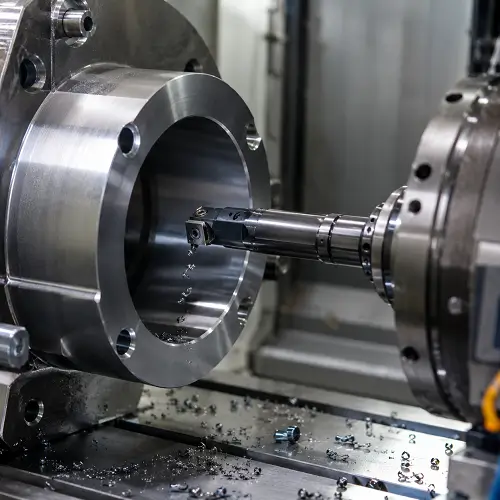
Boring machining is a cutting process used to enlarge and refine an existing hole. Material is removed from the inside wall of the hole so the final bore can be brought closer to the required diameter, finish, roundness, straightness, or alignment.
That point matters because boring is easy to confuse with drilling. Drilling makes the initial opening. Boring improves a hole that already exists. In simple shop terms, drilling creates the hole, while boring corrects and finishes it.
Boring can be done on lathes, machining centers, horizontal boring machines, and other setups depending on part size and bore requirements. The common idea is always the same: the hole is already there, but the hole quality still needs work.
What Is the Purpose of Boring?
The first purpose of boring is better diameter control. A drilled hole may be close to target size without being stable enough for the part’s actual function. Boring helps bring the final diameter under tighter control.
The second purpose is better surface finish. A hole can measure reasonably well and still be too rough for a bearing seat, sleeve fit, or precision assembly. Boring improves that internal surface when the finish matters.
The third purpose is better alignment. Some holes need more than size. They need better concentricity to an outer diameter, better relationship to another bore, or better straightness over depth. Boring is often chosen because the final bore quality matters more than simply making the opening.
The fourth purpose is controlled enlargement. In many jobs, the hole is drilled undersize first, then bored to final size. That gives the shop more control than trying to reach final bore quality with drilling alone.
Where Boring Machining Is Commonly Used
Boring is common in parts where the hole is a functional bore rather than just an opening. Bearing bores, bushing seats, hydraulic component bores, cylinder features, machine housings, and alignment-critical holes are all typical examples.
It is also common in parts where one bore has to relate accurately to another feature. A housing may need the bore to run correctly with an outside diameter. A machine component may need one bore to stay aligned with another across distance or depth. A fabricated or cast part may need the internal surface corrected after the original hole is made.
Boring becomes most useful when the hole is expected to do real work in the final assembly.
Why a Drilled Hole Is Not Always Good Enough
A drilled hole is often good enough for ordinary clearance holes, many simple pass-through holes, and general production features where the hole only needs to exist and be reasonably sized.
The situation changes when the hole becomes a working bore.
A drilled hole can vary in size more than the final application allows. The surface finish may still be too rough. The hole may drift slightly. Entry and exit may look acceptable while the middle of the hole is not as straight or stable as the drawing assumes.
This is why some holes look finished on paper but still create trouble in assembly. A shaft may feel tight in one section and loose in another. A bearing may not seat with the consistency expected. A bore that seems close after drilling may still need correction before the part is genuinely ready.
Drilling is often the fastest way to create the opening. Boring becomes valuable when the opening exists but the quality is still not there.
How Boring Improves Hole Size, Finish, and Alignment
Boring improves hole size by removing material from the existing internal wall in a more controlled way than drilling can usually provide. The cut is aimed at the final bore condition, not just at opening the material.
Boring improves finish because the tool is refining an already formed hole instead of doing the heavier work of creating it from solid stock. That usually gives better control over the final surface.
Boring improves alignment because the setup can be tied more carefully to the reference features that actually matter. This is important when a bore must relate accurately to an outside diameter, another bore, or a datum structure on the part.
The result is not just a bigger hole. The result is a bore that behaves more like a controlled functional feature.
Types of Boring Machining
Lathe boring
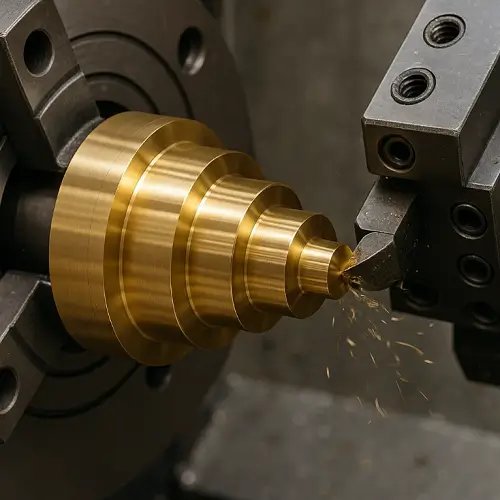
Lathe boring is common on rotational parts where the bore must stay closely related to the outside diameter. Sleeves, hubs, rings, bushings, and turned housings are common examples.
Milling machine boring
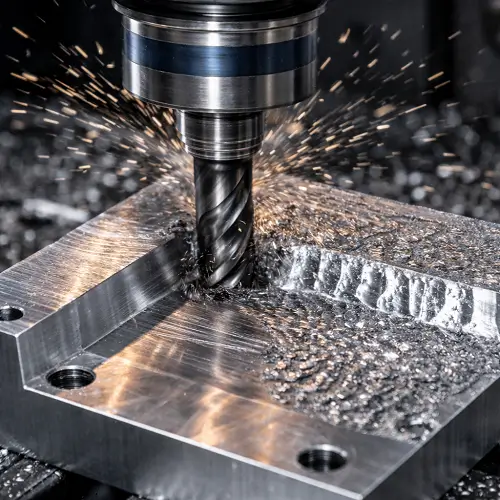
Machining centers and mills can bore holes when the part is prismatic or when the bore location is tied to other milled features. This is common in blocks, plates, housings, and structural components.
Horizontal boring
Horizontal boring is often used on larger workpieces that are too heavy or too large for simpler setups. This is common in industrial machinery parts, heavy equipment components, and larger housings.
Precision boring
Precision boring is used when the bore has stricter demands for size, finish, or alignment. This includes bores that directly affect fit, rotation, sealing, or final assembly performance.
What Affects Boring Quality?
Tool rigidity matters. The longer the boring bar overhang, the easier it becomes for the tool to deflect or vibrate. Deep bores are less forgiving than shallow ones for exactly this reason.
Workholding matters too. If the part is not stable, the bore may machine cleanly in appearance but still vary in size, alignment, or finish. This is especially important on larger parts and thin-wall features.
Machine stability matters. Boring puts real demands on spindle behavior, interpolation accuracy, and general machine condition when the final bore quality needs to be better than drilling alone can provide.
Material behavior matters as well. Aluminum, cast iron, mild steel, stainless steel, and harder alloys do not bore the same way. Some cut cleanly. Some smear. Some are more likely to chatter.
Cutting conditions matter in the usual way, but in boring, feed, speed, depth of cut, and insert geometry are tied very closely to bar rigidity and setup stability. That is why a boring process that works well on one part may become unstable on another with only a modest change in depth or material.
Common Problems in Boring Machining
Chatter is one of the most common boring problems. It leaves vibration marks inside the bore and quickly damages finish and size consistency. Long tool overhang makes chatter worse.
Taper is another problem. One end of the bore may come out larger than the other if the tool deflects, if the setup lacks stability, or if the cutting conditions are not suited to the depth of the bore.
Poor concentricity can show up when the bore looks acceptable by itself but is wrong relative to the outside diameter or to another critical feature.
Surface finish can stay below expectation if the tool is unstable, the material smears, or the cut is too aggressive for the setup.
Tool deflection becomes more serious as the bore gets deeper. This is one reason deep boring deserves more attention than a simple diameter callout on a drawing suggests.
Boring vs Drilling vs Reaming
These three operations are related, but they do not solve the same problem.
Drilling is used to create the initial hole. It is fast and efficient, but it is not always the right final answer when bore quality matters.
Boring is used after the hole already exists and the shop wants better control over final diameter, finish, and alignment. It is often the right choice when the hole has become a real functional bore.
Reaming is usually used when the hole is already close and only a lighter finishing step is needed for better size and finish. Reaming can work extremely well, but it is generally less flexible than boring when the hole needs more meaningful correction.
Quick Comparison
| Process | Main purpose | Best used when |
|---|---|---|
| Drilling | Create the initial hole | The hole does not need high bore quality yet |
| Boring | Improve size, finish, and alignment | The existing hole still needs controlled correction |
| Reaming | Light finishing of a near-size hole | The hole is already close and needs a final clean-up |
When Boring Is Worth It
Boring is worth it when the final hole is doing real work.
That includes bores that carry bearings, bushings, sleeves, precision pins, sealing elements, or tight mating components. It also includes bores that must relate accurately to other features.
Boring is usually not worth it when drilling already meets the function. A simple bolt pass-through hole does not need boring just because boring sounds more precise. If the hole is only a clearance feature and drilling already gives the required result, the extra operation is unnecessary.
Boring becomes worth the cost when drilling leaves the part too uncertain.
A common example is a housing where the drilled hole is close to size, but the bearing still seats inconsistently. Another is a turned component where the internal bore must run more accurately with the outside diameter than drilling alone can reliably deliver. In those jobs, boring is not unnecessary refinement. It is the process that makes the part usable.
How to Specify a Bore on a Drawing
A bore should not be treated like a casual hole if the quality really matters.
The final bore diameter should be clear. The depth should be clear. If internal surface finish matters, that should be stated. If concentricity, runout, or positional relationship to a datum matters, that also needs to be defined clearly.
The drawing should reflect the bore’s function. A bearing seat and a loose pass-through feature are not the same thing, even if both are cylindrical holes.
This is also where overcontrol can become expensive. If the function does not require boring-level quality, the drawing should not force it. But if the bore truly is a critical interface, the drawing should not pretend a simple drilled hole is enough.
Practical Design Tips Before Releasing a Bored Hole
Use boring when the hole quality actually matters, not just because the term sounds more precise.
Ask what the bore does in the assembly. If the answer involves fit, finish, alignment, or controlled diameter, boring may be justified. If the hole is just there for clearance, boring may be unnecessary.
Watch tool overhang on deeper bores. Long, slender boring setups are more likely to chatter or taper.
Review part support early. Bore quality can fall off quickly when workholding is weak, especially on larger or more flexible parts.
Separate simple hole enlargement from true precision-bore requirements. Not every enlarged hole needs to be treated like a critical bore. But when a bore must function like a precision feature, the design and process should both acknowledge that early.
Conclusion
Boring machining is not just a way to make a hole larger. It is a controlled process used to improve bore size, surface finish, and alignment when drilling alone is not enough. On parts with bearing bores, bushing seats, alignment-critical holes, or other functional internal diameters, that extra control often makes the difference between a part that only looks finished and a part that actually works in assembly.
If your drawing includes bores with tighter fit, better finish, or more stable alignment requirements, upload it to JeekRapid for a machining review and quote before production. That review can help determine whether boring is actually needed, how the bore should be controlled, and what machining approach makes the most sense for the part.