May 2026

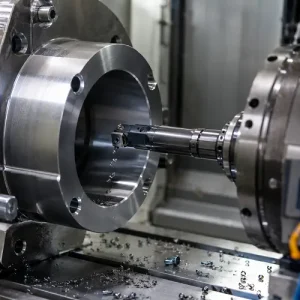
CNC boring machining process

Boring Machining: Process, Uses, and Design Guide

Some holes come off the machine looking acceptable until the part reaches inspection or assembly. The diameter may be close, but not steady enough. The surface may still feel rough. The hole may be in the right place, yet the bore quality is still not good enough for a bearing, sleeve, pin, or mating component …
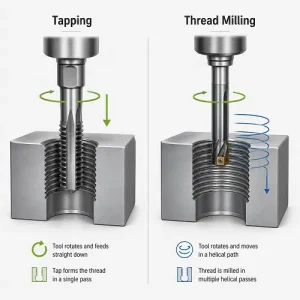
Thread milling and tapping comparison

Thread Milling vs Tapping: Which One Should You Use in CNC Machining?

Internal threads look simple on a drawing. Pick the thread size, make the hole, cut the thread, and move on. In real production, the choice between tapping and thread milling affects much more than the thread itself. It affects cycle time, tool breakage risk, thread fit control, blind-hole safety, and sometimes whether an expensive part …

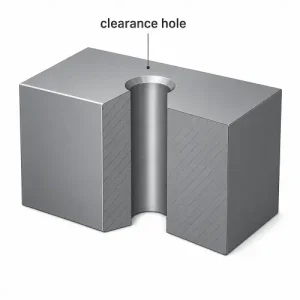
Clearance hole in a metal block

Clearance Holes in CNC Machining: Size, Fit, and Design Guide

Bolt holes look simple until the parts reach assembly. On the drawing, the bolt diameter is known, the hole is there, and the joint seems straightforward. In production, the hole can still be wrong for the job. The bolt may not pass through easily. A stack of parts may refuse to line up. Painted parts …

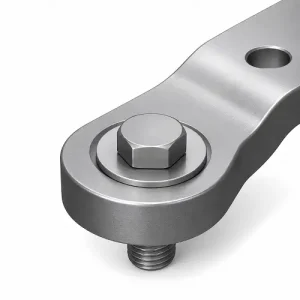
Spotface on a machined metal surface

Spotface in CNC Machining: Purpose, Applications, and Design Guide

Many seating problems start around the hole, not in the hole. A bolt head, washer, or nut may be the correct size, yet still fail to sit flat because the surrounding surface is rough, curved, or locally distorted. This is common on castings, weldments, forgings, and angled faces where the fastener seat cannot be trusted …

Scroll to Top