When requesting a quote for low-volume CNC machining, many buyers have the same reaction: the quantity is small, so why isn’t the price low?
This is a common question—and a reasonable one. The answer lies in how cost behaves in small batch production, where preparation and process control matter far more than part count.
Low-volume CNC machining follows a different cost structure than high-volume manufacturing. Understanding what drives that cost helps explain why quotes vary and why small batches often feel disproportionately expensive.
Setup and Programming Are the First Cost Barrier
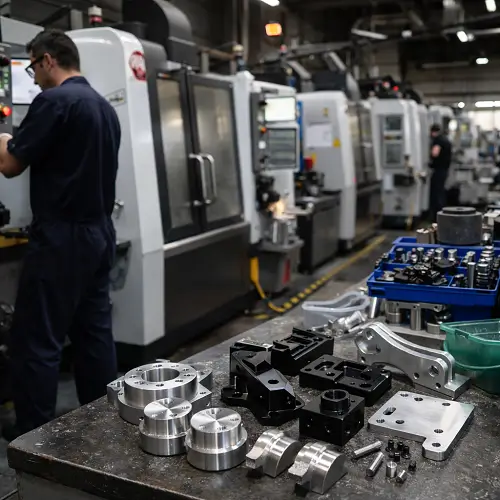
In low-volume CNC machining, setup and programming are required before any cutting begins. Toolpaths must be created, fixtures prepared, tools selected, and reference points defined. This work is largely the same whether you are producing 10 parts or 100.
If you have ever compared two quotes and wondered why the difference was smaller than expected, this is often the reason. The upfront effort does not scale down with quantity, which makes setup a visible portion of total cost in small batch orders.
Part Geometry Defines How the Part Is Made
Part geometry directly affects how a component must be machined. Features that require multiple orientations, deep pockets, thin walls, or limited tool access force additional setups and more conservative machining strategies.
From a drawing, a part may appear simple. In practice, even small design details can introduce extra handling, longer cutting time, and higher risk control. In low-volume CNC machining, these effects show up clearly in the final price.
Tolerances Increase Machining and Inspection Effort
Tolerances are another major cost driver in low-volume CNC machining. Tight tolerances require slower cutting speeds and significantly more inspection work.
In small batch production, inspection and verification can take as much time as machining itself. When tight tolerances are applied beyond functional interfaces, this inspection effort becomes one of the main contributors to cost.
If you have ever been surprised by how much tolerances affected a quote, inspection time is usually the reason.
Material Choice Affects More Than Raw Material Cost
Material cost is not only about price per kilogram. Some materials machine cleanly and predictably, while others demand slower feeds, frequent tool changes, or extra care to avoid distortion and surface damage.
In low-volume CNC machining, difficult-to-machine materials increase cycle time and labor involvement. Scrap risk also becomes more visible in small batches, where a single rejected part represents a higher percentage of the order.
For this reason, machinability often has a greater impact on cost than material price alone.
Surface Finishing Often Pushes the Price Higher
Surface finishing is one of the most common reasons low-volume CNC machining quotes increase. A basic machined finish requires minimal extra work, but specific surface requirements introduce additional handling and processing steps.
Processes such as bead blasting, anodizing, plating, polishing, or cosmetic surface control rely heavily on manual preparation in small batch production. These steps cannot benefit from automation or volume efficiency, which makes their cost more noticeable.
When appearance consistency is required across a small batch, rework and inspection effort can increase further, especially for materials that show machining marks easily.
Secondary Operations Add Manual Labor
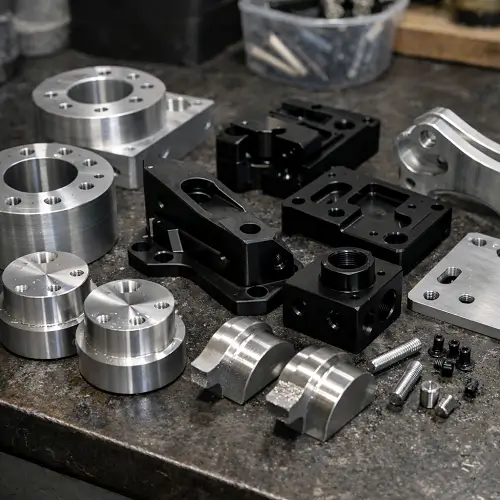
Secondary operations such as deburring, thread inserts, coating, or heat treatment often account for a significant portion of total cost in low-volume CNC machining.
These processes are typically manual and do not scale efficiently with quantity. As a result, their cost impact is much more visible in small batch orders than in high-volume production.
A Practical Example from a Low-Volume CNC Project
A common example involves a small batch of aluminum brackets used for early system testing. The initial design included tight tolerances on all faces and a cosmetic surface finish requirement. Although only 30 parts were needed, setup, inspection, surface finishing, and manual deburring accounted for more than half of the total cost.
After reviewing the design, tolerances were relaxed on non-critical features and the cosmetic finish requirement was limited to visible surfaces only. The part function remained unchanged, but the overall cost was reduced significantly without increasing quantity.
This type of adjustment is typical in low-volume CNC machining and highlights where cost is often hidden.
Why Low-Volume CNC Machining Is Still the Right Choice
Despite its cost structure, low-volume CNC machining remains essential for many projects. It allows teams to validate design, fit, and function using real materials without committing to tooling too early.
For prototypes, pilot builds, and early production runs, flexibility and accuracy matter more than unit price. Low-volume CNC machining supports fast iteration, design refinement, and functional testing—benefits that high-volume processes cannot provide at this stage.
If you want a broader view of when low-volume CNC machining makes sense in the product lifecycle, you can also refer to
Low-Volume CNC Machining for Functional Parts and Prototypes, which explains how small batch CNC production fits into early manufacturing phases.
Choose JeekRapid CNC Machining Services
The cost of low-volume CNC machining is driven by preparation, complexity, and control rather than by quantity alone. Setup effort, geometry, tolerances, material behavior, surface finishing, and secondary operations all shape the final price.
Understanding these factors makes CNC quotes easier to interpret and highlights where design or requirement changes can reduce cost. Low-volume CNC machining is not intended to deliver the lowest unit price—it is chosen to deliver reliable, functional parts when flexibility and speed matter most.
If your project requires accurate parts in small quantities, reviewing part requirements early can help determine whether low-volume CNC machining is the right approach and where cost adjustments are possible.
Sharing basic design details for a quick quote is often the fastest way to clarify feasibility, cost range, and next steps.
FAQs
Why does low-volume CNC machining still cost more than expected?
Because setup, programming, and inspection are required regardless of quantity.
Does increasing quantity always lower the unit price?
No. Unit cost decreases only until setup effort is absorbed.
Why do tight tolerances raise cost in low-volume CNC machining?
Because tighter tolerances require slower machining and more inspection.
Does material choice affect cost more than material price?
Yes. Machinability usually matters more than raw material price.
Why does surface finishing increase cost for small batches?
Because surface finishing relies on manual handling that cannot scale with low volume.
Are secondary operations a major cost factor?
Yes. Deburring, inserts, and finishing often represent a large share of total cost.
Is low-volume CNC machining chosen for low cost?
No. It is chosen for flexibility, accuracy, and fast iteration.