CNC machining cost is one of the first questions buyers ask when they need custom metal or plastic parts. The difficult part is that CNC machining does not have one fixed price. A simple aluminum plate with four holes may cost much less than a stainless steel housing with deep pockets, tight bores, threaded holes, and cosmetic finishing.
For most custom CNC machined parts, simple components may start around $50–$150 per piece for early budgeting. More complex precision parts can reach several hundred dollars or more. Parts made from titanium, PEEK, stainless steel, or complex 5-axis geometry can cost even more, especially when tight tolerances, inspection reports, or surface finishing are required.
The final price depends on the whole process: material, raw stock size, programming, setup, workholding, cutting time, tolerance, surface finish, inspection, and order quantity. A drawing that looks simple on screen may still require multiple setups, long tools, slow finishing passes, or special inspection. Those details change the quote.
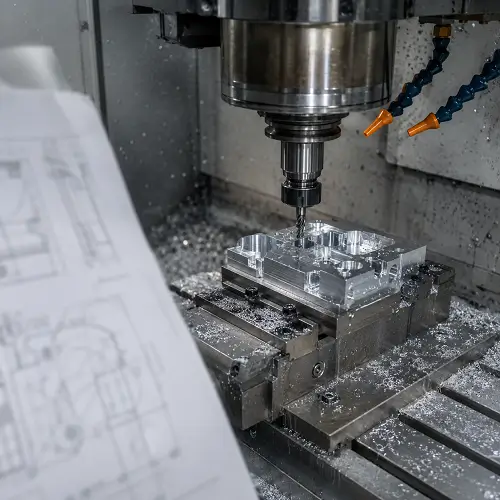
A rough price range can help with early planning, but an accurate CNC machining quote still needs CAD files, 2D drawings, material requirements, tolerance notes, surface finish callouts, and quantity.
Rough CNC Machining Cost Range
The table below gives a practical reference for early budgeting. These prices are not fixed quotes. Actual pricing can be lower or higher depending on part size, material grade, machining time, tolerance, finishing, inspection, and delivery requirements.
| CNC Machined Part Type | Typical Cost Range | Why the Cost Changes |
|---|---|---|
| Simple aluminum plate, spacer, or bracket | $50–$150 per part | Simple milling, drilling, loose tolerance, common material |
| Basic turned shaft or bushing | $60–$200 per part | CNC turning, facing, threading, grooves, common materials |
| Stainless steel machined part | $100–$400+ per part | Slower cutting, higher tool wear, more heat control |
| Thin-wall aluminum housing | $200–$800+ per part | Pocketing, wall control, multiple tools, possible anodizing |
| Precision engineering plastic part | $100–$500+ per part | Deformation control, sharp tooling, burr control, inspection |
| PEEK precision part | $150–$800+ per part | Expensive material, careful machining, strict process control |
| Titanium component | $300–$1,000+ per part | Slow machining, high tool wear, tight process control |
| 5-axis complex contoured part | $500–$2,000+ per part | Complex toolpaths, long cycle time, advanced setup |
A small part is not always cheap. A tiny stainless steel part with a deep M2 threaded blind hole, a tight bore, and a polished surface may cost more than a larger aluminum plate with loose tolerances. Size matters, but machining difficulty often matters more.
Quantity also changes the unit price. One prototype carries the full cost of programming, setup, tool preparation, and first article checking. When the same part is ordered in 50, 100, or 500 pieces, those fixed costs can be spread across more parts. The part may not become “cheap,” but the unit cost usually becomes more reasonable.
CNC Machining Cost Per Hour
CNC machining is often estimated partly by machine time. Hourly rates vary by region, machine type, shop overhead, operator skill, and precision level. A high-end 5-axis machining center costs more to run than a basic 3-axis mill. Precision machining also costs more when inspection, tool control, and slower finishing passes are required.
| CNC Process | Rough Hourly Rate |
|---|---|
| CNC turning | $40–$90/hour |
| 3-axis CNC milling | $40–$100/hour |
| 4-axis CNC machining | $60–$120/hour |
| 5-axis CNC machining | $90–$150+/hour |
| Precision CNC machining | $80–$180+/hour |
Hourly rate does not equal final part price. A part may take only 20 minutes of cutting time but still need programming, setup, material preparation, deburring, inspection, cleaning, and packing. Another part may have a higher hourly machine rate but need fewer setups because 5-axis machining can reach more surfaces in one clamping.
For buyers, the better question is not only “What is the hourly rate?” The more useful question is: how much setup time, cutting time, material, finishing, inspection, and risk does this part require?
Why CNC Machining Cost Is Not One Fixed Number
CNC machining price is not calculated from material weight alone. A quote usually includes several cost layers.
Programming is needed to create toolpaths from the CAD model. Setup is needed to clamp the workpiece, load tools, set offsets, and prove the process. Workholding may require standard vises, soft jaws, custom fixtures, or special supports. Cutting time depends on material, tool size, depth of cut, tolerance, and surface finish. After machining, the part may need deburring, inspection, cleaning, surface treatment, and packing.
A simple block with wide tolerances may only need one setup and a few common tools. A housing with features on five sides may need several setups or a 5-axis machine. A deep pocket may require long tools and light cuts. A thin wall may need slower machining to avoid distortion. A precision bore may need drilling, boring, finishing, and inspection.
This is why two parts made from the same material can have completely different prices. CNC machining cost follows the process, not just the material name.
How Material Cost Affects CNC Machining Price
Material cost is one of the first items in a CNC quote, but raw material price alone does not explain the full cost. For many CNC parts, material is not always the largest cost. Setup time, machine time, tolerance control, tool wear, finishing, and inspection can cost more than the raw stock itself.
In CNC machining, the shop does not only pay for the final finished weight of the part. The shop buys bar stock, plate, billet, tube, or block large enough to hold the part and allow machining allowance.
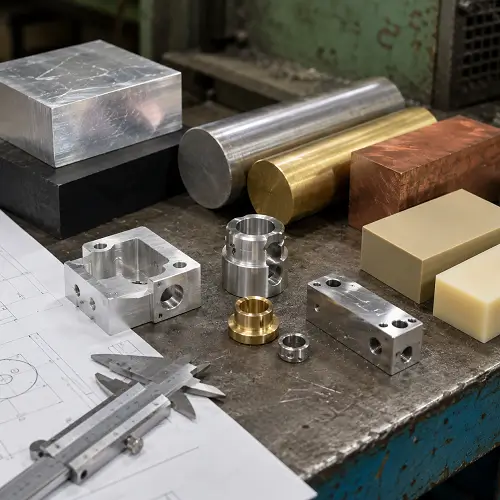
A finished part may weigh 0.2 kg, but the starting block may be much larger. If the part has a deep pocket, most of the material may be cut away as chips. If the part needs thick stock, oversized blank material, or special grade material, the real material cost can be much higher than the final part weight suggests.
Material cost can include:
- raw stock price
- material grade
- stock size
- cutting allowance
- minimum purchase size
- scrap rate
- material certificate requirements
- waste from heavy material removal
Aluminum alloys such as 6061 are common because aluminum machines quickly and is usually cost-effective for prototypes, brackets, housings, plates, and fixtures. Stainless steel costs more to machine because stainless steel cuts slower, generates more heat, and wears tools faster. Titanium is expensive as raw material and also slow to machine. Copper can be costly and sometimes gummy during cutting. Engineering plastics are not always cheap either. PEEK is a good example: the material itself can be expensive, and precision PEEK machining needs careful control to avoid deformation.
| Material | Material Cost Level | Machining Cost Impact | Common Notes |
|---|---|---|---|
| Aluminum 6061 | Low to medium | Low | Easy to machine, common for prototypes, plates, brackets, and housings |
| Aluminum 7075 | Medium | Low to medium | Stronger than 6061, higher material cost, still machines well |
| Carbon steel | Low | Medium | Lower raw cost, may need coating, plating, or black oxide |
| Stainless steel 304 | Medium | Medium to high | Slower cutting, more tool wear, common for corrosion-resistant parts |
| Stainless steel 316 | Medium to high | Medium to high | Better corrosion resistance, harder to machine than aluminum |
| Brass | Medium to high | Low to medium | Machines well, but raw material can be expensive |
| Copper | High | Medium to high | Expensive material, can be gummy and harder to control |
| Titanium | High | High | Slow cutting, high tool wear, common in aerospace and medical parts |
| ABS / Nylon / POM | Low to medium | Low to medium | Easier to machine, but burrs and deformation still matter |
| PEEK | Very high | High | Expensive engineering plastic, needs careful precision machining |
The cheapest material per kilogram does not always create the cheapest machined part. If a material cuts slowly, wears tools quickly, needs special coolant control, distorts during machining, or requires extra finishing, the final quote can increase.
Material selection should match the real function of the part. For a prototype used only for fit testing, aluminum 6061 or an engineering plastic may be more practical than stainless steel, titanium, or PEEK. For a part that needs corrosion resistance, high strength, heat resistance, chemical resistance, or medical compatibility, the higher material cost may be necessary.
Main Factors That Affect CNC Machining Cost
Setup and Programming Time
Setup and programming are fixed costs. They exist whether the order is one piece or one hundred pieces.
Before the machine starts cutting, the shop has to review the drawing, create or adjust the CNC program, select tools, prepare the workholding, set up the machine, load the material, check tool offsets, and confirm the first part. For tight tolerance parts, the first article check may take additional time.
This is the main reason CNC prototypes have a higher unit cost. A one-piece order carries all of the setup cost by itself. A 100-piece order spreads that same setup cost across more parts. The cutting time per part may stay similar, but the setup cost per part becomes lower.
Machine Time
Machine time is one of the largest cost drivers. More cutting time means higher cost.
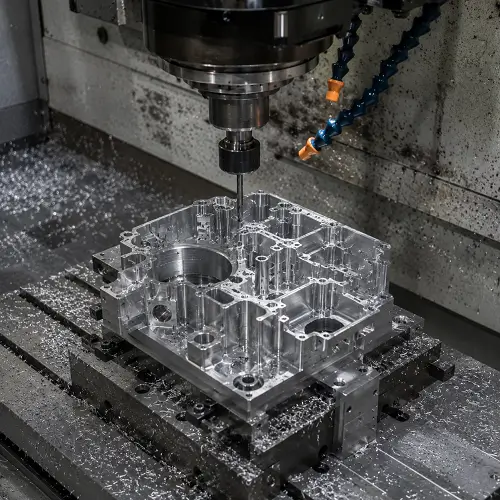
Machine time increases when the part has deep pockets, complex profiles, hard materials, tight tolerances, fine surface finish requirements, small tools, or long tool reach. A small cutter removes material slowly. A deep pocket may require several step-down passes. A 3D surface may need a small step-over to avoid visible marks. Stainless steel and titanium often need slower cutting speeds than aluminum.
A part that looks simple from the outside may still require long machine time if the internal features are difficult to reach or finish.
Part Complexity
Complexity in CNC machining is not only about appearance. A part can look clean and simple but still be expensive to machine.
Cost increases when a part has:
- deep pockets
- thin walls
- small internal radii
- undercuts
- features on multiple sides
- tight bores
- deep threaded holes
- complex curved surfaces
- narrow slots
- difficult clamping areas
- cosmetic faces that cannot show tool marks
Thin walls need careful cutting pressure control. Small internal corners need small end mills, and small tools cut slower. Multiple sides may require extra setups. Complex curved surfaces may require 5-axis machining or long finishing cycles.
A drawing with fewer difficult features is often cheaper than a drawing that simply looks smaller.
Tolerance Requirements
Tolerance has a direct effect on cost. A general tolerance part is easier to machine than a part that requires ±0.01 mm or tighter features.
Tight tolerances may require roughing and finishing passes, slower cuts, better tool control, more stable fixturing, temperature awareness, and additional inspection. A hole with a loose clearance requirement may only need drilling. A precision dowel hole may need drilling, reaming, or boring. A bearing bore may need a slower finishing operation and careful measurement.
Not every surface needs a tight tolerance. A common cost mistake is applying tight tolerances across the full drawing when only a few functional features need that control. Non-critical faces, cosmetic areas, and clearance features can often use wider tolerances without hurting function.
Surface Finish and Post-Processing
Surface finish changes cost in two ways. First, the machined surface itself may need a slower finishing pass, smaller step-over, sharper tools, or extra toolpath planning. Second, the part may need post-processing after machining.
Common finishing options include anodizing, bead blasting, polishing, passivation, plating, powder coating, black oxide, heat treatment, and laser marking. Each adds cost, lead time, and sometimes extra inspection requirements.
Cosmetic parts need more care because visible surfaces cannot show heavy tool marks, scratches, dents, or uneven finishing. Functional surfaces such as sealing faces, sliding bores, and bearing seats may need controlled roughness rather than only good appearance.
Surface finish notes should be clear. When only certain faces need cosmetic or functional finish, marking those faces on the drawing can prevent unnecessary cost.
Quantity
Quantity strongly affects unit cost. A one-piece prototype is usually more expensive per part because setup, programming, tool preparation, and first article inspection are spread over only one piece.
As quantity increases, the fixed cost per part decreases. Tooling choices may also change. For a prototype, standard tools and flexible machining may be best. For production, optimized fixtures, dedicated tools, and stable process planning can reduce cycle time and improve repeatability.
Higher quantity does not remove all costs. Material, machine time, tool wear, inspection, surface finishing, and packing still remain. The biggest savings usually come from spreading setup cost and improving process efficiency.
Inspection and Documentation
Inspection requirements can increase CNC machining cost. Basic dimensional checks are normal. Detailed inspection reports take more time.
Cost may increase when a part needs CMM inspection, first article inspection, material certificates, surface finish reports, hardness reports, full dimensional reports, or special documentation for medical, aerospace, automotive, or precision equipment applications.
Inspection is not just paperwork. The shop may need to slow down the process, use controlled measurement methods, inspect more features, or separate parts by batch. For critical parts, this cost is necessary because documentation supports function, traceability, and quality control.
CNC Machining Cost by Process
CNC Milling Cost
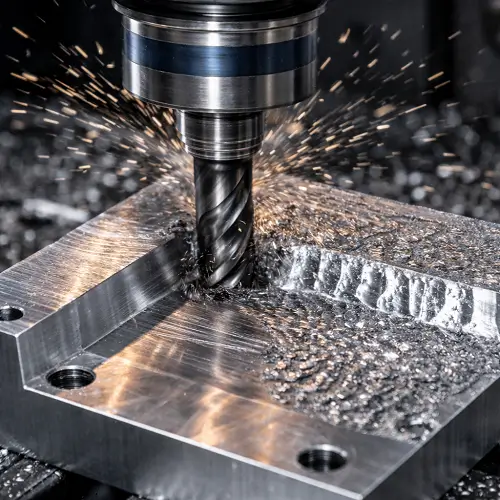
CNC milling is used for plates, brackets, housings, fixtures, blocks, pockets, slots, flat surfaces, contours, and 3D features. Milling cost depends on the number of setups, pocket depth, tool reach, material removal, tolerance, surface finish, and the number of machined sides.
A simple aluminum plate with drilled holes may be low cost. A thin-wall housing with deep pockets, small corner radii, several threaded holes, and anodized finish will cost more. The machine may need several tools, lighter cutting passes, extra deburring, and more inspection.
CNC milling becomes more expensive when small tools are required. Small tools cut slower, break more easily, and need more careful toolpaths. Deep cavities also increase cost because long tools are less rigid and may cause chatter or wall deflection.
CNC Turning Cost
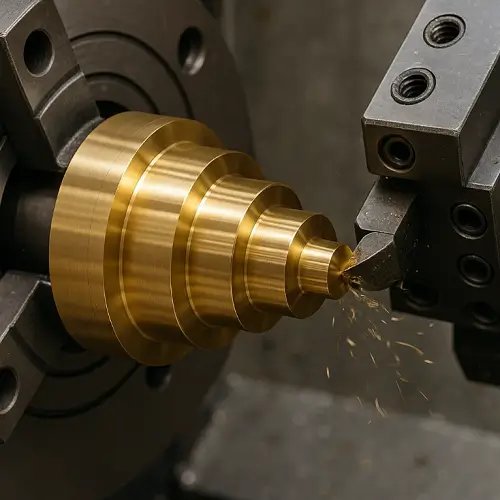
CNC turning is used for round parts such as shafts, pins, bushings, spacers, sleeves, collars, threaded rods, and fittings. Simple turned parts can often be efficient because the workpiece rotates and the tool removes material continuously.
Turning cost increases when the part has tight diameters, long slender shafts, deep internal bores, fine threads, grooves, undercuts, or multiple operations. Stainless steel and titanium turned parts also cost more than aluminum because cutting is slower and tool wear is higher.
CNC turning can be very cost-effective when the part has rotational symmetry. For mill-turn parts that need both round features and milled flats, slots, or holes, the quote depends on how many operations can be completed in one setup.
5-Axis CNC Machining Cost
5-axis CNC machining usually has a higher hourly rate than 3-axis machining, but the final cost is not always higher. The higher machine cost may be justified when the part has complex geometry, features on many sides, or surfaces that are difficult to reach with standard setups.
A 5-axis machine can sometimes reduce the number of setups, improve feature alignment, and avoid special fixtures. For complex parts, fewer setups may reduce accumulated error and shorten total production time.
5-axis machining becomes expensive when the part requires long 3D finishing paths, complex tool orientation, tight surface quality, or difficult material. The process is most useful when the geometry truly needs multi-axis access or when reducing setups improves quality and repeatability.
Precision CNC Machining Cost
Precision CNC machining costs more because the process needs more control. Tight tolerances, fine surface finishes, precision holes, flatness, parallelism, concentricity, and critical assembly features may require slower machining and more inspection.
A precision part may need roughing, stress relief, semi-finishing, finishing, and final inspection. Tool wear has to be watched more closely. Temperature, clamping pressure, and measurement method may matter. For plastics and thin-walled parts, deformation control may become just as important as cutting accuracy.
Precision machining cost is not only about the machine. It is about process stability.
CNC Machining Cost Examples
The examples below show why CNC machining prices vary so widely. The cost level is based on typical machining difficulty, not only part size.
| Part Example | Cost Level | Main Cost Drivers |
|---|---|---|
| Simple aluminum spacer | Low | Simple turning or milling, basic hole, loose tolerance |
| Aluminum mounting plate | Low to medium | Drilling, tapping, flatness, surface finish |
| Stainless steel shaft | Medium | Turning, threading, harder material, tool wear |
| Thin-wall aluminum housing | Medium to high | Deep pocketing, wall control, multiple tools |
| Stainless steel manifold | High | Deep holes, threads, sealing surfaces, inspection |
| Titanium aerospace-style bracket | High | Slow cutting, high tool wear, tight tolerance |
| PEEK precision component | High | Expensive material, deformation control, inspection |
| 5-axis contoured part | High | Complex surfaces, long toolpaths, advanced setup |
A simple aluminum spacer may only need cutting, facing, drilling, and basic inspection. A thin-wall aluminum housing may need roughing, finishing, wall control, deburring, and anodizing. A stainless steel manifold may need deep drilling, thread control, sealing surfaces, and CMM inspection. These parts cannot share one fixed CNC machining price.
Why One CNC Part Costs More Than Another
Two CNC parts can use the same material and still have different prices.
Consider two aluminum parts. The first part is a simple plate with four clearance holes and a general tolerance. The process is straightforward: cut the blank, face the surface, drill the holes, deburr the edges, inspect basic dimensions, and ship.
The second part is an aluminum housing. It has thin walls, a deep pocket, small internal radii, several tapped blind holes, a sealing face, and anodized finish. The part needs careful roughing and finishing, multiple tools, controlled clamping pressure, more deburring, and surface preparation before finishing.
Both parts may be called aluminum CNC machined parts. Their quoting logic is completely different.
This is also why a larger part is not always more expensive than a smaller part. A larger part with simple geometry can be easier to machine than a small part with hard material, tight tolerance, deep holes, and poor tool access.
A good CNC quote is built from the drawing, not from part size alone.
How to Reduce CNC Machining Cost
Avoid Unnecessary Tight Tolerances
Tight tolerances should be used where function requires them. Applying ±0.01 mm across the full drawing can raise cost without improving the part.
Functional bores, bearing seats, dowel holes, sealing faces, and alignment features may need tight control. Clearance holes, non-mating surfaces, hidden areas, and cosmetic faces may not need the same tolerance.
A drawing that clearly separates critical and non-critical features is easier to quote and easier to machine.
Increase Internal Corner Radii
Small internal corner radii require small end mills. Small tools remove material slowly, deflect more easily, and break more easily. If a pocket can accept a larger internal radius, the shop can use a stronger cutter and reduce machine time.
Sharp internal corners are especially costly because a rotating cutter always leaves a radius. If a truly sharp internal corner is required, EDM or a design change may be needed.
Avoid Very Deep and Narrow Pockets
Deep, narrow pockets increase CNC machining cost because they require long tools and careful chip evacuation. Long tools are less rigid and more likely to chatter or deflect.
When the design allows wider pockets, larger radii, or reduced depth, machining becomes more stable. In many cases, small design changes can reduce both cost and risk.
Choose Cost-Effective Materials
Material should match the part function. If the part only needs fit testing, aluminum 6061 or a machinable plastic may be more cost-effective than titanium, 316 stainless steel, or PEEK.
For production parts, material choice should consider strength, corrosion resistance, heat resistance, wear behavior, weight, and finishing. A cheaper raw material is not always cheaper after machining and finishing.
Simplify Surface Finish Requirements
Surface finish requirements should be applied where they matter. A part does not need polishing, bead blasting, anodizing, or plating on every surface unless the function or appearance requires it.
Marking cosmetic faces and functional surfaces clearly on the drawing helps avoid unnecessary finishing cost.
Combine Similar Parts in One Batch
Batching similar parts can reduce setup cost. If several parts use the same material, similar thickness, similar tools, or similar finishing, quoting them together may improve efficiency.
For repeat orders, stable batch planning can also reduce unit cost because the shop can reuse proven programs, fixtures, and inspection methods.
Provide Clear CAD Files and 2D Drawings
Clear files reduce uncertainty. A 3D CAD model helps with programming and toolpath planning. A 2D drawing defines tolerances, threads, surface finish, material, heat treatment, inspection requirements, and critical features.
When a drawing is missing tolerance notes or finish requirements, the shop must ask questions or quote with more caution. Clear technical information helps produce a more accurate price.
Get a CNC Machining Quote Based on Your Drawing
CNC machining cost can only be estimated roughly without a drawing. Material, part size, tolerance, surface finish, machining process, quantity, and inspection requirements all affect the final price. A simple aluminum plate and a thin-wall stainless steel housing may both be CNC machined parts, but the quoting logic is completely different.
JeekRapid reviews CAD files, 2D drawings, material requirements, tolerance notes, surface finish callouts, thread and hole details, inspection requirements, and order quantity before providing a CNC machining quote. If the design has areas that may increase cost, such as tight internal corners, deep pockets, unnecessary tight tolerances, or expensive material choices, JeekRapid can provide practical machining feedback before production begins.
To know the actual cost of your part, send JeekRapid the CAD file, 2D drawing, material, quantity, and surface finish requirement. JeekRapid can review the design and return a practical CNC machining quote based on the real manufacturing requirements.
Upload your CAD files and drawings to request a CNC machining quote from JeekRapid.