Robotics is becoming a larger part of industrial automation, logistics, inspection, warehouse systems, and product development. According to the International Federation of Robotics, 542,000 industrial robots were installed worldwide in 2024, more than twice the number installed ten years earlier. Annual installations have also remained above 500,000 units for four consecutive years.
As robotics expands into automation equipment, mobile platforms, inspection systems, collaborative applications, and new prototype programs, more projects need mechanical parts that standard hardware cannot provide. Robot joints, motor mounts, end-effectors, sensor supports, controller housings, and battery structures often need to fit around a specific motor, reducer, sensor, or frame within limited space.
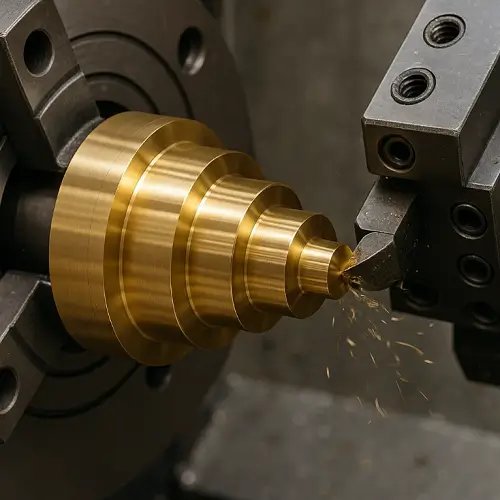
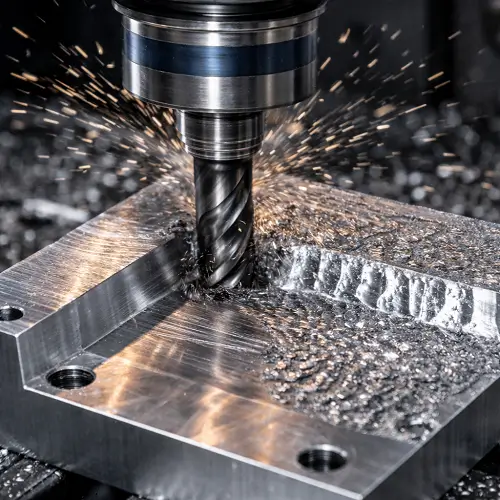
Before a design is stable enough for molding, stamping, or casting, CNC machining gives robotics teams a practical way to make functional metal or engineering-plastic parts for assembly tests and low-volume production. It allows the team to check fit, mounting positions, cable clearance, weight, and service access with parts made from real materials.
What Are CNC Robotics Parts?
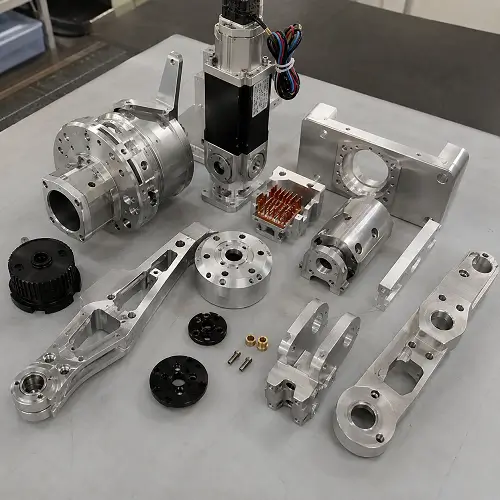
CNC robotics parts are custom metal or engineering-plastic components used in robotic systems. They may connect, support, protect, position, or mount motors, reducers, sensors, cameras, batteries, controllers, grippers, and structural frames.
CNC machining for robotics is commonly used when a part needs threaded holes, controlled mounting positions, machined contact surfaces, or a specific fit with another component. This may include a sensor bracket, motor mounting plate, robot joint housing, gripper interface, controller enclosure, or structural link in a robot arm.
Not every robot part needs to be machined from metal. Covers, cable guides, insulating parts, and low-load components may be better made from engineering plastics. The material and process should match what the part needs to do in the finished robot.
Robot Parts Machining: Common CNC Components
Robot Joint Housing Machining
Robot joint housing machining is used for custom housings that connect motors, reducers, bearings, encoders, sensors, and cable paths inside a compact joint assembly. Standard parts are often difficult to use because the internal layout depends on the selected motor, reducer, bearing size, wiring route, and arm structure.
A joint housing may need mounting faces for several purchased components while keeping the outer profile compact and light enough for efficient movement. It may also need bearing locations, cable exits, maintenance access holes, and covers that protect internal components.
Aluminum is common when low weight matters, especially for moving arm sections. Stainless steel or alloy steel may be more suitable when the joint carries higher loads, faces repeated impact, or needs better wear resistance in selected areas.
CNC machining can produce the housing and its mounting features, but joint load capacity, bearing life, stiffness, and motion accuracy should be confirmed through engineering analysis and functional testing.
Robot Arm Parts Machining
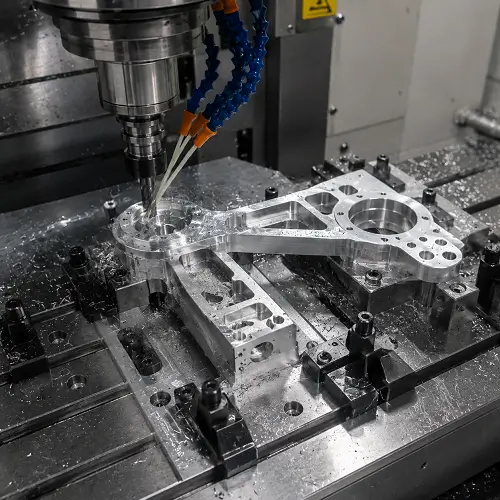
Robot arm parts machining supports custom arm links, connection plates, structural blocks, lightweight sections, and mounting interfaces used between robot joints. These parts often need to connect moving modules while keeping the robot balanced and leaving enough room for cables and service access.
A robot arm link may need to match the mounting pattern of two joint modules, protect internal parts, provide a cable route, and avoid interference during movement. During prototype development, the arm length, wall thickness, cable path, and mounting position may change after the first assembly test.
Aluminum robot parts are common because they reduce moving mass and are practical for CNC machining. For higher-load industrial systems, steel or titanium may be considered where the added strength justifies the extra material and machining cost.
Robot Motor Mount and Actuator Parts Machining
Robot motor mount machining is used when a standard bracket cannot match the required bolt pattern, mounting height, offset, reducer interface, or available space inside the robot structure. Actuator parts can also include connection plates, mounting blocks, adjustment brackets, coupling supports, and structural interfaces between a motor, gearbox, linear actuator, or arm section.
A custom motor mount may position the motor, create clearance for cables, connect to another module, and support a cover or sensor in one part. This can reduce the number of separate components in a compact robot assembly.
For projects that need a custom mounting structure, custom CNC machined brackets can provide the required bolt pattern, offset, mounting height, and connection features. Aluminum is often suitable for lightweight motor mounts, while steel or stainless steel may be preferred for higher-load or vibration-heavy applications.
Robot End-Effector and Gripper Parts Machining
Robot end-effector machining can produce gripper mounting plates, jaw adapters, vacuum cup brackets, tool-change interfaces, clamp bodies, and custom connection blocks. These parts connect the robot to the task it needs to perform, such as picking, gripping, inspection, dispensing, fastening, welding, cutting, or handling a specific product.
Robot gripper parts machining is often needed because the tool must match the workpiece, robot flange, payload, reach, and working environment. A standard gripper may need a custom adapter before it can be installed on a robot arm. A vacuum handling system may need a machined plate that positions several suction cups around a product.
The CNC-machined parts are usually the structural and mounting elements around the gripper or end-effector. They may need reliable threads, flat mounting faces, accurate bolt patterns, and enough stiffness to keep the tool stable during repeated movement.
Robot Sensor Bracket and Camera Mount Machining
Robot sensor bracket machining is used for custom mounts that position sensors, cameras, lidar units, encoders, inspection modules, and other monitoring equipment at the required angle and distance. The main goal is usually stable positioning, clear sight lines, cable access, and protection from vibration or accidental contact.
A robot camera mount may sit above a conveyor, near a gripper, inside a protective housing, or on a moving robot arm. Standard brackets may not provide the required offset or viewing angle, especially when the camera must avoid nearby motors, cables, guards, or moving mechanisms.
Aluminum, stainless steel, POM, and PC are common choices depending on the working environment. A lightweight aluminum bracket may suit a moving arm, while POM or PC may be useful where electrical insulation or lower contact risk matters.
Robot Controller Housing and Battery Enclosure Machining
Robot controller housing machining supports custom electronic enclosures, battery mounting structures, protective covers, connector panels, and internal mounting brackets for robot control systems. These components help protect sensitive electronics from dust, vibration, cable movement, impact, and accidental contact.
Like other CNC enclosures used for electronic equipment, a robot controller enclosure may need openings for connectors, displays, cooling paths, switches, cable glands, and mounting points. A battery enclosure may need to hold modules, control boards, protective plates, or internal separators while fitting inside a mobile platform or robot body.
CNC machining can support prototype housings, internal battery brackets, cable-routing parts, connector panels, and cooling structures before the final production method is selected.
Robot Fixture and Assembly Part Machining
Robot fixture machining supports prototype assembly plates, calibration fixtures, positioning blocks, test tools, cable-routing supports, and custom bases used during robot development and low-volume production. These parts may not remain inside the final robot, but they are often needed for assembly, testing, inspection, and maintenance.
A fixture may hold a robot arm section during assembly, position a sensor during calibration, support a battery enclosure while connectors are installed, or keep a joint housing stable during inspection. These support parts help reduce variation when the same robot assembly needs to be built more than once.
For repeat fixture components and assembly tooling, stable machining setups help keep critical mounting features and assembly relationships consistent across batches.
Why CNC Machining Is Used for Robotics Prototypes
CNC machining is often used for robotics prototypes when parts need real material strength, threaded holes, accurate mounting features, machined contact surfaces, or repeated assembly testing before dedicated tooling is justified.
Robotics designs often change after the first assembly test. A motor may need to move to improve balance. A sensor may need a different angle after a visibility problem. A cable route may interfere with a moving joint. A gripper adapter may need more clearance around the workpiece.
Instead of remaking a complete robot assembly, a team can revise the joint housing, motor mount, gripper adapter, or sensor bracket that caused the fit, access, or clearance problem. CNC machining makes these targeted changes possible without waiting for a mold, stamping die, or casting tool.
A visual model is not always enough for this work. A robot prototype may need to carry load, withstand repeated movement, hold threads, support a cable, align with a motor, or fit with a bearing or reducer. Functional testing usually requires parts that behave more like the intended final components.
Materials for CNC Robotics Parts
Aluminum is often the starting point for lightweight robot structures, mounts, and housings. Stainless steel or alloy steel is more suitable when load, wear resistance, or harsh operating conditions matter more than weight.
| Material | Common Grades | Typical Robot Parts | Why It Is Used | Considerations |
|---|---|---|---|---|
| Aluminum | 6061, 7075 | Arm links, joint housings, motor mounts, sensor brackets, enclosures | Lightweight, easy to machine, and suitable for anodizing | 6061 is often the practical starting point; 7075 provides higher strength but usually costs more |
| Stainless Steel | 304, 316, 17-4PH | Mounts, shafts, housings, outdoor robot parts, wear-resistant components | Strong, durable, and corrosion resistant | Heavier and slower to machine than aluminum |
| Carbon and Alloy Steel | 1018, 1045, 4140 | High-load brackets, structural parts, drive-related components, industrial robot frames | Good strength for load-bearing parts | Usually needs powder coating, black oxide, zinc plating, or other corrosion protection |
| Titanium | Grade 2, Grade 5 | Lightweight high-strength structural parts and specialized robot components | High strength-to-weight ratio and corrosion resistance | Higher material and machining cost |
| Brass and Copper | C360, C110, C101 | Electrical contacts, grounding parts, conductive fixtures, thermal components | Good conductivity and reliable small threads | Not usually the first choice for primary robot structures |
| Engineering Plastics | POM, Nylon, PC, PEEK | Covers, cable guides, insulators, low-friction parts, sensor mounts | Lightweight, electrically insulating, and useful in special environments | Long-term load, temperature, and thread strength should be reviewed before selection |
A robot does not need the strongest material everywhere. A lightweight aluminum arm link may be the better choice when motion speed and overall mass matter. Stainless steel may work better in a wet or corrosive environment. POM or PEEK may be useful where electrical insulation, low friction, or chemical resistance matters more than structural load.
CNC Machining vs 3D Printing, Sheet Metal, and Injection Molding for Robot Parts
CNC machining is usually the better choice when a robot part needs real material performance, threaded features, precise mounting relationships, or low-volume production without dedicated tooling.
| Your Requirement | Better Choice | Why |
|---|---|---|
| Functional metal or engineering-plastic prototype | CNC machining | Suitable for real assembly, threaded holes, mounting surfaces, and load-bearing parts |
| Early visual model or low-load fit check | 3D printing | Fast for checking shape, clearance, and general space requirements |
| Bent covers, guards, or large thin panels | Sheet metal fabrication | More practical for folded thin-wall structures |
| Stable plastic design with larger production quantity | Injection molding | Lower unit cost after tooling is justified |
| Complex low-volume metal robot part | CNC machining | Avoids tooling and supports design changes |
3D printing can be useful during early development when the main goal is to check shape, access, and available space. It may not be the right choice when the robot part needs metal strength, stable threads, a machined bearing seat, a precise mounting face, or repeated functional testing.
Sheet metal fabrication is often better for simple covers, guards, panels, and folded structures. CNC machining becomes more suitable when the part has thick sections, internal pockets, machined steps, threaded holes, multiple mounting faces, or geometry that cannot be made through simple bending.
Injection molding may become a better long-term solution when a plastic design is stable and the quantity is high enough to justify tooling. For prototype and low-volume robot parts, CNC machining often gives more flexibility before the design is final.
Robotics Prototype Machining and Low-Volume Production
Prototype Robot Parts
At the prototype stage, the goal is usually to verify whether the robot can be assembled, moved, serviced, and tested as intended. A custom CNC part can help confirm motor position, sensor angle, arm length, battery space, cable routing, end-effector connection, and overall fit.
A prototype joint housing may show that the reducer needs more clearance. A sensor mount may need a different viewing angle. A gripper interface may need a stronger connection area. These changes are easier to make before investing in permanent tooling.
CNC machining supports this stage because parts can be made from aluminum, steel, stainless steel, brass, copper, POM, PEEK, and other materials that are closer to the final functional requirement.
Low-Volume Robot Parts
Once the design is stable, low-volume production needs more than a part that looks correct. Robot joint housings, mounting brackets, controller enclosures, and end-effector components need to fit consistently across multiple assemblies.
Critical mounting holes, contact surfaces, threads, bearing locations, and connection features should be identified clearly on the drawing. This helps control the dimensions that affect robot assembly without applying unnecessarily tight requirements to every feature.
For repeat orders, stable material selection, machining setups, inspection methods, and surface finishes can improve consistency between batches. This is especially important when robot parts must connect with motors, reducers, sensors, batteries, or other purchased components.
What Affects CNC Robotics Parts Cost?
The cost of robotics parts machining depends on geometry, material, machining features, inspection requirements, finishing, and production quantity.
Part Geometry and Assembly Features
A simple flat mounting plate with a few holes is usually more economical than a robot joint housing with deep pockets, multiple machined sides, threaded holes, bearing features, and close-fitting assembly surfaces.
Robot arm links, gripper interfaces, motor mounts, controller housings, and battery structures can have very different cost structures even when their outside dimensions are similar. Deep cavities, narrow channels, curved surfaces, side holes, tight mounting positions, and multiple setups can all increase machining time.
Material and Surface Finish
Material has a direct effect on cost. 6061 aluminum is generally easier to machine than stainless steel, 4140, titanium, copper, or PEEK. Higher-strength and more difficult materials can require longer machining time and more controlled cutting conditions.
Surface treatment also affects cost and lead time. Anodizing, bead blasting, powder coating, black oxide, passivation, zinc plating, and other finishes may be selected for corrosion resistance, durability, appearance, or electrical requirements.
Quantity and Inspection Requirements
One prototype part carries programming, setup, material preparation, and first-part inspection costs. In repeat or low-volume production, those steps can be reused, helping reduce the unit cost and improve consistency.
Inspection requirements also matter. Robot parts with critical joint locations, motor mounting patterns, bearing features, sensor positions, or mating surfaces may need additional measurement and verification. Material grade, machining complexity, finishing, inspection requirements, and production quantity all affect the final CNC machining cost of robotics parts.
Get a Quote for Custom CNC Robotics Parts
To quote CNC robotics parts accurately, provide a 3D CAD model and 2D drawing with the material, quantity, surface finish, and critical assembly features. It is also useful to explain where the part will be used, such as a robot joint, arm structure, motor mount, gripper, sensor mount, controller housing, battery structure, or assembly fixture.
JeekRapid provides CNC machining services for custom robotics parts, including joint housings, arm structures, motor mounts, actuator components, end-effector parts, sensor brackets, controller enclosures, battery structures, and prototype fixtures.