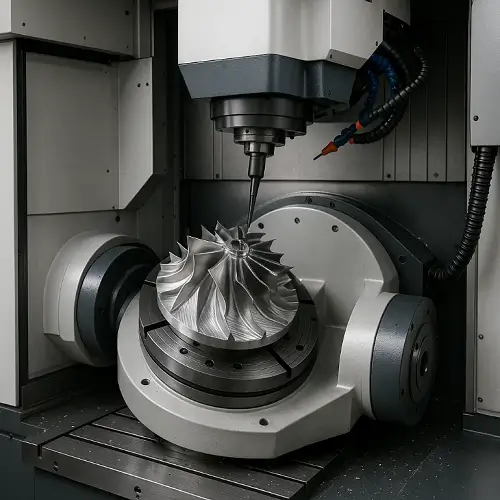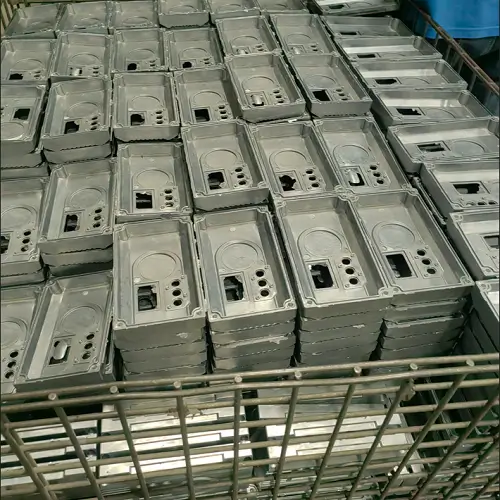
Thin-wall machining appears in far more CNC projects than many people expect. Thin edges, ribs, and reduced wall sections are rarely added for appearance. In most cases, they exist because the part must fit into a tight assembly, meet weight targets, or satisfy functional constraints.
The real question is not whether thin walls exist in a design, but whether those thin walls can be machined in a stable and repeatable way.
If you have ever seen a part that looked fine after roughing but moved or distorted during finishing, you have already encountered the real challenge of thin-wall CNC machining.
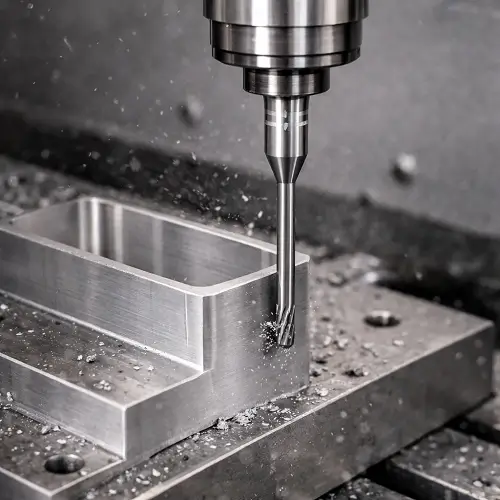
Why Thin-Wall Parts Are Difficult to Machine with CNC
The core limitation of thin-wall machining is stiffness. As material is removed, the remaining wall gradually loses its ability to resist cutting forces. Even relatively light tool engagement can cause deflection once the wall becomes slender.
When deflection begins, several issues tend to appear together. Tool engagement becomes inconsistent, vibration shows up in the surface finish, and dimensional control becomes difficult. In many cases, rough machining looks acceptable, while distortion only becomes visible after the final material is removed. This often leads to the assumption that tooling or feeds are the problem, when the real issue is structural behavior.
Thermal effects add another layer of complexity. Thin sections heat up and cool down unevenly. During machining, temporary expansion can occur, followed by spring-back once the part cools. If tight tolerances are involved, even small thermal shifts become noticeable.
If your part relies heavily on thin edges or thin ribs, this behavior is not an exception—it is something that must be planned for.
How Material Choice Affects Thin-Wall CNC Machining
Material selection sets the baseline for thin-wall feasibility, but it never works in isolation. Differences in cutting force, elasticity, and thermal behavior become amplified as wall thickness decreases.
Aluminum Alloy Thin-Wall Parts
Aluminum alloys are the most common material for thin-wall CNC parts and generally provide a good balance between machinability and strength. With proper support, aluminum walls around 0.8 to 1.0 mm are routinely achievable in production.

The main challenge with aluminum is elastic deformation. Thin aluminum walls tend to flex during cutting and spring back after tool engagement, which can affect flatness and parallelism. This behavior becomes more pronounced on long, unsupported edges and wide thin panels.
If your design includes long free-standing aluminum walls, the risk usually comes from spring-back rather than chatter.
Titanium Alloy Thin-Wall Parts
Titanium alloys push thin-wall machining close to practical limits. High cutting forces combined with poor thermal conductivity make thin walls sensitive to both heat buildup and tool pressure. Even when vibration is controlled, residual stress can cause slight movement after machining.
In many real-world projects, titanium thin walls are kept above 1.0 mm unless geometry provides strong structural support. When thinner sections are required, cutting parameters must be conservative, cycle times increase, and process stability becomes the primary concern rather than productivity.
This is often where feasibility matters more than nominal wall thickness on the drawing.
Magnesium Alloy Thin-Wall Parts
Magnesium alloys machine easily and generate relatively low cutting forces, which makes them attractive for thin-wall applications. Under good support conditions, walls in the 0.6 to 0.8 mm range are achievable without excessive vibration.
The limitation of magnesium is stiffness rather than machinability. Unsupported thin edges can deform during finishing or even during handling. In these cases, fixturing strategy and support geometry matter more than aggressive cutting parameters.
The Role of Geometry and Support in Thin-Wall Stability
In practice, geometry often has more influence on thin-wall success than material. Thin walls with curvature, shallow arcs, or contoured surfaces usually machine more cleanly than perfectly straight, free-standing walls. The geometry itself adds stiffness and helps distribute cutting forces instead of concentrating them at a single edge.
Support conditions further amplify this effect. A wall supported at both ends behaves very differently from a cantilevered edge. Short walls and ribs with solid backing are far more predictable. In aluminum parts, short ribs with good support can reach height-to-thickness ratios around 15:1 without major stability issues. Compact ribs may approach 20:1 when wall length is limited and tool engagement remains controlled.
Problems typically begin when thin walls turn into long, unsupported edges. Even when nominal thickness looks reasonable, vibration and edge collapse often appear during finishing. At that point, the limiting factor is no longer tooling or feeds, but the structure itself.
If your part includes large free edges, this is usually where risk concentrates.
How Part Design Can Amplify Thin-Wall Machining Risk
Certain design features consistently increase thin-wall machining difficulty. Large, flat thin panels struggle to maintain flatness. Long, narrow walls behave like springs under side load. Thin ribs inside deep pockets suffer from long tool reach, which magnifies vibration.
Sudden transitions from thick to thin sections are another common source of trouble. Internal stress concentrates at these transitions, and once material is removed, the part may shift unexpectedly. These effects are often subtle during roughing and become obvious only during finishing, when the wall no longer has enough mass to stabilize itself.
If distortion appears late in machining, the root cause is often already built into the design.
Why Fixturing Matters More Than Expected
Fixturing is frequently the hidden variable in thin-wall CNC machining. A wall that looks stable in CAD can distort simply due to uneven clamping pressure.
Standard vise clamping works well for thicker sections, but thin walls often require soft jaws, full-contact support, or custom fixtures that distribute clamping force evenly. Vacuum fixturing can be effective for thin plates, but only when backing support and sealing are properly designed.
Re-clamping introduces additional risk. Thin-wall parts machined in multiple setups may shift slightly each time they are repositioned. These small movements accumulate and often appear as flatness or alignment issues at the final inspection stage.
CNC Machine and Strategy Effects on Thin-Wall Results
Machine rigidity plays a larger role in thin-wall machining than in general CNC work. Spindle stability, axis stiffness, and tool runout all become more visible as wall thickness decreases.
Cutting strategy matters just as much. Light radial engagement, controlled step-downs, and consistent toolpaths help keep cutting forces predictable. In many cases, leaving a small amount of material for a final stabilization pass produces better results than attempting to finish a thin wall in a single cut.
Thin-wall machining favors stability over speed. Conservative strategies often reduce rework and scrap, even if cycle time increases slightly.
When CNC Machining Is Not the Best Choice for Thin Walls
There are situations where CNC machining is simply not the right solution. Large parts with wide, unsupported thin sections are difficult to control consistently. High-volume production with aggressive thin-wall requirements may be better suited to forming, stamping, or molding processes followed by secondary machining.
Recognizing these limits early prevents costly iterations later.
Why choose Jeekrapid for thin-walled machining?
Thin-wall CNC machining is rarely about chasing a theoretical minimum wall thickness. The real difficulty lies in how material behavior, geometry, support, and process stability interact once cutting begins. Many thin-wall issues only appear late in machining, when there is no longer enough structure left to correct them.
If a design already depends on thin edges, thin ribs, or reduced wall sections, confirming feasibility early can save time and cost. Small adjustments to wall length, local support, or machining strategy often determine whether a thin-wall part runs smoothly or becomes a repeatability problem.
JeekRapid regularly machines thin-wall components across aluminum, magnesium, titanium, and other engineering materials, where these challenges are addressed from the start rather than discovered at the end.
Ready to machine the thin-wall parts you need?
FAQs
What is considered a thin wall in CNC machining?
A wall is typically considered thin when it starts to deflect under cutting forces during finishing. In practice, this often begins around 1.0 mm for aluminum, with limits increasing for harder or less stable materials.
Can CNC machining handle thin-wall parts reliably?
Yes, thin-wall parts can be machined reliably when geometry, support, and fixturing are properly designed. Most issues come from long unsupported walls rather than the CNC process itself.
Which materials work best for thin-wall CNC machining?
Aluminum alloys are the most common choice due to their balance of strength and machinability. Magnesium allows thinner walls under good support, while titanium requires more conservative strategies to maintain stability.