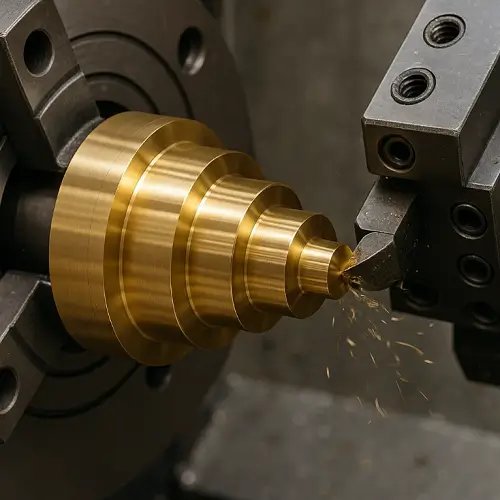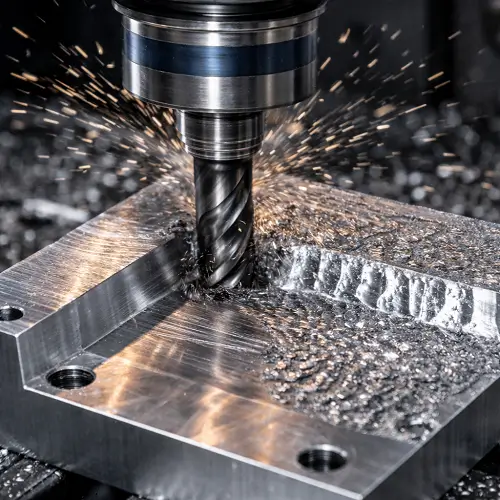
CNC machining is often described as a cutting process, but in real production, machining results depend on how machines, materials, tolerances, and process planning are handled together. Parts drift out of tolerance, fail inspection, or become unnecessarily expensive not because CNC machining lacks capability, but because these factors are treated in isolation.
On the shop floor, machining problems rarely come from a single mistake. More often, they are the result of reasonable decisions made without considering how they interact. A tolerance specified without understanding material behavior, a machine selected without considering rigidity, or a process planned without accounting for inspection and setup stability can all lead to rework or scrap.
In production environments, most CNC issues are discovered late not because the process is unknown, but because the interaction between these factors was underestimated early on.
This page explains how these elements connect in practical CNC machining and how engineers evaluate them as a system rather than as separate topics.
CNC Machines: Capability Defines the Practical Limits
CNC machines define the physical limits of what can be produced. Axis configuration, machine rigidity, spindle capability, control accuracy, and thermal behavior all influence achievable geometry and consistency.
In production environments, machine selection is rarely about choosing the most advanced equipment available. The goal is to match machine capability to part geometry and tolerance requirements. A standard 3-axis vertical machining center may be sufficient for prismatic aluminum components, while parts with complex surfaces or tight positional relationships often require continuous multi-axis motion to maintain accuracy.
Rigidity often matters more than speed. Insufficient stiffness leads to chatter, tool deflection, and inconsistent surface finish, especially when machining harder materials or thin-wall features. Thermal stability also becomes critical in longer cycles, where temperature changes can shift dimensions beyond tolerance.
Inconsistent results are often traced back to machines being pushed outside their stable operating range, rather than a lack of nominal accuracy. From an engineering perspective, machine capability should be evaluated based on repeatability under load, not just published specifications.
A detailed discussion of CNC machine configurations and their practical differences can be found here:
→ CNC Machine Types and Capabilities
Materials in CNC Machining: Machining Behavior Over Datasheets
Materials behave very differently during CNC machining, even when their basic properties appear similar. Strength, hardness, ductility, thermal conductivity, and internal stress all influence cutting forces, tool wear, and dimensional stability.
In practice, material choice often determines whether a specified tolerance is realistic or unnecessarily costly. Aluminum alloys generally allow higher cutting speeds and stable finishes, while many stainless steels introduce heat buildup and accelerated tool wear. Engineering plastics may machine cleanly but can introduce issues related to creep, thermal expansion, or stress relaxation after machining.
Many machining issues attributed to tooling or programming are ultimately material-driven, especially when internal stress or heat sensitivity is overlooked. Engineers often discover material-related instability only after parts leave the fixture and begin to relax.
Material behavior also affects how parts respond after they are released from fixturing. A part that measures correctly on the machine may shift slightly once unclamped if internal stresses are not considered during process planning.
Common material considerations in CNC machining are explained in more detail here:
→ Materials Used in CNC Machining
Tolerances and Accuracy: Understanding the Real Cost of Precision
Tolerances define allowable variation, but tighter tolerances do not automatically result in better parts. In CNC machining, tolerance decisions influence setup strategy, tooling selection, inspection effort, and overall manufacturing cost.
A tolerance that appears reasonable on a drawing may require additional setups, specialized fixturing, or secondary finishing operations when applied to real production. In many cases, tightening a tolerance by a small amount can significantly increase machining time and inspection requirements without improving functional performance.
In real projects, tolerances that are not functionally required are one of the most common sources of avoidable machining cost.
Accuracy is also cumulative. Positional relationships, flatness, and parallelism are affected by machine repeatability, fixture stability, and thermal effects. Engineers who understand this treat tolerances as part of a broader system rather than as isolated specifications.
A practical explanation of CNC tolerances and how they are applied in production is available here:
→ CNC Machining Tolerances Explained
Process Planning: Turning Capability Into Consistency
CNC machining success is rarely determined by a single factor. Process planning connects machine capability, material behavior, and tolerance requirements into a workable manufacturing sequence.
Setup strategy, operation order, tool selection, and fixturing all influence part stability throughout machining. Poor process planning often shows up as inconsistent dimensions between batches, excessive manual correction, or inspection failures that are difficult to trace back to a single cause.
Process-related problems often surface only after the first few parts are inspected, when adjustments become costly and schedules are already committed. Consistent results usually come from conservative planning rather than aggressive optimization.
This becomes especially important in prototype and low-volume production, where flexibility often matters more than cycle time. In these cases, engineering judgment and planning discipline play a larger role than automation alone.
Related process and planning considerations are discussed here:
→ CNC Machining Process and Planning
How These Factors Work Together in Real CNC Machining
In real CNC machining projects, machines, materials, tolerances, and process planning cannot be evaluated independently.
A tolerance that appears achievable may become unrealistic when paired with a specific material. A capable machine may still struggle if part geometry forces unstable tool engagement. A well-planned machining sequence can fail if inspection strategy does not account for how the part relaxes after machining.
In practice, experienced engineers rarely evaluate these factors in isolation. Decisions are made by considering how changes in one area affect the entire machining system. This systems-level view is what separates stable production from short-term success on individual parts.
CNC Machining in Practical Production Contexts
Beyond technical capability, CNC machining decisions are influenced by production volume, delivery timelines, and downstream assembly requirements. A part designed for low-volume machining often involves different trade-offs than one intended for long-term production.
Production constraints often expose weaknesses in earlier machining decisions that were acceptable during prototyping. Early engineering feedback during the machining phase frequently prevents issues later in assembly or field use.
For this reason, CNC machining is not simply an execution step, but a critical part of product development and manufacturing planning.
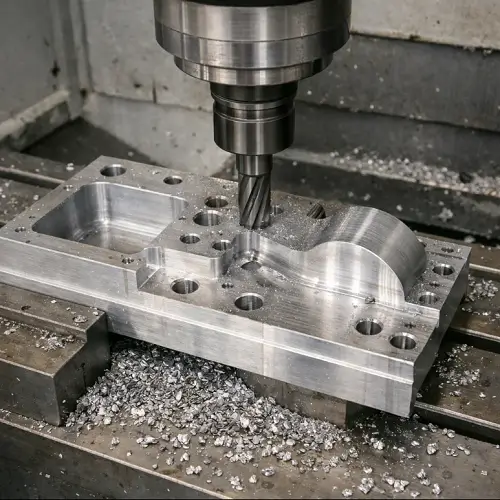
CNC Machining Support at JeekRapid
Based on these engineering considerations, JeekRapid supports CNC machining projects from prototype through low-volume production, with engineering feedback integrated into each stage of machining.
Rather than treating machines, materials, and tolerances as separate concerns, JeekRapid approaches CNC machining as a connected system focused on stability, accuracy, and practical manufacturability.
For production-oriented CNC machining support, see:
→ CNC Machining Services
In practical terms, a CNC machined part at JeekRapid moves through the same engineering steps discussed above. Each project starts with design review and functional intent clarification, followed by process planning that defines machining sequence, fixturing strategy, and tool selection. Material behavior and tolerance requirements are evaluated before cutting begins, and inspection checkpoints are built into the machining process to verify dimensional stability as work progresses. Only after these steps are aligned does the part move into stable production machining.