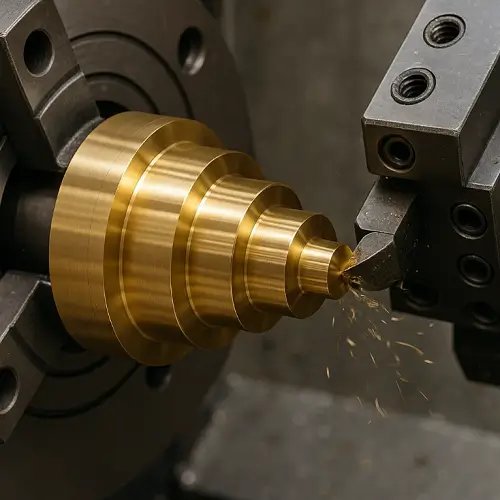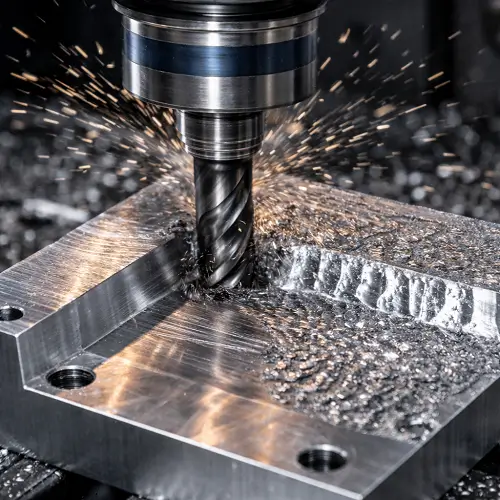
CNC machining and conventional machining are two common ways to produce metal and plastic parts, but they differ fundamentally in how cutting is controlled. In CNC machining, tool movement follows predefined digital instructions, while conventional machining relies on continuous manual control. This difference affects accuracy, consistency, setup effort, and how easily parts can be produced again under the same conditions.
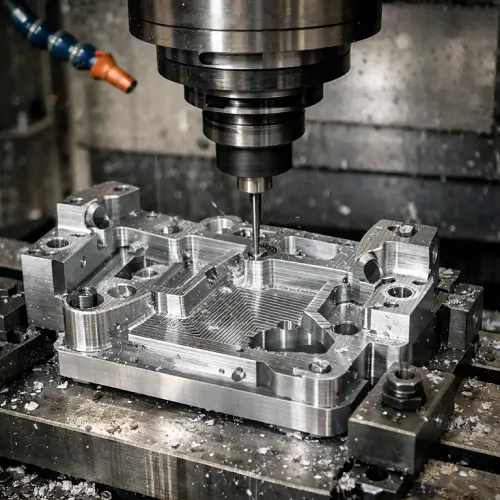
What Is CNC Machining?
CNC machining is a manufacturing process where cutting tools are controlled by pre-defined digital instructions rather than continuous manual input. Before machining starts, tool motion, cutting depth, speeds, and the order of operations are decided and fixed into a program.
From a user’s perspective, this means most decisions are made before the first chip is cut. Once the program is running, the machine follows the same motion every time. The cutting process no longer depends on the operator’s hand movement or moment-to-moment judgment. As long as the setup and program are correct, the output stays consistent.
This is why CNC machining is often associated with precision and reliability. It shifts uncertainty away from the machining stage and into preparation and planning.
Advantages of CNC Machining
Users usually turn to CNC machining when part requirements become harder to control through manual operation alone. As tolerances tighten, part geometry becomes more complex, or multiple pieces need to behave the same way in assembly, small variations start to create real problems.
CNC machining addresses these issues by moving most decisions out of the cutting stage and into the preparation stage. Instead of relying on operator judgment during machining, the process follows predefined instructions, which changes where uncertainty appears and how risk is managed during production.
Accuracy and Repeatability
In CNC machining, accuracy refers to how closely a part matches its intended dimensions, while repeatability refers to how consistently those dimensions are held across multiple parts. Because tool motion is digitally controlled, the same cutting path is repeated every cycle.
For users, this shows up most clearly during assembly. Hole positions line up more consistently, flat surfaces stay parallel, and parts from different batches behave the same way. Instead of checking and adjusting each part, users can rely on dimensions staying within a known range.
This becomes especially important when parts must mate with other components, when replacements are needed later, or when multiple suppliers are involved.
Complex Geometry Control
As part geometry becomes more complex, it becomes harder to rely on manual positioning and visual judgment. CNC machining handles complex shapes by following coordinated toolpaths that maintain relationships between features.
For users, this means features such as angled faces, curved profiles, and precise hole patterns can be produced without increasing setup complexity at every step. The geometry is controlled by the program, not by how carefully an operator turns a handwheel.
This reduces the risk of cumulative errors as designs become more detailed.
Process Stability
Once a CNC machining process is proven, it tends to behave the same way every time it runs. Cutting parameters, motion sequence, and cycle time remain stable unless something is intentionally changed.
From a user’s standpoint, this stability simplifies planning. Inspection results become predictable, delivery schedules are easier to estimate, and quality issues are easier to trace back to a specific cause instead of guessing whether the issue came from operator variation.
Reduced Dependence on Operator Technique
CNC machining reduces how much results depend on individual operator habits. After setup, the machine executes the same motions regardless of who is supervising it.
This matters for users working across multiple shifts or facilities. Quality becomes tied more to process control than to individual skill, which reduces variability that is hard to manage at scale.
Efficiency Over Repeated Runs
Although CNC machining requires preparation upfront, it becomes efficient when parts are produced repeatedly. Once setup is complete, each cycle takes roughly the same amount of time, and manual intervention is limited.
For users planning repeat orders or long-running projects, this consistency reduces per-part effort and lowers the risk of delays caused by re-learning or re-adjusting the process.
Scalability
CNC machining allows users to increase quantity without redesigning the entire manufacturing approach. A program developed for early parts can often be reused with minor adjustments.
This makes it easier to move from prototype to production while keeping dimensional behavior consistent.
Limitations of CNC Machining
CNC machining solves many problems, but it also introduces constraints that become visible when part requirements are still evolving, tolerances are being adjusted, or frequent changes are expected during machining.
Upfront Setup Time
Before any cutting begins, CNC machining requires programming, fixture preparation, and setup verification. This effort happens regardless of whether one part or many parts are produced.
For users who need a single simple part or a quick modification, this preparation can feel disproportionate. The machine may spend more time being prepared than actually cutting material.
Decisions Locked In Advance
Once a CNC program is running, the machine follows it exactly. If something is not correct in the program or setup, the issue will repeat consistently.
For users, this means mistakes are not gradual—they are systematic. Problems must be identified, traced back to preparation, and fixed before machining continues, rather than adjusted naturally during cutting. This is especially noticeable during early-stage projects or first-run parts.
Limited Adjustment During Machining
CNC machining does not allow continuous tuning while the cut is happening. Adjustments usually require stopping the machine and changing offsets or code.
This becomes noticeable when designs are not fully finalized or when parts need to be fitted to existing components. Compared to manual machining, where adjustments happen naturally, CNC machining can slow down exploratory or fitting-heavy work.
Maintenance and Downtime Risk
CNC machines rely on precise mechanical and electronic systems to maintain accuracy. Maintenance and calibration are part of keeping results stable.
For users working on tight schedules, unexpected downtime, recalibration, or machine drift can delay delivery and disrupt production planning more than with simpler equipment.
Preparation Determines Results
CNC machining does not eliminate skill—it shifts it. Results depend heavily on how well the job is prepared.
Poor preparation can lead to repeated defects before issues are noticed, which increases risk when producing multiple parts.
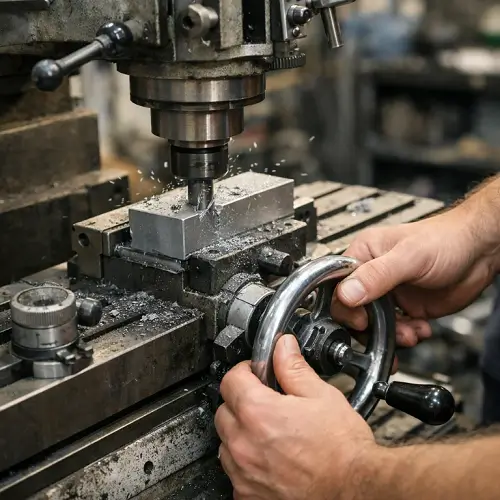
What Is Conventional Machining?
Conventional machining relies on direct human control. Cutting tools are guided through handwheels or levers, and adjustments are made continuously while the cut is being observed.
During machining, operators respond to sound, vibration, chip formation, and surface appearance. Feed rate and depth are adjusted as the part takes shape, rather than being fixed entirely before cutting begins.
For users, this means decisions are made at the machine instead of inside a software program. When dimensions are uncertain or parts need to be fitted gradually, this hands-on control allows changes to happen naturally during the machining process, rather than requiring the job to stop and restart.
Advantages of Conventional Machining
Conventional machining remains widely used because it fits situations where not everything is known in advance. When drawings are incomplete, dimensions need to be tested, or materials behave differently than expected, manual control allows users to react immediately instead of committing to decisions too early.
Real-Time Adjustment
In conventional machining, adjustments are part of the cutting process itself. Operators can change feed rate, depth of cut, or tool position while the machine is running.
For users working on fitting parts, repair work, or early-stage designs, this means dimensions can be tuned gradually based on how the part actually behaves. Instead of locking values in advance, the final size is reached through controlled adjustment during machining.
Lower Barrier to Start
Manual machines require minimal preparation before cutting begins. Parts can often be machined directly from a drawing without programming or complex setup.
This makes conventional machining practical when time matters more than repeatability. For urgent jobs, maintenance tasks, or early development work, users can move from drawing to cutting quickly without spending time on preparation that may change later.
Practical for Simple and Stable Parts
When part geometry is simple and dimensions are already well understood, conventional machining can be both efficient and reliable. Repetitive operations with clear visual reference can be performed consistently by experienced operators.
In these cases, users may choose manual machining because it meets functional requirements without the extra effort of automation. The process stays straightforward, and setup remains minimal.
Direct Problem Solving at the Machine
Conventional machining works well when drawings are incomplete or parts must match existing components. Adjustments are made directly at the machine based on fit and observation.
For users, this shortens the feedback loop. Instead of stopping the job to revise programs or re-prepare setups, changes are made immediately as the part is being produced.
Limitations of Conventional Machining
Results Depend on the Operator
Because control is manual, results vary with operator skill and consistency. Different shifts or operators may produce slightly different outcomes even when working from the same drawing.
For users, this variability often shows up during inspection and assembly. Parts may meet dimensional limits individually, but small differences in feature location, surface finish, or edge condition can affect how parts fit together. When multiple people or shifts are involved, maintaining uniform behavior becomes more difficult.
Harder to Maintain Consistency Over Time
Manual control makes it more difficult to hold identical dimensions across multiple parts, especially when positional accuracy matters.
This issue becomes more noticeable not just as quantity increases, but as time passes. Parts produced days or weeks apart may begin to show subtle differences as tools wear, setups change, or different operators take over. For users who need repeat orders or long-term dimensional stability, this can create downstream adjustment or rework.
Less Efficient for Long Runs
As production volume grows, conventional machining requires continuous attention for each part. The operator must remain involved throughout the entire run.
For users, this limits how tightly cycle time can be controlled. Even small pauses or variations accumulate over longer runs, making manual machining less competitive when output needs to stay consistent over time.
Challenges with Complex Geometry
As part geometry becomes more complex, conventional machining begins to show its limits. Features such as angled surfaces, curved profiles, intersecting holes, or tight positional relationships often require multiple setups when controlled manually.
Each additional setup introduces a new reference point. For users, this means small positioning differences can accumulate across operations, even if each individual cut appears acceptable. Maintaining consistent relationships between features becomes increasingly difficult as complexity grows.
In practical terms, this often leads to longer setup time, more frequent checking, and higher risk of mismatch during assembly. When parts rely on precise geometric relationships rather than just individual dimensions, manual control struggles to maintain the same level of consistency across multiple pieces.
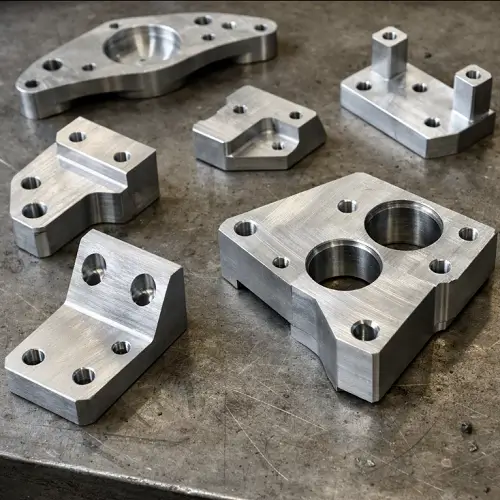
CNC Machining vs Conventional Machining: Key Differences
Rather than repeating individual advantages, this section compares how the two processes behave side by side when users are making a direct choice.Now that both processes have been examined individually, the differences between CNC machining and conventional machining become clearer when viewed from a production and decision-making perspective.
Part Accuracy and Complexity
The most fundamental difference between CNC machining and conventional machining lies in how cutting motion is controlled. CNC machining uses computer-controlled instructions to guide tool movement, allowing dimensions and feature relationships to be held with higher accuracy and repeatability.
Because toolpaths are predefined and executed consistently, CNC machining can maintain tight tolerances and complex feature relationships across multiple parts. This is especially important when parts must assemble reliably or when small deviations can affect function.
Conventional machining, by contrast, relies on the operator to guide the tool manually. While skilled machinists can achieve impressive results, human control introduces natural variation. Fatigue, subtle differences in hand movement, and judgment during cutting can all affect dimensional accuracy and surface finish. As part geometry becomes more complex, maintaining consistency often requires multiple setups and increased inspection.
Material Capability
Both CNC machining and conventional machining can process a wide range of materials, but their practical limits differ.
CNC machining supports a broader range of materials because cutting conditions can be precisely controlled and paired with advanced tooling. Hard materials such as stainless steel, titanium alloys, Inconel, and even ceramics or engineered plastics can be machined reliably using appropriate tools, coatings, and process strategies. Non-traditional methods such as EDM or waterjet cutting further expand material options beyond what manual cutting alone can handle.
Conventional machining is typically more suitable for softer and easier-to-cut materials. Tool hardness and cutting force become limiting factors when working with harder alloys. Excessive tool wear, poor surface finish, or safety risks can occur if material hardness exceeds what manual tooling can handle effectively. As a result, conventional machining is more commonly used with materials such as aluminum alloys, brass, mild steel, and similar metals.
Production Volume and Efficiency
CNC machining is designed for repeatability and automation, which makes it well suited for medium to high production volumes. Once a program is validated, the same part can be produced repeatedly with minimal variation. Automatic tool changes, consistent cycle times, and the ability to run continuously all contribute to higher throughput.
For users producing multiple identical parts, this consistency reduces per-part effort and shortens overall production time.
Conventional machining, on the other hand, is more dependent on continuous operator involvement. Each part requires direct attention, which limits how quickly output can scale. While efficient for small quantities or one-off work, manual machining becomes less competitive as production volume increases.
Cost Considerations
CNC machining typically involves higher upfront costs. Equipment investment, programming time, and tooling preparation all contribute to initial expense. For small quantities, this setup cost may outweigh short-term benefits.
However, as production volume increases, CNC machining often becomes more cost-effective. Reduced labor involvement, lower scrap rates, and stable cycle times help spread setup costs across more parts, lowering the cost per unit.
Conventional machining usually requires lower initial investment, but labor costs rise with volume. Manual operation, longer machining time, and the potential for rework can increase total cost during extended production runs.
Skill Requirements
CNC machining reduces dependence on individual operator technique during cutting. Once a program and setup are correct, results remain consistent regardless of who is supervising the machine. This helps standardize quality across shifts and facilities.
Conventional machining relies heavily on operator skill and experience. Skilled machinists can produce excellent parts, but consistency depends on maintaining that same level of expertise over time. Training, experience differences, and operator availability all affect results, especially for complex parts.
Design Flexibility During Machining
CNC machining requires most decisions to be made before cutting begins. While this improves repeatability, it limits flexibility during machining when adjustments are needed.
Conventional machining allows real-time changes during cutting. For fitting work, repairs, or designs that are still evolving, this flexibility can reduce interruptions and speed up iteration.
Conclusion
CNC machining and conventional machining address different production needs rather than competing directly with each other. The key difference lies in when decisions are made. CNC machining requires most decisions to be fixed before cutting begins, while conventional machining allows decisions to be made during the cutting process.
For parts that require tight tolerances, complex geometry, consistent behavior across batches, or scalable production, CNC machining offers stability and repeatability that manual control cannot easily match. It reduces variation and supports predictable results once the process is established.
Conventional machining remains valuable when flexibility matters more than repeatability. For one-off parts, fitting work, repairs, or projects where dimensions and designs are still evolving, manual control allows faster adjustment without the overhead of full automation.
Understanding these differences helps users choose a process that fits not only the part design, but also the stage of development, production volume, and tolerance for change.
FAQs
Is CNC machining always better than conventional machining?
No. CNC machining is better when repeatability, tight tolerances, and complex geometry matter. Conventional machining can be more practical for one-off parts or work that requires frequent adjustment during cutting.
Which machining method is better for prototypes?
Early-stage prototypes often benefit from conventional machining because designs change frequently. Once the design stabilizes and dimensions need to be repeated consistently, CNC machining becomes the better choice.
Can conventional machining achieve tight tolerances?
Skilled machinists can achieve tight tolerances on individual parts, but maintaining the same tolerance consistently across multiple parts or batches is more difficult than with CNC machining.
How should I choose between CNC machining and conventional machining?
Focus on design stability, tolerance requirements, production volume, and how much adjustment is expected during machining. These factors usually matter more than the machine type itself.