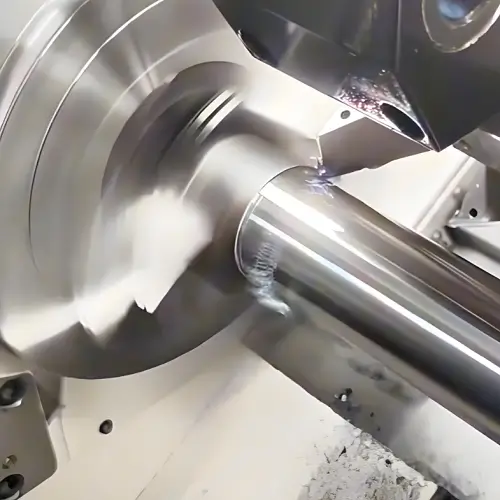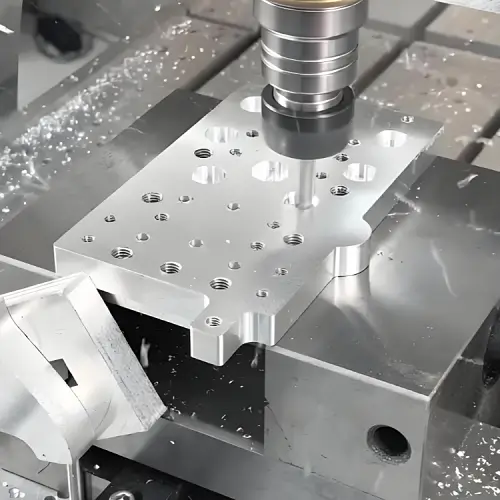
CNC milling machines are one of the most commonly used tools in modern machining shops. From early-stage prototypes to stable production runs, milling remains a core process for manufacturing non-rotational parts with complex geometry.
Compared with manual milling, CNC-controlled milling brings repeatability, process stability, and predictable results. Tool motion is driven by programmed paths rather than operator judgment, which allows complex features to be machined consistently across multiple parts. For many machining projects, CNC milling becomes the baseline process around which other operations are planned.
What Is a CNC Milling Machine?
A CNC milling machine removes material using a rotating cutting tool while the workpiece is fixed on the table. The tool follows programmed movements along multiple axes to create flat surfaces, pockets, contours, slots, holes, and assembly features.
In real production, CNC milling is typically used for parts that contain multiple features on different planes, require accurate feature-to-feature relationships, or must maintain dimensional consistency across batches. Unlike CNC turning, which is optimized for rotational parts, milling is better suited for structural components, housings, and complex geometric shapes.
Types of CNC Milling Machines
CNC milling machines are commonly classified based on spindle orientation, machine structure, and axis configuration. Each type supports different machining priorities, and choosing the wrong configuration often leads to unnecessary setups or unstable processes.
Vertical CNC Milling Machines
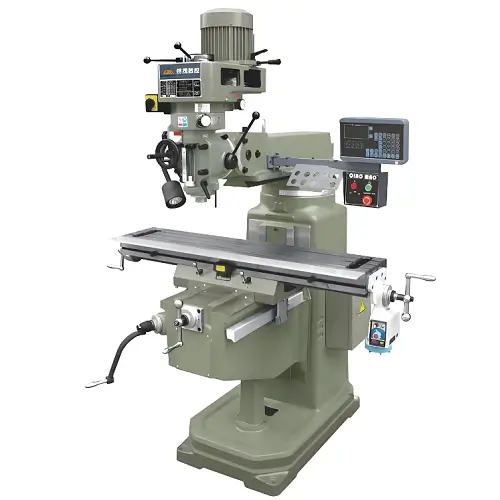
Vertical CNC milling machines have a spindle oriented perpendicular to the worktable, with the cutting tool approaching the part from above. This is the most widely used milling configuration in general machining.
In practice, vertical mills are commonly used for face milling, pocket machining, drilling, slotting, and contouring. The vertical orientation makes setup and part inspection intuitive, which is why vertical milling machines are frequently used for prototypes, general-purpose components, and small to medium production batches.
From a process standpoint, vertical mills are best suited for parts where most features can be accessed from one primary direction. When multiple side features or deep cavities are involved, additional setups may be required, which can introduce alignment risk if not carefully managed.
Horizontal CNC Milling Machines
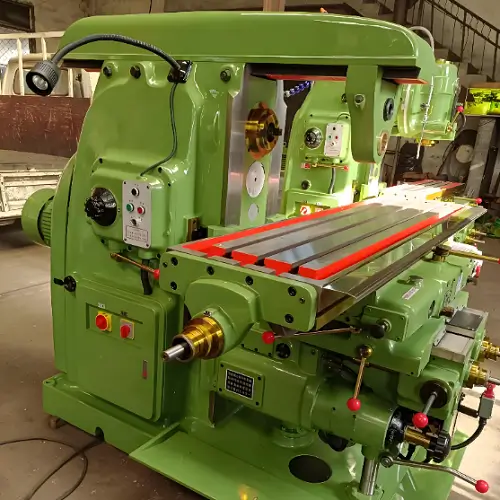
Horizontal CNC milling machines feature a spindle that runs parallel to the worktable, allowing the cutting tool to engage the workpiece from the side. This configuration improves chip evacuation and supports heavier cutting loads.
In production environments, horizontal mills are often selected for parts that require significant material removal, deep side features, or consistent cycle times. Better chip flow reduces heat accumulation and tool wear, which becomes important during long production runs.
Horizontal milling machines are also commonly integrated with pallet systems and automated loading. This makes them suitable for repeat production where throughput and process consistency matter more than frequent manual intervention.
Gantry CNC Milling Machines
Gantry CNC milling machines are designed for large or heavy workpieces that require high structural rigidity. The machine frame spans over the worktable, allowing the cutting head to move while the part remains fixed.
These machines are typically used for large molds, base plates, machine frames, and structural components. In these applications, part size and weight make repeated repositioning impractical, and overall flatness and alignment must be maintained throughout extended machining cycles.
Gantry milling is often chosen not for speed, but for stability over long machining durations, especially when multiple operations must be completed without disturbing the setup.
3-Axis CNC Milling Machines
Three-axis CNC milling machines operate along the X, Y, and Z linear axes and represent the most basic configuration in CNC milling.
For parts with relatively simple geometry and limited access requirements, 3-axis milling remains an efficient and cost-effective solution. Many brackets, housings, and general mechanical components can be completed using this setup without introducing unnecessary complexity.
However, when parts require multiple angled features or access from several directions, reliance on a 3-axis machine often leads to additional setups, which can increase both cycle time and alignment risk.
Multi-Axis CNC Milling Machines (4-Axis and 5-Axis)
Multi-axis CNC milling machines add one or more rotational axes to the standard three-axis configuration. This allows the tool or workpiece to be positioned at different angles during machining.
In real production, multi-axis milling is selected not simply for geometric capability, but to reduce setup count. Fewer setups mean fewer opportunities for accumulated error, which is critical for parts with tight positional relationships between features.
Multi-axis machines are commonly used for aerospace components, including impellers and other complex flow-path parts, as well as medical parts and complex housings where feature alignment and surface continuity are more important than raw removal speed (these machines represent the majority of milling capacity in our shop today).
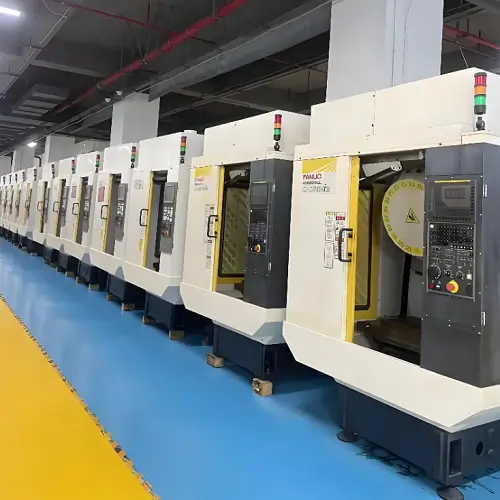
CNC Milling Machine Functions in Real Production
At its core, the function of a CNC milling machine is controlled material removal. A single milling setup can perform facing, pocketing, profiling, drilling, and finishing operations as part of a coordinated process.
In practical machining, milling operations are often divided into roughing, semi-finishing, and finishing stages. This separation allows cutting forces, heat generation, and dimensional stability to be managed more effectively over the course of production.
From an engineering perspective, the value of CNC milling lies in its ability to combine multiple operations while maintaining positional consistency. When the process is planned correctly, milling supports repeatable production rather than relying on post-process adjustment.
Advantages and Limitations of CNC Milling
Advantages
CNC milling machines offer strong flexibility across a wide range of part geometries and materials. Aluminum, steel, stainless steel, and many engineering plastics can be machined with consistent results when the process is properly controlled.
Milling also supports complex feature integration within a single setup, which simplifies downstream assembly and inspection. This flexibility makes CNC milling suitable for both development work and production programs.
Limitations
Despite its versatility, CNC milling is not always the most efficient solution for every part. Rotational components are generally better suited for CNC turning, and highly complex multi-face parts may require advanced machines or additional setups.
In real-world manufacturing, CNC milling is often combined with turning, grinding, or secondary operations to achieve the best overall process balance rather than relying on a single machine type.
Applications of CNC Milling Machines
CNC milling machines are widely used across different industries, primarily because they can produce complex features on non-rotational parts while maintaining consistent geometric relationships. In practice, milling applications are better understood by looking at the actual components being produced rather than industry labels alone.
Aerospace Components
In aerospace manufacturing, CNC milling is commonly used for structurally complex and geometrically sensitive parts. Typical components include impellers, blisks, turbine housings, brackets, and structural supports where feature alignment, surface continuity, and multi-face accuracy are critical.
Many of these parts cannot be completed in a single orientation. Multi-axis milling is often selected to reduce setup changes and maintain consistent relationships between flow paths, mounting features, and reference surfaces.
Mold and Tooling Parts
CNC milling plays a central role in mold and tooling production. Common milled components include mold bases, cavity inserts, core blocks, ejector plates, and custom fixtures.
These parts often require stable flatness, accurate pocket geometry, and predictable surface finish. Milling allows tooling components to be produced with controlled geometry that supports downstream molding or assembly processes.
Mechanical and Industrial Components
For general industrial applications, CNC milling is used to manufacture brackets, housings, base plates, adapter plates, and mounting components.
These parts typically contain multiple functional surfaces, threaded holes, slots, and datum features. Milling is well suited for maintaining positional accuracy between these features, especially when parts are produced in repeat batches.
Automotive and Electronics Parts
In automotive and electronics manufacturing, CNC milling is commonly applied to enclosures, mounting frames, heat sinks, sensor brackets, and test fixtures.
These components often demand tight positional control between features while being produced in moderate to high volumes. Milling supports consistent geometry across production runs, which simplifies assembly and inspection.
Plastics and Lightweight Components
CNC milling is also widely used for engineering plastic parts, such as prototype housings, functional covers, insulating components, and lightweight structural parts.
For low to medium volumes, milling provides fast iteration without the tooling investment required for molding. It is especially useful when dimensional stability and feature accuracy are required during early-stage development.
Conclusion
CNC milling machines play a foundational role in modern machining operations. Their value is not defined by precision alone, but by how effectively they adapt to different part geometries while maintaining stable, repeatable processes.
In practical manufacturing, selecting the right type of CNC milling machine often matters more than choosing the highest specification. Matching machine configuration to part requirements helps reduce unnecessary complexity, avoid process instability, and control production cost over time. Understanding how milling machines are used in real production leads to better decisions early in the machining process.
If a project involves complex geometry, multiple setups, or tight process stability requirements, early review of machine configuration and machining strategy can prevent downstream issues.
For projects at this stage, drawings can be reviewed to assess machining approach, setup risk, and process feasibility before production decisions are finalized.