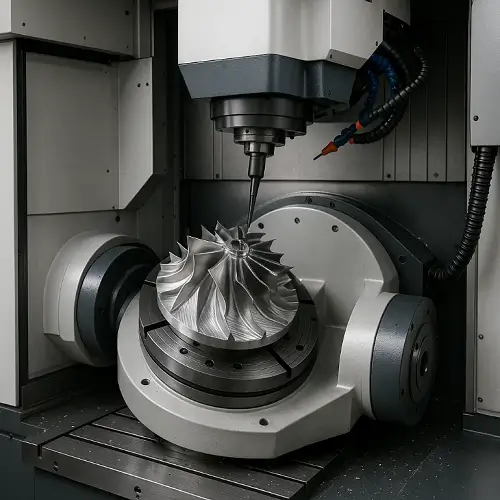
Polishing is often scheduled as a finishing step. In precision machining, it is still material removal. When material comes off the surface, geometry moves. Sometimes it moves only a few microns, but tight tolerance parts operate in microns.
Consider a simple example. A shaft at Ø20.000 ±0.01 mm has a total tolerance width of 20 microns. If polishing removes 10 microns from the diameter, half of the allowable tolerance band is consumed in one step. The part may still pass inspection, but the dimensional safety margin is no longer the same.
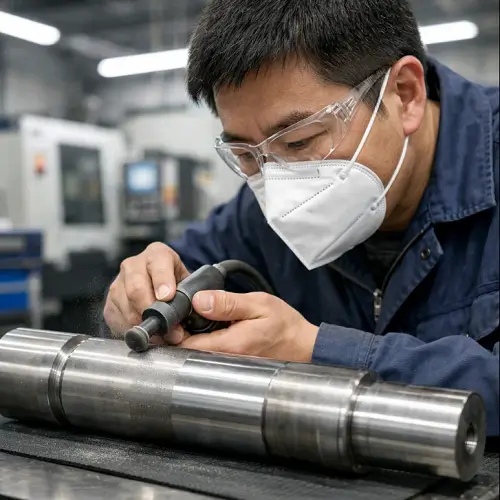
Does Polishing Affect Dimensional Tolerance?
Yes. Polishing changes dimensional results because it removes the surface that defines size. A micrometer or probe measures the outermost material present. Remove that material and the measured dimension shifts.
The shift is often subtle. A diameter that was centered at nominal can move toward the lower limit after polishing. The feature remains within specification, yet it no longer has equal margin on both sides of the tolerance band. Being “in tolerance” does not mean dimensional margin is unchanged.
Polishing pressure is also rarely perfectly uniform. Slight variations in contact can influence roundness or flatness in addition to size. The part may comply with drawing limits while its geometric balance has shifted.
How Much Material Does Polishing Remove?
Removal depends on method and process control. Light manual polishing typically removes a few microns. Mechanical buffing may remove more and often introduces greater variability. Electropolishing is generally more uniform but still reduces measurable size.
In wide-tolerance applications, those microns are negligible. In ±0.01 mm work, they represent a measurable portion of the tolerance window.
Once polishing removal becomes meaningful relative to tolerance width, it must be planned as part of dimensional control rather than treated as a cosmetic step.
Why Surface Finish Improvement Reduces Measured Size
Surface finish improves because surface peaks are removed. A machined surface is not perfectly smooth; it contains microscopic highs and lows left by the cutting tool. When Ra is reduced, those high points are physically lowered.
Those high points are part of what measurement instruments contact.
If polishing reduces peak height across a diameter, the effective outer envelope becomes smaller. The drawing still specifies Ø20.000 mm, but the physical boundary defining that size has shifted inward.
This is why a smoother part often measures slightly smaller. Surface finish improvement and dimensional size are tied to the same surface geometry. When tolerances are tight, that relationship becomes visible in inspection data.
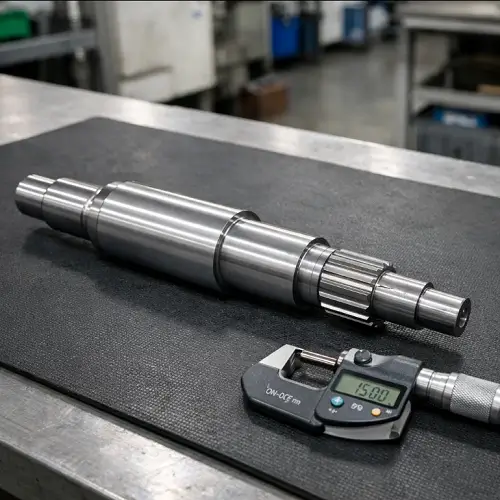
How Polishing Shifts Position Within the Tolerance Band
Tolerance defines a permissible range between upper and lower limits. During machining, features are commonly targeted near nominal to maintain balanced margin.
Polishing changes that balance.
If a diameter loses several microns, it shifts toward minimum material condition. The part may still pass inspection, but less dimensional margin remains inside the allowable band.
Polishing rarely causes immediate out-of-tolerance conditions. More often, it quietly consumes part of the tolerance window.
When Polishing Becomes Critical in Tight Tolerance Design
Polishing becomes critical when removal approaches the same scale as the tolerance width. On a ±0.05 mm feature, a few microns usually have limited impact. On a ±0.01 mm feature, the same removal changes where the part sits inside the band.
Bearing seats are one example. Interference fits may rely on only 10–20 microns of dimensional difference. Removing several microns through polishing can consume a large portion of that interference range and move the feature toward the loose side.
Precision sliding components are similarly sensitive. Clearance is controlled within a narrow window. Reduce the shaft diameter slightly and clearance increases, shrinking the usable tolerance margin between mating parts.
Sealing faces require both controlled size and flatness. Polishing can improve roughness while still consuming part of the flatness or diameter allowance if removal is uneven.
Mold cavities also require attention. Cavity dimensions are adjusted to account for material shrinkage. If polishing enlarges the cavity by several microns, the dimensional relationship between mold and molded part shifts accordingly, even though the cavity remains within machining tolerance.
Tolerance stack-up magnifies these effects. In assemblies with multiple tight features, losing a few microns on one polished surface reduces the remaining margin available to the entire system.
How Engineers Account for Polishing in Tolerance Planning
The practical solution is straightforward: treat polishing as part of dimensional control.
Leave a controlled polishing allowance during machining. If a feature is expected to lose several microns, machine it slightly above target so that it lands correctly after finishing.
Separate functional and cosmetic surfaces. Critical diameters, locating shoulders, and bearing seats should not rely on uncontrolled hand polishing.
Control variability. A predictable removal can be compensated. A removal that varies widely cannot.
Inspect after polishing. Measuring before polishing verifies only an intermediate condition. Final dimensional compliance must reflect the part’s condition after all material removal is complete.
Conclusion
Polishing does not usually push parts outside tolerance limits. What it changes is the usable dimensional margin inside those limits. When tolerances tighten to the micron level, finishing operations become part of the dimensional strategy, not decoration at the end.
In real production, machining, polishing, inspection, and cost control are connected. When these steps are split across different suppliers, responsibility for dimensional shift can become unclear.
At JeekRapid, CNC machining and surface finishing are planned together from raw material to final inspection. Expected polishing removal, tolerance allocation, and measurement control are defined before production begins. This integrated approach prevents dimensional margin from being consumed unexpectedly and ensures tight-tolerance components remain stable through delivery.
If your project involves controlled fits, micron-level tolerances, or critical surface finishes, you can upload your CAD files for review. Our engineering team evaluates machining parameters, finishing allowance, and inspection strategy as one coordinated process — from material selection to final surface preparation.
Frequently Asked Questions
Can polishing push a part out of tolerance?
Yes, especially when tolerances are tight. More commonly, it reduces the remaining tolerance margin and shifts the feature toward a limit. If machining was already close to spec boundaries, polishing can create risk.
Is polishing always required for precision parts?
No. Polishing should be driven by surface finish or functional needs, not by appearance alone. If surface roughness is not critical, unnecessary polishing may introduce avoidable dimensional change.
Can polishing improve performance without affecting size?
Surface finish can improve friction or sealing behavior, but it still changes measurable geometry. On micron-level tolerances, smoother does not mean dimensionally neutral.
What should I discuss with a CNC supplier before polishing?
Confirm expected material removal, polishing allowance, and final inspection timing. When machining and finishing are planned together under one supplier, dimensional control is clearer and more reliable.
If your project includes tight fits or micron-level tolerances, uploading your CAD files early allows finishing strategy to be aligned with machining from the start.