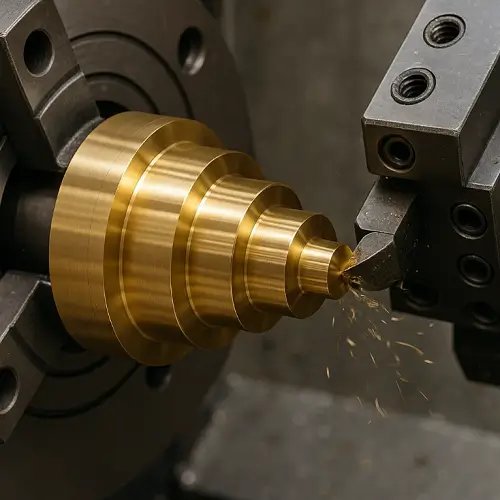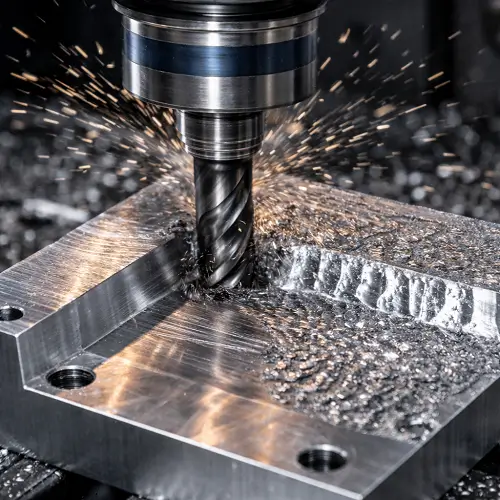
In machining work, precision and accuracy are often treated as the same thing. On the shop floor, they are not. Confusing the two usually leads to the wrong adjustments and the wrong priorities. A setup may look fine during the first checks, then create problems once parts reach assembly or move downstream.
The difference between precision and accuracy shows up in daily production. It affects how a process is tuned, how inspection data is interpreted, and whether machining can run steadily without constant intervention.
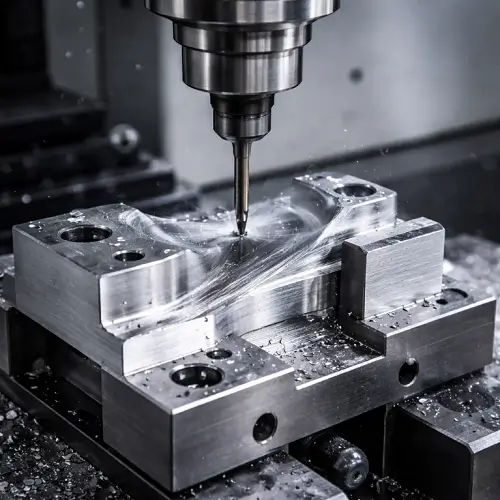
What Is Precision in Machining
Precision describes how consistently a machining process produces the same result. It has nothing to do with whether a dimension matches the drawing. It describes repeatability.
On the machine, precision looks like stable behavior. Consecutive parts measure close to each other. Offsets respond predictably. Dimensions stay where they were set instead of drifting as the run continues. When precision is present, cause and effect are visible.
A process can be very precise and still be off nominal. That happens frequently during early setup or when offsets are not finalized. As long as the behavior stays consistent, the process remains controllable.
What Is Accuracy in Machining
Accuracy describes how close a machined feature comes to the nominal value on the drawing. It answers a simple question at a specific moment: does this part meet the print.
Accuracy matters when features must line up with mating components or when function leaves little room for deviation. A part that is accurate satisfies the drawing and passes inspection.
Accuracy alone does not describe how the process behaves. One accurate part does not say much about the next ten.
Key Differences Between Precision and Accuracy in Machining
Differences in Definition
Precision compares results to each other. Accuracy compares a result to nominal.
A process can produce parts that cluster tightly while sitting a few thousandths off target. That process is precise but not accurate. Another process may occasionally hit nominal while scattering widely. That process shows accuracy at moments but lacks precision.
Fixing one does not automatically fix the other.
Differences in Error Behavior
Precision is affected by random variation. Tool wear, small fixture movement, thermal change during a long run, and minor shifts in cutting conditions all increase scatter.
Accuracy is affected by systematic error. Offset mistakes, datum misalignment, tool length compensation errors, or consistent thermal bias shift the entire result in one direction while keeping variation tight.
One problem requires stabilization. The other requires correction. Mixing the two wastes time.
Differences in Measurement Perspective
Precision shows up only when results are viewed together. Trends, spread, and drift matter more than individual numbers.
Accuracy is confirmed by comparing a single result to the drawing. That confirms correctness, but it does not describe future behavior. Clean inspection reports can still hide instability if variation is ignored.
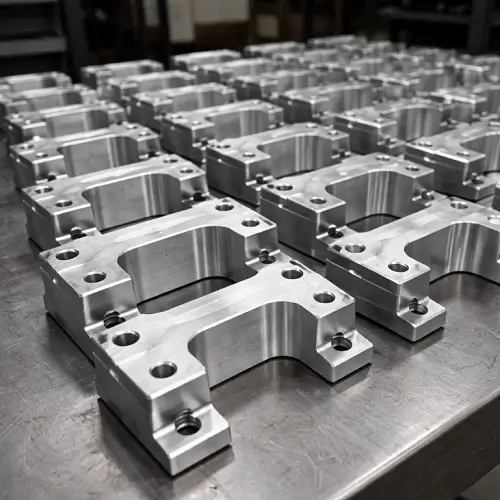
Practical Examples of Precision and Accuracy in Machining
In production, it is common to see a process repeat the same size every time while missing nominal. A milled feature may hold within a couple of thousandths across an entire batch, yet sit consistently off target. The result is wrong, but predictable. That situation is usually corrected with a controlled offset change, without touching tooling or fixturing.
The opposite condition causes far more trouble. A turned diameter may bounce between passing and failing, drifting several thousandths from part to part. Some parts pass inspection, others do not, and confidence in the process disappears. Accuracy shows up occasionally, but the lack of precision makes the process unreliable.
Hole position shows the same pattern. A bolt pattern that repeats the same positional shift every time is frustrating but manageable. A pattern that jumps unpredictably, even if some parts fall within tolerance, turns assembly into trial and error.
These situations are why experienced engineers separate process behavior from target value before deciding how to fix a problem.
Why Precision and Accuracy Matter in Real Production
precision vs accuracy in production
On a machining center, accuracy often looks acceptable at first glance. A part measures close to nominal, the report passes, and the setup moves on. Problems usually appear later, when parts begin interacting with other parts. That is when small variation turns into real cost.
Accuracy answers whether a dimension matches the print at one moment. Precision answers whether the process behaves the same way shift after shift. A process that occasionally hits nominal but drifts unpredictably demands constant attention. A process that repeats the same result, even if slightly off target, is far easier to manage.
repeatability in production machining
Repeatability keeps production running. When size stays consistent, offsets can be adjusted once and left alone. Operators stop chasing numbers. Inspection pressure drops. The process settles.
When repeatability is missing, every measurement becomes a decision. Adjustments pile up, and scrap follows. Not because the target was unrealistic, but because the behavior was unstable.
assembly fit and tolerance stack-up
Assembly exposes poor precision quickly. Press fits feel tight on one unit and loose on the next. Shafts meet size requirements and still introduce vibration. Sealing surfaces pass inspection and leak.
These are not inspection failures. They are process consistency failures.
downstream manufacturing processes
Machining is rarely the final step. Heat treatment, coating, and finishing all assume stable incoming geometry. When variation enters at machining, downstream processes magnify it instead of correcting it.
Stable machining simplifies everything that follows. Unstable machining pushes problems downstream, where fixes take longer and cost more.
tight tolerances in real production
Tight tolerances do not guarantee good quality. If a process cannot repeat, tighter limits only increase inspection effort and scrap.
In practice, a tolerance that stays consistent usually outperforms a tight tolerance that the process cannot hold.
production stability and process trust
Accuracy gets a process close. Precision determines whether it can be trusted.
A process that behaves the same way every day can be adjusted and relied on. A process that changes without warning will always cause trouble, no matter how good individual parts look on paper.
Measuring Precision and Accuracy in Machining
Accuracy can often be confirmed with a single measurement. Precision only appears when results are compared over time.
Accuracy measurement checks whether a feature sits near nominal. Precision measurement looks at clustering, drift, and repeatability. Even when all parts sit slightly off target, a stable trend indicates control.
This difference becomes clearer when machining tolerances are considered. Tolerance defines acceptance. Trends reveal whether the process itself is stable.
In formal measurement terms, accuracy can be expressed as the relative deviation from the true value:
Accuracy = (Measured Value − True Value) / True Value × 100%
In machining practice, the exact value matters less than how consistently the process behaves over time. This expression is mainly useful for reporting and comparison, not for diagnosing process stability.
Precision, Accuracy, and Machining Tolerances
Machining tolerances define how far a result is allowed to deviate from nominal. They do not describe how a process behaves.
Accuracy determines whether a result falls inside the boundary. Precision determines how results move within it. A process can stay within tolerance and still be unstable. It can also sit near one edge of tolerance and remain fully under control.
Tolerances only work when a process can repeat. In real production, engineers care less about centerline perfection and more about whether the process stays where it is put.
Do You Need a Machining Partner for High-Precision and Accurate Parts?
Are you looking for a machining partner that can deliver both precision and accuracy in real production, not just on a first article.
For parts that require tight dimensional control, consistent repeatability, and reliable assembly fit, the machining process matters as much as the nominal size on the drawing. Stable behavior, controlled variation, and predictable results keep production moving without constant adjustment.
JeekRapid supports precision machining projects that demand this level of control. With 3-axis, 4-axis, and full 5-axis CNC machining capability, JeekRapid machines complex geometries, tight tolerances, and multi-face features that require consistent positioning and repeatability. Process behavior is addressed before output is scaled.
If your project involves accuracy-critical or high-precision components, you can upload your drawings to JeekRapid for engineering review and quotation. Process feasibility, tolerance risk, and machining approach can be evaluated early, before problems appear downstream.
In real production, precision and accuracy only matter when they can be held within a stable tolerance system over time.
Conclusion
In machining, precision and accuracy are not interchangeable targets. Accuracy defines whether a result meets the drawing at a specific moment. Precision determines whether that result can be repeated reliably.
A process that repeats can be adjusted and brought back to nominal. A process that drifts unpredictably cannot be trusted, even if individual parts occasionally pass inspection. Most downstream problems trace back to variation that was never controlled at the machining stage.If it does not repeat, it is not under control.