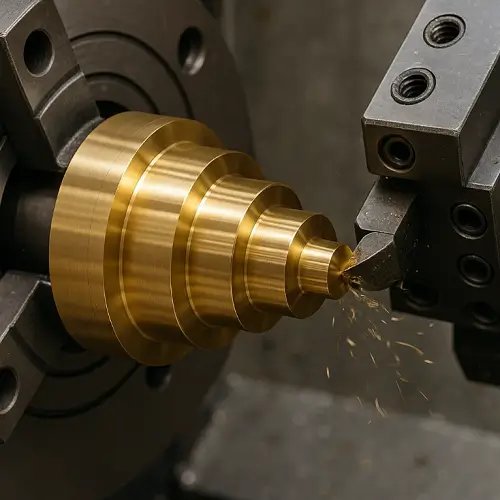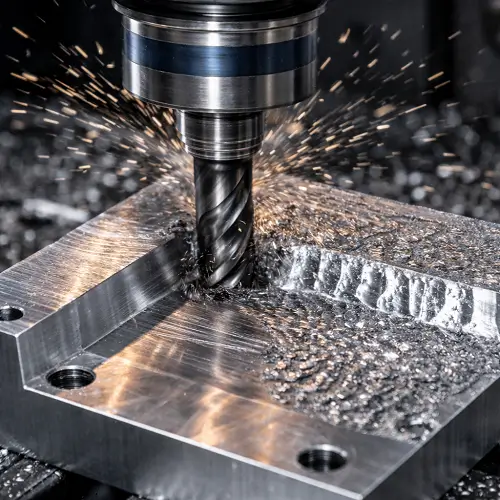
Choose a CNC machining supplier that has made parts similar to yours, can explain the important details on your drawing, and provides a clear quote with realistic delivery terms. Before placing an order, agree on how the parts will be inspected and what happens if something does not meet the drawing.
The difficult part is that most machine shops make similar promises: tight tolerances, competitive prices, and fast delivery. Those promises do not tell much about how a supplier will handle an aluminum housing that needs to fit an existing assembly or a shaft with a critical bearing seat.
A better way to choose is to bring the conversation back to the actual part. What has the shop made before? What does it need to clarify? What exactly is included in the price? The answers give a buyer more to work with than a polished factory introduction.
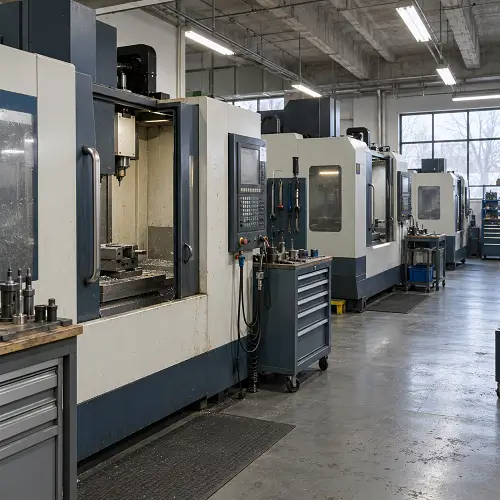
What Should You Look for in a CNC Machining Supplier?
Start with experience making similar parts. If the project involves an aluminum housing, photos of turned shafts will not tell much. Look for housings with similar pockets, thin walls, or mounting holes, and have the supplier explain which features on the proposed drawing need extra attention.
The parts do not need to be identical. What matters is whether the shop understands the relevant challenges. A housing may need careful control of mounting faces and wall thickness. A shaft may depend on bearing-seat dimensions and the relationship between its different diameters. Simply saying “we machine aluminum and stainless steel” does not answer either question.
A useful reply might be: “We have made similar housings. On this drawing, we need to confirm whether the bore tolerance applies before or after anodizing.” That does not prove the factory will deliver perfect parts, but it shows the team is looking beyond the outside shape.
Order size is another part of the match. A custom CNC machining supplier that welcomes prototype changes may suit an early design, while a repeat production project also needs consistent batches and controlled revisions. Explain whether the order is a one-time build, a trial batch, or the start of regular purchasing.
How Can You Tell Whether a CNC Shop Can Make Your Part?
Send the drawing and look at the quality of the response. Equipment lists help establish what a shop may be able to handle, but the discussion about the part reveals more about how it plans to approach the work.
For example, a supplier may advertise five-axis machining. That alone is not a reason to choose it for a simple mounting plate. The more useful question is whether the proposed process suits the geometry, required accuracy, and order quantity. If a special machine or additional operation increases the price, the supplier should be able to explain why it is needed.
Pay attention to specific questions. An unspecified thread, an unclear material grade, or conflicting dimensions should be resolved before production. If a bore must fit an existing component, the shop may need to confirm the required fit rather than guess from the CAD model.
Not every drawing needs a long discussion. A complete, straightforward drawing may require little clarification. But an immediate “everything is fine” is not especially reassuring when important details are visibly missing.
It is also reasonable to ask which processes happen outside the factory. A shop may machine the part itself and send it elsewhere for anodizing or heat treatment. That arrangement can work well, provided it is clear who passes on the requirements, checks the returned parts, and takes responsibility if there is a problem.
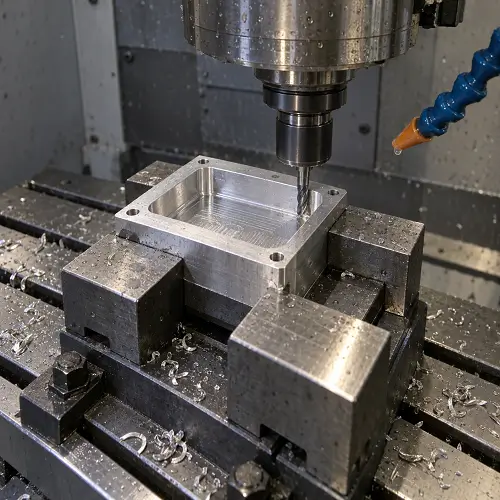
How Do You Compare CNC Machining Quotes?
Compare what each supplier is offering before comparing the total. One quote may include machining, anodizing, and a dimensional report. Another may include only machining. Those are not yet prices for the same delivery.
Send each supplier the same drawing revision, material requirement, quantity, and finish specification. Then clarify what is included and what would cost extra. Setup, dedicated fixtures, material certificates, inspection, and shipping are worth checking when they matter to the order.
A lower price is not automatically a warning sign. A shop may have suitable material in stock, an efficient setup, or experience making similar components. The important thing is to understand the difference rather than assume that the cheapest quote is careless or the highest quote is safest.
If one price is much lower, bring the discussion back to the drawing: “Does this include the specified material, the marked bore tolerance, anodizing, and the inspection report?” A clear written answer is more useful than another general assurance about quality.
For repeat orders, separate first-order expenses from ongoing CNC machining cost. If the initial quote includes a dedicated fixture, clarify whether it can be reused and whether later batches will still have setup charges. Do not assume that every initial charge disappears on the next order.
When buying from a CNC machining supplier in China or another overseas location, confirm whether the price includes freight and who is responsible for import-related charges. Otherwise, an attractive factory price may be compared with another supplier’s delivered price.
How Do You Check CNC Machined Part Quality?
Start with the features that determine whether the part will work. A shaft may look excellent but still fail to fit its bearing. A housing may have a clean finish while its mounting holes do not align with the assembly. Appearance is useful to inspect, but it cannot replace dimensional checks.
Mark the important requirements on the drawing and agree on how they will be verified. For a bearing seat, that means confirming the specified size and any relevant geometric requirements. For a mounting plate, it may mean checking hole locations relative to the stated datums. The supplier should explain the inspection approach in terms of those features.
The phrase “all parts inspected” needs clarification. Does it mean every part receives a visual check, every critical dimension is measured, or a sample from the batch receives a dimensional inspection? These are different levels of coverage.
A CNC machining inspection report should make it possible to connect the results to the delivered part and drawing revision. An anonymized report from previous work can show how the supplier records requirements and measurements. A CMM report may be useful for certain features, but the name of the measuring equipment matters less than whether the agreed requirements are actually checked.
Material certificates answer a different question: what material was supplied? They do not prove that a bore or hole pattern is correct. If material documentation is required, confirm that it will correspond to the material used for the order.
Certification is worth checking, too, including its validity and scope. But a certificate does not answer the practical question: “What will be checked on my parts before they leave the factory?”
Should You Order Samples Before a Production Batch?
A sample or trial order can help evaluate a new supplier before committing to a larger batch. It is particularly useful when the part has critical fits, an important cosmetic finish, or features that need to be tested in the actual assembly.
Decide what counts as an acceptable sample before it arrives. For a housing, that might include fitting the cover, installing the internal components, checking screw access, and reviewing the agreed dimensions. For a shaft, the bearing and mating components may need to be checked against the intended fit.
This makes the sample useful. “Looks good” is not enough if the reason for ordering it was to confirm assembly.
If a sample is intended to represent production, confirm that its material and finish match the planned order. Any differences should be clear. A sample without the final surface treatment, for example, leaves that part of the evaluation unfinished.
A successful sample does not prove that every later part will be consistent. Before moving into production, agree on the inspection coverage for the batch. First article inspection can document the initial part against the drawing, while ongoing checks address the remaining production.
The trial order also shows what working with the supplier feels like. Were questions answered clearly? Did the paperwork match the agreement? Was a potential delay explained before the delivery date passed? Those details are part of the purchasing decision, not just customer service extras.
What Should You Confirm About CNC Machining Lead Time?
Find out whether the quoted date means the parts will be ready to ship or will have arrived. “Ten days” is not a complete delivery commitment if one side means machining time and the other means delivery to the assembly floor.
Confirm whether the schedule includes material purchasing, finishing, inspection, and packaging. A machined part waiting for anodizing is not ready to use, even if the cutting work was completed on time.
The start date matters as well. Does the lead time begin after payment, drawing approval, or material confirmation? If the drawing is still changing, ask how a revision could affect the schedule.
If there is a firm assembly deadline, share the required arrival date rather than simply requesting “fast delivery.” This gives the supplier a chance to assess the whole schedule. Where useful, discuss whether an initial quantity can be delivered ahead of the remainder, with any added costs made clear.
A realistic date with a clear explanation is more useful than the shortest promise. Before ordering, establish who will provide updates and how a problem affecting delivery will be communicated.
Can the Supplier Handle Repeat Orders and Part Problems?
For repeat orders, check how the supplier identifies the approved drawing. Sending an updated file is not enough unless the shop acknowledges the new revision and uses it for the next batch.
This becomes especially important in low-volume CNC machining, where designs may change between builds. A mounting hole moved during development should not return to its old position because someone reused an earlier file.
Clarify whether changes to the agreed material, finish, or other requirements need approval. A suggested substitution may be reasonable, but it should not arrive as a surprise with the finished parts.
Also discuss how a nonconforming part will be handled. If a dimension falls outside the drawing tolerance, what information will the supplier need to investigate? How will rework, replacement, or another resolution be agreed? If the schedule is affected, who will help establish the next step?
No supplier can offer a credible promise that problems will never occur. What a buyer can look for is a clear process and a willingness to take responsibility for work that does not meet the agreement.
What Should You Send a CNC Machining Supplier for a Quote?
Provide the CAD model and available 2D drawing, along with the material, quantity, finish, and required delivery date. Identify the dimensions and surfaces that matter to fit or function, and include any required inspection reports or material documentation.
If something is undecided, say so. There is a useful difference between “quote this exact specification” and “help assess a practical material or tolerance before quoting.” Making that distinction early reduces assumptions on both sides.
Explain the concern behind the request when it helps. Perhaps a previous housing did not assemble correctly, the first batch is needed for testing, or the current design is too expensive. That context lets the supplier address the actual problem rather than return a price without explanation.
For confidential work, arrange any required NDA before sending sensitive files.
JeekRapid provides CNC machining services for custom metal and plastic parts, from prototypes to production. Send the drawing with the material, quantity, and project requirements for a manufacturability review and quotation. If there is a feature or cost concern that needs attention, include it with the files so it can be discussed before machining.
The right CNC machining supplier should make the project easier to understand before asking for an order. By the end of the quotation process, the buyer should know what is included, which details need approval, how the parts will be checked, and when they are expected—not simply how much they cost.