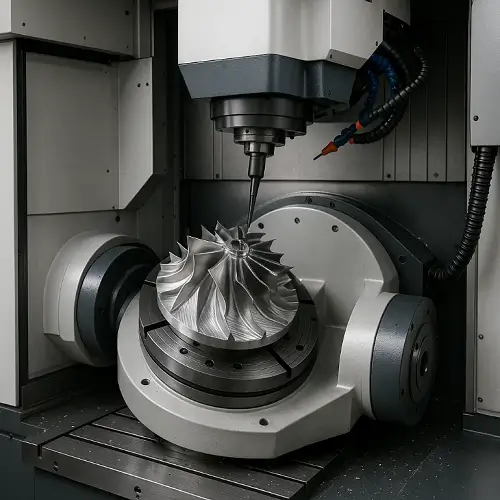
Heat treatment is used when a metal part needs more hardness, strength, wear resistance, toughness, or dimensional stability than the material provides in its original condition. Common heat-treated parts include gears, shafts, pins, molds, tools, bearing surfaces, machine components, and high-strength brackets.
For customers ordering machined parts, the main concern is not the detailed science inside the furnace. What matters is whether the part needs heat treatment, which process is suitable, and whether heating and cooling will change its dimensions.
Heat treatment must therefore be considered before CNC machining begins. A part may be rough machined in a softer condition, heat treated, and then finish machined or ground to its final dimensions. Planning this sequence correctly helps control hardness, distortion, tolerance, and production cost.
What Is Heat Treatment?
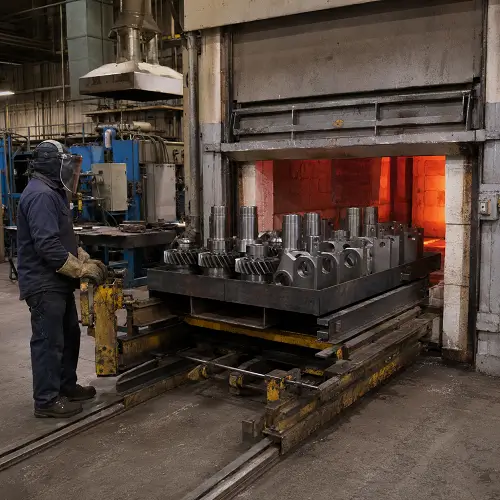
Heat treatment is a controlled manufacturing process that changes the properties of a metal through heating, holding, and cooling. Depending on the material and process, it can make the metal harder, softer, stronger, tougher, easier to machine, or more resistant to wear.
The component is heated to a temperature selected for its material grade and required properties. It is held at that temperature long enough for the material structure to change and then cooled at a controlled rate.
Slow cooling is commonly used when the goal is to soften the metal or reduce internal stress. Rapid cooling, known as quenching, can increase hardness in suitable steels. Additional heating after quenching, called tempering, reduces brittleness and provides a more useful balance between hardness and toughness.
Heat treatment does not automatically improve every property. A process that increases hardness may reduce ductility or make the part more difficult to machine. The correct treatment depends on how the finished component will be used.
Why Is Heat Treatment Used for CNC Machined Parts?
CNC machining creates the required shape, holes, threads, pockets, and mating surfaces. Heat treatment changes how the material performs after the part is placed into service.
A gear or shaft may need a harder surface to resist repeated wear. A tooling component may need high hardness so that its edges and working surfaces do not deform. A structural part may require greater strength but still need enough toughness to withstand impact.
Heat treatment can also improve machining. Some hard or uneven materials are annealed before cutting so they are easier to mill, drill, or turn. Large plates, welded components, and heavily machined parts may be stress relieved so that they remain more stable during final machining.
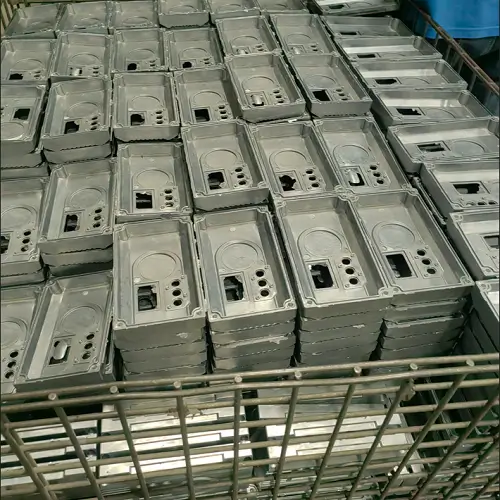
Not every CNC part needs heat treatment. Aluminum housings, ordinary brackets, covers, and lightly loaded components often perform correctly in their supplied material condition. Adding unnecessary heat treatment increases lead time, cost, and distortion risk without providing a useful benefit.
When requesting CNC machining services, the working load, wear conditions, target hardness, and final tolerance should be reviewed before deciding whether heat treatment is necessary.
What Are the Common Types of Heat Treatment?
The main heat treatment processes used with CNC machined parts serve different purposes.
| Heat treatment | What it does | Common CNC applications |
|---|---|---|
| Annealing | Softens metal, improves ductility, and makes machining or forming easier | Steel blanks, copper parts, aluminum parts, forgings |
| Normalizing | Produces a more uniform structure and refines steel after forging or welding | Carbon steel parts, forgings, castings |
| Quenching and tempering | Increases hardness and strength while controlling brittleness | Shafts, gears, pins, fasteners, machine components |
| Stress relieving | Reduces residual stress with limited change to hardness | Large plates, weldments, thin-wall parts |
| Surface hardening | Creates a hard wear-resistant surface while retaining a tougher core | Gears, cams, shafts, pins, bearing surfaces |
| Solution treatment and aging | Strengthens heat-treatable aluminum, stainless steel, and other alloys | Aerospace parts, high-strength brackets, precision components |
Annealing is used when a metal is too hard, brittle, or difficult to machine in its current condition. Normalizing is mainly applied to steel and usually leaves it somewhat stronger and harder than fully annealed material.
Quenching increases hardness in compatible steels, but freshly quenched steel can be too brittle for normal use. Tempering is applied afterward to reduce brittleness and establish the required balance between hardness and toughness.
Stress relieving is useful when machining, welding, forging, or cold working has introduced internal stress. It is often considered for large or thin components that could move after material is removed.
Carburizing, nitriding, induction hardening, and flame hardening are forms of surface hardening. They are selected when only the working surface needs high hardness while the center of the part remains tougher.
Which Metals Can Be Heat Treated?
Many metals can be heat treated, but they do not respond in the same way. The material grade must be known before the heat treatment process is selected.
Heat treating steel is common because its hardness, strength, and toughness can be adjusted through controlled heating and cooling.
Carbon steel is commonly heat treated, although its response depends heavily on carbon content. Low-carbon steels such as 1018 cannot normally achieve high through-hardness through ordinary quenching. When a hard wear surface is required, they may be carburized or treated using another surface-hardening method.
Medium-carbon and alloy steels respond more strongly to quenching and tempering. Materials such as 4140 are often used for shafts, gears, pins, and loaded machine components that need controlled strength and toughness.
Tool steels are designed to achieve high hardness after heat treatment. They are used for cutting tools, molds, dies, gauges, and wear-resistant components. The correct cycle depends on the specific tool-steel grade.
Stainless steels must be considered by type. Martensitic stainless steels such as 410 and 420 can be hardened. Precipitation-hardening grades such as 17-4 PH gain strength through aging. Austenitic stainless steels such as 304 and 316 cannot be hardened by conventional quenching and tempering.
Some aluminum alloys can also be heat treated. Grades from the 2xxx, 6xxx, and 7xxx series may be solution heat treated and aged to increase strength. The material temper, such as T6 or T651, tells the supplier about its heat treatment and stress-relief condition.
Does Heat Treatment Increase Metal Hardness?
Heat treatment can increase metal hardness, but hardening is not the purpose of every process.
Quenching, surface hardening, and precipitation aging can increase hardness in suitable materials. Annealing normally reduces hardness and makes the metal easier to machine or form. Stress relieving mainly reduces internal stress and may cause little change in final hardness.
Higher hardness can improve wear resistance and help a component retain its shape under surface contact. However, specifying the highest achievable hardness is not always a good decision. Excessive hardness can make a part brittle, increase cracking risk, and make finish machining more expensive.
For many steel parts, quenching is followed by tempering. Tempering sacrifices some hardness to improve toughness and produce a component that can withstand real working loads.
The drawing should specify a practical hardness range rather than one exact value. The correct range depends on wear, load, impact, fatigue, and the material used.
Does Heat Treatment Cause Part Distortion?
Heat treatment can cause dimensional change and distortion. Metal expands during heating and contracts during cooling, while structural changes inside the material create additional movement.
A long shaft may bend slightly, a thin plate may warp, and a round component may lose some roundness. Flatness, straightness, hole position, concentricity, and finished diameters can all change.
Distortion risk increases when a part has thin walls, deep pockets, uneven section thickness, asymmetrical geometry, or large differences between thick and thin areas. Residual stress from raw material, forging, welding, or heavy machining also contributes to movement.
The risk can be reduced by using stable material, balancing the part geometry, rough machining before treatment, leaving finishing allowance, stress relieving when needed, and using a suitable cooling method.
Even with good control, heat treatment movement cannot always be eliminated. Tight-tolerance parts may need grinding, hard turning, lapping, or another finishing process after treatment.
Should Heat Treatment Be Done Before or After CNC Machining?
There is no single sequence for every part. The correct order depends on the material condition, required hardness, geometry, heat treatment process, and final tolerance.
Some components are machined directly from material that has already been heat treated to a usable condition. Pre-hardened mold steel and aluminum supplied in a T6 condition are common examples. This avoids a separate treatment after machining, although harder materials may take longer to cut.
Parts requiring high hardness and tight final dimensions are often produced using this route:
Raw material → Rough machining → Heat treatment → Finish machining or grinding → Final inspection
Rough machining removes most of the material while the metal is still easier to cut. A small amount of material is left on critical diameters, faces, and bearing surfaces. After heat treatment, these areas are finished to their required dimensions.
Gears, shafts, pins, and surface-hardened components are commonly rough or semi-finish machined before treatment. Their critical working surfaces may then be ground after hardening.
Large plates and thin-wall parts may need stress relieving between rough and finish machining. Removing a large amount of material can release internal stress and cause the part to move before final dimensions are produced.
Threads and small holes also require planning. Tapping a fully hardened steel component can be difficult, while heat treatment can distort threads that were completed beforehand. Depending on the material and hardness, threads may be machined before treatment, protected during treatment, or finished afterward using grinding, thread milling, EDM, or another suitable method.
The heat treatment sequence should therefore be confirmed during drawing review rather than decided after the CNC part has already been completed.
How Are Heat-Treated CNC Parts Inspected?
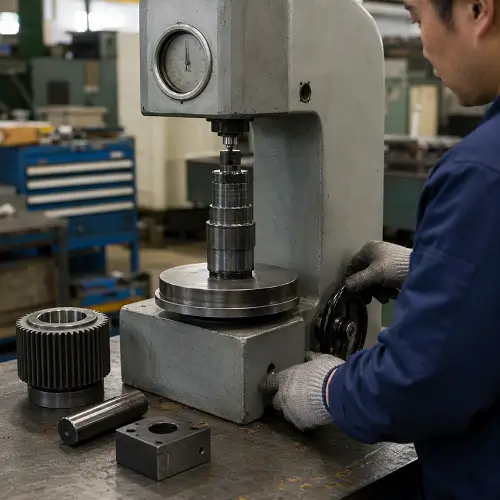
Hardness testing confirms whether the material has reached the specified condition. Rockwell testing is commonly used for hardened steel, while Brinell and Vickers testing may be selected for softer materials, small parts, or thin hardened layers.
The hardness test location matters because the test can leave a small indentation. Cosmetic surfaces, sealing faces, and precision contact areas may not be suitable locations.
Surface-hardened parts may also require case-depth inspection. A high surface-hardness reading does not confirm how deeply the hardened layer extends.
Dimensional inspection is still necessary after heat treatment. A hardness certificate does not show whether the part meets its required flatness, roundness, straightness, hole position, or diameter.
Critical steel parts may also be inspected for heat-treatment cracks. The required inspection level depends on the material, hardness, component function, and customer requirements.
What Affects Heat Treatment Cost for CNC Parts?
Heat treatment cost depends on the material, process, part size, quantity, target hardness, case depth, furnace atmosphere, cooling method, inspection, and documentation.
Prototype quantities may have a relatively high cost per part because the furnace cycle and setup are still required. Larger batches allow the treatment cost to be distributed across more components.
Heat treatment can also create secondary costs. Distortion correction, oxide removal, grinding, hard turning, polishing, hardness testing, and final dimensional inspection may be required after the furnace process.
To obtain an accurate quotation, provide the material grade and condition, CAD model, 2D drawing, required hardness range, treatment process if specified, quantity, and final tolerance requirements. If the part needs surface hardening, include the required case depth and identify any surfaces that must remain soft.
The drawing should also state whether critical dimensions apply before or after heat treatment. This allows the supplier to include machining allowance and final finishing in the production plan.
Conclusion
Heat treatment changes the hardness, strength, toughness, wear resistance, machinability, and stability of metal parts. Common processes include annealing, normalizing, quenching and tempering, stress relieving, surface hardening, and aging.
For CNC machined parts, the most important issue is how heat treatment fits into the manufacturing sequence. Heating and cooling can change flatness, roundness, hole position, and finished dimensions, so precision components are often rough machined before treatment and finished afterward.
Not every component requires heat treatment. The correct decision depends on the material, working load, wear conditions, target hardness, geometry, and final tolerance.
JeekRapid can review your CNC part drawings, material requirements, hardness, heat treatment, and finishing sequence before production. Upload your CAD files, 2D drawings, and order quantity to get a quote.