Electroplating is a process that uses electricity to deposit a thin metal coating onto another material. It is commonly used on steel, stainless steel, copper, brass, and aluminum parts when the original material needs better corrosion resistance, wear protection, electrical performance, or appearance.
A steel bracket may be zinc plated to prevent rust. A machined shaft may receive nickel or hard chrome plating to improve surface performance. Electrical contacts may be plated with tin, silver, or gold to improve conductivity and connection reliability.
For customers ordering manufactured parts, the most important questions are not limited to how electroplating works. They also need to know which plating metal to choose, how much thickness is required, whether the coating changes dimensions, and what information must be included on the drawing.
What Is Electroplating?
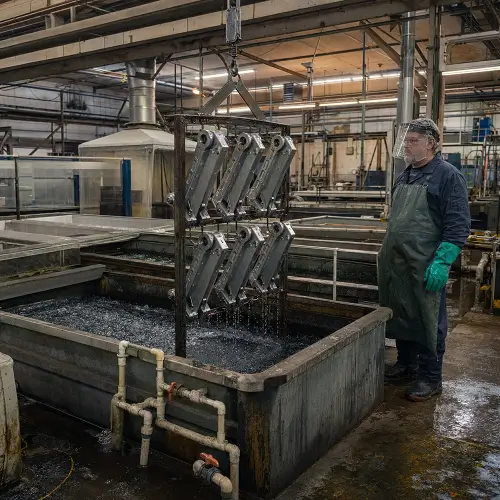
Electroplating is an electrochemical surface-finishing process. A component is placed in a liquid solution containing ions of the metal that will form the coating. The component is connected to an electrical circuit, and direct current causes metal ions in the solution to become solid metal on its surface.
The component being plated normally acts as the cathode, which is connected to the negative side of the electrical circuit. When current flows through the solution, positively charged metal ions move toward the component, gain electrons, and form a metallic layer.
For example, during zinc electroplating, a prepared steel part is placed in a plating bath containing zinc ions. Electrical current causes zinc to build up on the steel surface. The part remains steel internally, but the new zinc layer protects the outside from corrosion.
The coating metal does not simply stick to the component like paint. It is deposited through a controlled electrochemical reaction. Current density, plating time, bath chemistry, temperature, part position, and surface cleanliness all affect the coating.
This is why electroplating is not only about putting a metal part into a chemical bath. The complete process includes cleaning, activation, electrical contact, metal deposition, rinsing, post-treatment, and inspection.
How Does Electroplating Work?
The electroplating process starts with surface preparation. CNC machining coolant, cutting oil, grease, fingerprints, oxide, rust, and polishing compound can prevent the coating from bonding correctly. The surface must therefore be cleaned before electroplating begins.
After cleaning, the component is activated. Activation removes oxide layers and exposes a chemically active surface. Different base materials need different treatments. Carbon steel, stainless steel, aluminum, copper, and brass cannot all be prepared in the same way.
The cleaned part is then mounted on a rack or placed in a plating barrel. Racks provide electrical contact and hold larger or more delicate parts in a controlled position. Barrel plating is commonly used for high quantities of small parts such as screws, washers, pins, and simple hardware.
The component is immersed in the electroplating solution and connected to the electrical circuit. When current is applied, metal begins to deposit on the exposed conductive surfaces. Increasing the plating time generally increases coating thickness, but the relationship also depends on current density, bath condition, part geometry, and plating efficiency.
After deposition, the component is rinsed to remove remaining solution. Depending on the coating, it may then receive passivation, sealing, polishing, heat treatment, or another supplementary process.
The finished part is inspected for thickness, adhesion, appearance, coverage, dimensions, and surface defects. Functional components may also require corrosion, hardness, solderability, or wear testing.
What Is Electroplating Used For?
Electroplating is used when the surface of a component needs different properties from the material underneath it. Instead of manufacturing the complete part from an expensive or difficult material, a suitable base metal can be machined first and then covered with a controlled metallic coating.
Corrosion protection is one of the most common electroplating applications. Carbon steel is strong, economical, and easy to machine, but it rusts when exposed to moisture. Zinc electroplating adds a sacrificial layer that protects the steel underneath. Nickel, chromium, and tin can also provide corrosion protection in suitable applications.
Electroplating can improve wear resistance on shafts, pins, rods, molds, hydraulic components, and sliding surfaces. Engineering nickel and hard chrome are used when the surface must resist repeated contact or abrasion. However, the coating does not increase the strength of the complete component. The base material and heat treatment must still support the working load.
Electrical components are plated to improve conductivity, solderability, and contact reliability. Copper, tin, silver, nickel, and gold are commonly used on terminals, connectors, bus bars, and electrical contacts.
Decorative electroplating creates a cleaner and more consistent appearance. Nickel and chrome plating are widely used on handles, housings, controls, automotive trim, and visible hardware. The result still depends on the condition of the original surface because plating does not automatically remove scratches, pits, or machining marks.
What Are the Common Types of Electroplating?
Different plating metals solve different problems. Selecting a coating only by color can result in poor corrosion performance, unnecessary cost, or problems during assembly.
| Plating metal | Common parts | Main purpose | Important consideration |
|---|---|---|---|
| Zinc | Steel brackets, fasteners, housings and hardware | Economical corrosion protection | Usually combined with a passivate or supplementary finish |
| Nickel | Shafts, fittings, contacts, tools and decorative parts | Corrosion resistance, wear resistance and appearance | Engineering nickel and decorative nickel have different requirements |
| Copper | Electrical parts and undercoats | Conductivity, adhesion and surface leveling | Often used beneath nickel or chrome |
| Chromium | Shafts, hydraulic parts, tools and visible hardware | Wear resistance, low friction or decorative appearance | Hard chrome and decorative chrome are different processes |
| Tin | Terminals, connectors and solderable components | Solderability and corrosion protection | Service temperature and electrical requirements must be considered |
| Gold | Electrical contacts and electronic parts | Stable contact performance and corrosion resistance | Usually applied selectively because of cost |
| Silver | Conductive contacts and electrical components | High electrical and thermal conductivity | Tarnishing may matter in some environments |
Zinc plating is usually selected for steel components that need practical corrosion protection at a reasonable cost. Nickel plating provides a harder and more decorative surface and is also used as an engineering coating. Copper is frequently used as an intermediate layer because it provides good conductivity and can improve adhesion between other metals.
Chrome plating can refer to two very different finishes. Decorative chrome is a thin outer layer used mainly for appearance and surface protection. Hard chrome is a thicker engineering coating used on wear surfaces, shafts, rods, and hydraulic components.
Tin, silver, and gold plating are more closely connected to electrical and electronic applications. They are selected according to conductivity, solderability, contact resistance, corrosion conditions, and project cost.
What Base Materials Can Be Electroplated?
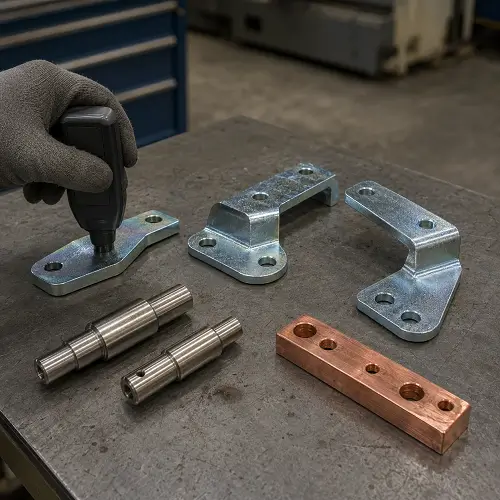
Carbon steel is one of the most commonly electroplated materials. Zinc, nickel, copper, chromium, and tin coatings can all be applied to steel when the correct preparation and coating system are used.
Stainless steel can also be electroplated, but its natural passive oxide layer makes adhesion more difficult. The surface must be properly activated before nickel, copper, gold, or another coating is deposited.
Copper and brass are suitable for many types of metal plating. They are commonly coated with nickel, tin, silver, or gold for electrical, decorative, or corrosion-related reasons. An intermediate layer may be required to prevent copper migration or unwanted color changes.
Aluminum requires more specialized preparation because a thin oxide film forms naturally on its surface. This oxide must be removed or converted before a plated coating can bond reliably. Nickel plating is possible on aluminum, but anodizing is often a more practical option when the main requirements are corrosion resistance, color, or general surface hardness.
Nonconductive materials such as plastics cannot be directly electroplated in the same way as metal parts. They first need a conductive surface layer. Electroplating plastic and electroplating 3D prints are therefore separate processes with different preparation, adhesion, and durability considerations.
Why Is Electroplating Used on CNC Machined Parts?
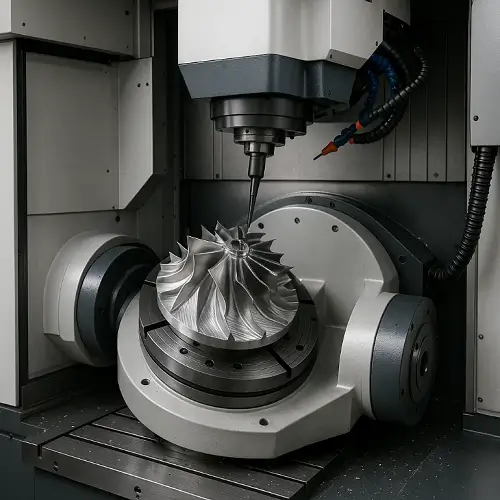
CNC machining controls the shape and dimensions of a part. Electroplating is added afterward when the machined material needs better surface performance.
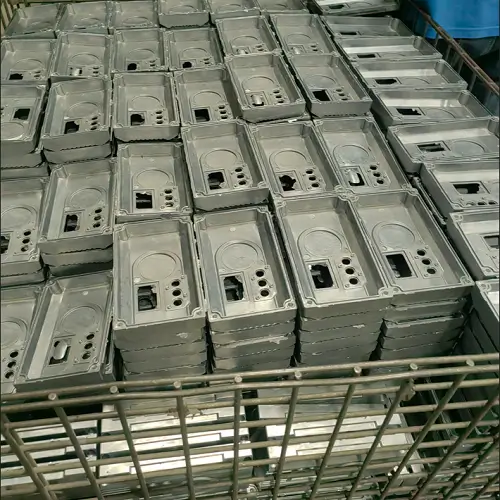
Common electroplated CNC parts include steel brackets, shafts, pins, bushings, housings, valve components, machine hardware, electrical contacts, mounting plates, and precision fixtures. The entire component may be plated, or selected surfaces may be masked.
The plating requirement should be reviewed before machining begins. If a drawing contains close-fitting holes, bearing seats, threads, press-fit diameters, or sealing surfaces, the added coating thickness can affect assembly.
When ordering CNC machining services, the plating type and required thickness should be included during quotation. This allows the supplier to determine whether machining allowance, masking, post-plating finishing, or additional inspection is needed.
Electroplating should not be treated as a cosmetic step added after the CNC part is finished. For precision components, machining and plating are part of the same dimensional plan.
How Thick Is Electroplating?
Electroplating thickness can range from a very thin decorative or electrical deposit to a much thicker engineering coating. There is no universal thickness that works for every part.
The correct coating thickness depends on the plating metal, base material, working environment, corrosion exposure, wear conditions, required service life, and applicable standard. A zinc coating used on an indoor bracket does not need the same performance as a coating exposed to outdoor moisture or salt.
Thickness also affects dimensions. If 0.0004 inch of plating is deposited on each side of an external diameter, the total diameter increases by approximately 0.0008 inch. If the same thickness is deposited inside a bore, the bore diameter can decrease by approximately 0.0008 inch.
Actual electroplating is not perfectly uniform. Corners and exposed edges usually receive more electrical current and can develop a thicker coating. Deep recesses, blind holes, internal corners, and shielded surfaces may receive less plating.
The drawing should therefore state the required thickness range and identify where it must be measured. A minimum local thickness is different from an average coating thickness, especially on a component with complex geometry.
Does Electroplating Affect CNC Machining Tolerances?
Electroplating adds material to the component, so it directly affects finished dimensions. The effect may be small on an open bracket but important on a precision shaft, bore, thread, sliding fit, bearing seat, or press-fit feature.
External diameters become larger after plating, while internal diameters become smaller. External threads become tighter because material is added to the thread flanks and crests. Internal threads lose clearance for the same reason.
When a dimension is critical, the CNC part can be machined with a pre-plating allowance. The machinist leaves enough room for the expected coating buildup so the component reaches its required size after electroplating.
Masking is another option. Threads, bores, grounding surfaces, sealing faces, or electrical contact areas can sometimes be protected from plating. However, masking increases cost and may leave a visible transition line.
Some thick engineering coatings can be ground or polished after plating. This method is used for precision shafts, rods, and wear surfaces, but it is unnecessary and unsuitable for many ordinary decorative or corrosion-protection coatings.
The drawing should clearly state whether its dimensions apply before or after plating. If a bore, diameter, or thread must meet its tolerance after finishing, this requirement should not be left for the supplier to assume.
Does Electroplating Change Surface Finish?
Electroplating follows the condition of the existing surface. Fine machining marks, scratches, pits, dents, waviness, and polishing defects may remain visible after plating.
A bright nickel or chrome coating may make surface defects more noticeable because the reflective finish highlights variations underneath it. Cosmetic components often need controlled polishing before electroplating.
Copper undercoats can provide some leveling, but they cannot repair incorrect geometry, deep scratches, or serious pitting. If the surface must be smooth, the required pre-plating roughness and final appearance should be discussed before production.
Functional parts require the same attention. A rough or uneven base surface can affect coating thickness, contact behavior, sealing, friction, and wear. The required surface finish should match the purpose of the plated part rather than appearance alone.
What Are the Most Common Electroplating Defects?
Peeling, blistering, and poor adhesion commonly result from oil, oxide, contamination, incorrect surface activation, or poor bonding between coating layers. Proper cleaning and material-specific preparation are essential.
Pitting and pinholes may be caused by trapped gas, surface contamination, defects in the base material, or problems with the plating solution. A coating can also become rough if particles or metallic debris become trapped in the deposit.
Burning appears as a dark, rough, or powdery area, often near corners and edges where the current density is too high. Uneven thickness occurs when exposed surfaces build coating faster than deep holes and recessed areas.
Discoloration and staining can result from poor rinsing, contaminated water, incorrect post-treatment, handling, or storage. For visible parts, an approved sample or clear cosmetic requirement provides better control than a general note such as “bright finish.”
High-strength steel also requires attention to hydrogen embrittlement. Hydrogen introduced during cleaning and plating can reduce ductility and cause delayed cracking. The material strength, hardness, coating process, and required post-plating heat treatment should be reviewed before electroplating high-strength steel components.
Electroplating vs Electroless Plating: What Is the Difference?
Electroplating uses an external electric current to deposit metal. Electroless plating uses a controlled chemical reaction and does not require an external electrical current.
| Comparison | Electroplating | Electroless plating |
| Deposition method | External electric current | Chemical reduction reaction |
| Thickness distribution | Affected by current density and part geometry | Generally more uniform |
| Common coatings | Zinc, nickel, copper, chrome, tin, gold and silver | Most commonly electroless nickel |
| Edges and corners | Can receive more buildup | Usually more consistent |
| Deep recesses | Coverage can be limited | Often provides better coverage |
| Typical use | Corrosion protection, appearance, conductivity and wear | Uniform coating on complex precision parts |
| Cost | Often more economical for suitable production volumes | Usually more expensive because of bath chemistry and process control |
Electroless nickel plating is often selected for complex parts with bores, recesses, internal features, or a strong need for uniform coating thickness. Electrolytic nickel plating may be more suitable for decorative appearance, selective buildup, or applications where the electrical plating process provides the required properties at a lower cost.
The better process depends on part geometry, coating thickness, base material, tolerance, performance, quantity, and budget.
How Do You Choose the Right Electroplating Finish?
Start with the problem the coating needs to solve. If a carbon steel component mainly needs economical corrosion protection, zinc plating is often suitable. The required passivate and coating thickness depend on the service environment.
Nickel plating is useful when the component needs improved wear resistance, corrosion protection, or a decorative metallic appearance. Engineering nickel should be distinguished from decorative nickel because the thickness and performance requirements are different.
Hard chrome is considered for shafts, rods, hydraulic components, and wear surfaces. Decorative chrome is used on visible hardware and normally relies on nickel or copper-nickel layers underneath.
Tin plating is appropriate for many solderable terminals and electrical components. Gold or silver plating is considered when contact performance, conductivity, or corrosion resistance justifies the additional cost.
For aluminum components, anodizing may be more practical than electroplating for general corrosion resistance and color. Nickel plating may still be selected when the part requires a particular wear surface, electrical property, or engineering coating.
JeekRapid’s surface finishing services include electroplating and other finishing options for machined metal parts. The finish can be reviewed according to the material, part function, appearance, tolerance, and working environment.
What Electroplating Requirements Should Be Added to a Drawing?
A drawing note that only says “zinc plate” or “nickel plate” does not provide enough information. It does not define thickness, color, supplementary treatment, corrosion performance, masking, or whether dimensions apply before or after plating.
Where applicable, the drawing should identify the plating metal, base material, coating thickness or class, finish color, post-treatment, inspection method, masked surfaces, and applicable standard.
Common references include ASTM B633 for zinc plating on iron and steel, ASTM B689 for engineering nickel, ASTM B456 for nickel-chromium coating systems, ASTM B545 for tin plating, and ISO 4042 for electroplated fasteners.
Projects with RoHS, REACH, automotive, aerospace, medical, or customer-specific requirements should identify those conditions before production. The supplier should not be expected to determine compliance requirements from the part shape alone.
Critical dimensions should be marked as applying before or after plating. Cosmetic surfaces and permitted rack-contact areas should also be shown when appearance matters.
How Much Does Electroplating Cost?
Electroplating cost depends on the base material, component size, quantity, coating metal, thickness, part geometry, preparation, racking, masking, inspection, and documentation.
Large production batches of simple steel parts are generally more economical per part than small quantities of complex components that require individual racking. Selective gold plating costs more than ordinary zinc plating because of material value, masking, process control, and inspection.
Parts with rust, heavy oxide, polishing compound, or difficult machining residue require additional preparation. Deep holes, internal passages, complex recesses, tight cosmetic requirements, and multiple masked surfaces also increase cost.
Prototype orders may be affected by minimum batch charges because the electroplating line still requires setup, bath control, racking, rinsing, and inspection. Planning machining and finishing together helps reduce avoidable handling and dimensional corrections.
What Information Is Needed for an Electroplating Quote?
Provide the CAD model and 2D drawing together with the base material, required plating metal, coating thickness, finish color, quantity, and applicable standard.
The supplier should also know whether dimensions apply before or after plating, which areas must be masked, where rack marks are acceptable, and whether corrosion, adhesion, hardness, or thickness testing is required.
If the coating has not been selected, explain the component’s working environment, wear conditions, electrical requirements, appearance target, and mating features. This information helps determine whether zinc, nickel, chrome, tin, electroless nickel, anodizing, or another finish is more appropriate.
Conclusion
Electroplating uses electrical current to deposit a metallic coating onto a component. It is used to improve corrosion resistance, wear performance, conductivity, solderability, appearance, or surface dimensions.
Zinc, nickel, copper, chromium, tin, gold, and silver plating serve different purposes. The right choice depends on the base material, part function, working environment, required thickness, tolerance, appearance, and cost.
For CNC machined parts, electroplating must be considered before final dimensions are established. Coating buildup can change holes, threads, fits, and external diameters, while poor surface preparation can cause peeling, pitting, discoloration, or uneven coverage.
JeekRapid supports custom CNC machined parts with electroplating and other surface-finishing options. Upload your CAD files, drawings, material requirements, coating specifications, and order quantity to get a quote.