Aerospace CNC machining is used to produce high-precision aircraft, UAV, satellite, and space-related parts with complex geometry, tight tolerances, and reliable material performance. Common CNC machined aerospace parts include structural brackets, aircraft housings, engine-related components, landing gear hardware, bushings, fittings, UAV mounts, satellite fixtures, and precision test parts.
The reason CNC machining is widely used in aerospace is straightforward. The process can machine strong, lightweight materials such as aluminum, titanium, stainless steel, Inconel, PEEK, and Ultem while holding controlled dimensions across critical holes, mounting faces, thin walls, and multi-side features. For aerospace parts, this control matters because a small error in hole position, flatness, or surface finish can create assembly problems later.
CNC machining for aerospace also supports prototype development, low-volume production, replacement parts, and production machining without the long lead time of dedicated tooling. Engineers can test real material strength, fit, weight, and assembly behavior before moving into larger production runs.
Aerospace machining is different from ordinary CNC work because the process must consider material stress, fixture stability, machining sequence, burr removal, surface finish, datum accuracy, and inspection. A part may look simple in CAD, but aircraft and aerospace components often need tighter control over how the part is held, cut, measured, and finished.
For customers looking for CNC machining aerospace parts, JeekRapid can review CAD files, drawings, material requirements, tolerance notes, surface finish needs, and inspection requirements before machining starts. This helps identify thin-wall risks, deep pocket issues, difficult hole locations, and avoidable cost drivers early.
What Is Aerospace CNC Machining?
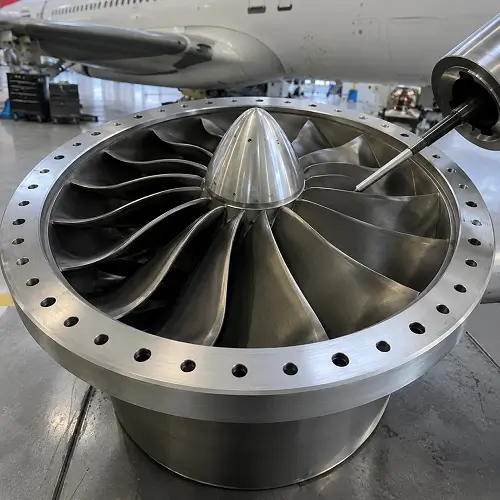
Aerospace CNC machining is the process of manufacturing precision parts for aircraft, spacecraft, drones, satellites, and aerospace support systems using computer-controlled machining equipment. The process may include CNC milling, CNC turning, drilling, tapping, boring, reaming, grinding, EDM, deburring, and surface finishing.
The work can range from a simple aluminum aircraft bracket to a thin-wall electronics housing, a titanium structural fitting, a stainless steel bushing, a UAV gimbal mount, or a satellite test fixture. Some parts are used directly in aerospace assemblies. Others support testing, inspection, assembly, ground equipment, or prototype validation.
In practical manufacturing, aerospace CNC machining covers both direct-use components and support hardware, including aircraft machined parts, aerospace tooling, inspection fixtures, prototype assemblies, and low-volume machined parts to aerospace standards.
The biggest difference between aerospace CNC machining and general CNC machining is the level of control. Aerospace parts often require stricter attention to material condition, datum structure, hole position, wall thickness, surface finish, burr control, traceability, and inspection. A part can look fine on a bench and still fail in assembly if the hole pattern is slightly off, the mounting face is not flat, or the part moved after being removed from the fixture.
That is why CNC machining aircraft parts requires more than a capable machine. The machining plan, workholding method, cutting sequence, inspection approach, and finishing process all affect the final result.
Why Precision Matters in Aerospace CNC Machining
Precision matters in aerospace because many parts work inside assemblies where small errors can create larger problems. A hole that is a few thousandths of an inch out of position may not sound serious until the part is mounted against another bracket, panel, bearing, or actuator. One small shift can create stress during assembly, misalignment during operation, or vibration problems under load.
Weight is another reason precision matters. Aerospace parts often use lightening pockets, thin ribs, narrow walls, and compact shapes to remove unnecessary mass. Those same features make parts harder to machine. Thin walls can deflect under cutting pressure. Large pockets can release material stress. Flat mounting faces can move after roughing. A part that holds size while clamped may change slightly after the clamps are released.
Precision also affects reliability. Aerospace components often face vibration, temperature changes, load cycles, and repeated assembly or maintenance. A sharp burr, poor thread, rough sealing surface, or unstable bore can create real problems later. Good aerospace CNC machining controls both the visible dimensions and the smaller details that affect long-term performance.
This is where drawings, GD&T, datum control, and inspection planning become important. A general ± tolerance may not describe the real function of the part. True position, flatness, perpendicularity, concentricity, surface finish, and thread quality often matter more than a simple outside dimension.
For precision machining for the aerospace industry, the shop needs to understand which features control assembly and which features are only clearance, cosmetic, or non-critical geometry. That difference affects machining time, inspection effort, and final cost.
Common CNC Aerospace Parts and Aircraft Machined Components
CNC machining is used across aerospace manufacturing because the process can handle strong metals, lightweight alloys, and high-performance plastics with reliable dimensional control. The exact part depends on the aircraft, drone, satellite, or test system, but many CNC aerospace parts fall into several practical groups.
For customers requesting CNC machining aerospace parts, the most common projects are not always large engine parts. Many jobs are precision brackets, housings, covers, fittings, bushings, UAV mounts, sensor supports, and custom aerospace machined components that must fit correctly during assembly.
Structural Brackets and Fittings
Structural brackets are among the most common CNC machined aerospace parts. These parts may support panels, sensors, actuators, wiring systems, hydraulic components, control equipment, or structural hardware. Many brackets are machined from 6061, 7075, or 2024 aluminum because these alloys provide a strong balance of weight, strength, and machinability.
The visible shape may look simple, but the difficult areas are usually thin walls, deep pockets, hole patterns, corner radii, and flat mounting faces. A bracket that is too heavy can miss the weight target. A bracket that is too thin can chatter during machining or distort after material removal. For this reason, machining sequence and fixture support matter as much as the cutting tool.
Aircraft Housings and Enclosures
Aircraft housings, avionics enclosures, sensor bodies, communication covers, and control system cases often require accurate sealing faces, clean threaded holes, stable wall thickness, and repeatable flatness. These parts may be machined from aluminum, stainless steel, or engineering plastics depending on the application.
Thin-wall housings require careful roughing and finishing. If too much material is removed from one side too quickly, the part may move. A good process usually leaves controlled stock, balances roughing passes, and saves critical surfaces for the final setup.
Bushings, Shafts, and Precision Hardware
CNC turning is often used for aerospace bushings, pins, sleeves, shafts, spacers, threaded inserts, and round hardware. These parts may look basic, but concentricity, surface finish, bore size, and thread quality can be critical.
A bushing with poor concentricity can create uneven load. A shaft with a rough bearing surface can affect wear. A threaded part with poor fit can slow down assembly or create rejection during inspection. Precision turning, reaming, boring, grinding, and thread gauging may all be part of the process.
UAV and Drone Components
UAV parts often combine lightweight design with tight fit requirements. Common parts include camera mounts, gimbal housings, motor mounts, antenna brackets, battery trays, heat sinks, frame plates, sensor supports, and custom fastener hardware.
Many UAV components are small, but small does not mean easy. Thin aluminum ribs, compact threaded holes, tight pockets, angled surfaces, and multi-side features are common. For small aerospace assemblies, a few thousandths of an inch can affect sensor alignment, vibration behavior, or assembly fit.
Satellite and Space-Related Components
Satellite parts and space-related test hardware may require lightweight pockets, low-distortion machining, clean surfaces, stable materials, and careful documentation. Some parts are machined from aluminum. Others use titanium, stainless steel, PEEK, Ultem, or other high-performance materials.
Not every space-related part is flight hardware. Many projects also need test fixtures, alignment tools, thermal test plates, handling fixtures, and assembly aids. CNC machining is useful because these parts often need accurate features without the cost and delay of dedicated tooling.
Engine-Related Parts and Landing Gear Hardware
Engine-related aerospace parts and landing gear hardware often bring higher material, strength, and inspection requirements. These parts may use titanium, stainless steel, Inconel, or high-strength aluminum depending on load, heat, corrosion exposure, and weight targets.
For these parts, tool wear, heat control, surface quality, and documentation become more important. Precision machining of turbine engine parts, high-load fittings, or landing gear-related hardware should be reviewed carefully before quoting because material grade, tolerance, inspection, and compliance requirements can change the process significantly.
Interior and Cabin Hardware
Aerospace CNC machining is also used for cabin hardware, seat components, latch parts, hinge components, trim supports, armrest hardware, and small precision fittings. These parts may not always need the same tolerance level as engine-adjacent hardware, but edge quality, surface finish, fit, and repeatability still matter.
Good deburring and finishing are especially important for interior parts because sharp edges, rough surfaces, or inconsistent appearance can create quality issues even when the dimensions are acceptable.
CNC Machining Processes Used for Aerospace Parts
Aerospace parts machining may involve CNC milling, CNC turning, drilling, tapping, boring, reaming, EDM, grinding, deburring, and surface finishing. The best process depends on part geometry, material, tolerance, quantity, and inspection requirements.
CNC Milling
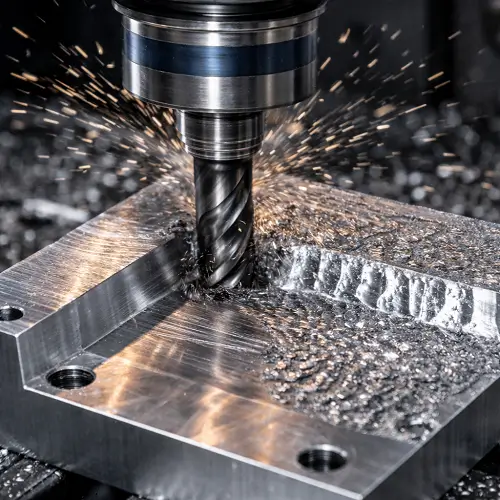
CNC milling is used for brackets, plates, housings, covers, pockets, slots, ribs, mounting faces, and complex prismatic parts. In aerospace work, milling often involves several stages: roughing, semi-finishing, finishing, drilling, tapping, deburring, and inspection.
Milling strategy has a direct effect on part stability. Thin-wall aluminum parts may need reduced cutting pressure and balanced material removal. Titanium parts may need slower cutting speeds and rigid toolholding. Stainless steel parts may require sharp tools and controlled feeds to avoid work hardening.
CNC Turning
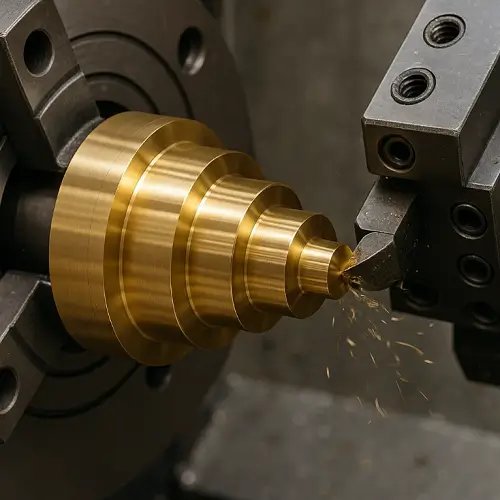
CNC turning is used for round aerospace components such as bushings, shafts, pins, sleeves, spacers, fittings, and threaded hardware. Turning can produce accurate diameters, grooves, bores, tapers, threads, and sealing surfaces.
For turned aerospace parts, concentricity and surface finish often matter more than the outside shape. A bore may need to align with an outside diameter. A thread may need to pass a gauge. A sealing face may need a controlled finish. These requirements should be clear on the drawing before machining starts.
Drilling, Reaming, Tapping, and Boring
Aerospace parts often include many holes, and holes are not all equal. Clearance holes, threaded holes, dowel holes, bearing holes, and fluid passages all require different machining methods.
Standard drilling may be enough for simple clearance holes. Reaming may be required for accurate pin holes. Boring may be needed for precision bores. Tapping or thread milling may be used for threaded features depending on material, depth, and tolerance.
Hole position is often more important than hole size alone. A hole pattern must relate correctly to the functional datum. This is where fixture planning and CMM inspection can make a big difference.
EDM and Grinding
EDM and grinding are not always required, but these processes can be useful for demanding aerospace features. EDM can create sharp internal features, narrow slots, or hard-to-machine geometry that would be difficult with standard cutting tools. Grinding can improve flatness, parallelism, surface finish, or tight dimensional control on specific features.
For high-precision aerospace parts, secondary operations may be the practical way to meet a tolerance instead of forcing a milling machine to hold every requirement in one setup.
3-Axis vs 5-Axis CNC Machining for Aerospace Components
Not every aerospace component needs 5-axis machining. A flat bracket, cover plate, or simple housing may be machined accurately on a 3-axis CNC machine. Good workholding, proper datums, sharp tools, and stable cutting conditions can produce excellent parts.
Aerospace CNC milling is often used for brackets, housings, plates, pockets, ribs, and multi-face components. For simple geometry, 3-axis machining may be enough. For angled faces, deep features, or tight positional relationships across several sides, 5-axis machining can reduce setup error.
3-axis machining works well when most features are accessible from one or two directions. The process is cost-effective for plates, simple pockets, flat mounting surfaces, and straightforward hole patterns.
4-axis machining becomes useful when the part has features around a cylindrical body or several sides that can be indexed without removing the part from the fixture. This reduces setup error and improves alignment between features.
5-axis machining is valuable when aerospace parts include angled faces, compound surfaces, multi-side features, deep cavities, impeller-like shapes, complex brackets, or difficult tool access. The biggest advantage is not only the ability to machine complex geometry. Fewer setups can improve positional accuracy because the part stays in one fixture for more operations.
The right machining choice depends on the part. A supplier should not recommend 5-axis machining just because 5-axis equipment is available. The better decision is to match the machine, fixture, toolpath, and inspection method to the geometry and tolerance requirements.
Aerospace CNC Machining Materials
Material selection has a major effect on machining time, cost, tolerance stability, surface finish, and final performance. Aerospace parts often use aluminum, titanium, stainless steel, nickel alloys, and engineering plastics. Each material brings a different balance of strength, weight, heat resistance, corrosion resistance, and machinability.
Material choice is one reason precision machining for aerospace requires more planning than ordinary commercial machining. Aluminum may machine quickly, titanium may carry load with less weight, stainless steel may improve corrosion resistance, and PEEK or Ultem may solve insulation or weight problems.
| Material | Common Aerospace Use | Machining Notes |
|---|---|---|
| 6061 aluminum | Brackets, housings, covers, UAV parts, fixtures | Machines well, stable, cost-effective, useful for prototypes and many non-critical parts |
| 7075 aluminum | High-strength brackets, fittings, structural parts | Stronger than 6061, good strength-to-weight ratio, requires attention to stress and thin features |
| 2024 aluminum | Aircraft structural parts, plates, fittings | Good fatigue performance, often used where strength matters, corrosion protection may be needed |
| Titanium Ti-6Al-4V | High-strength lightweight parts, structural fittings, engine-adjacent components | Excellent strength-to-weight ratio, slower to machine, high tool wear risk |
| 17-4 PH stainless steel | Shafts, fittings, high-strength hardware | Strong and corrosion resistant, can be heat treated, needs rigid machining conditions |
| 304 / 316 stainless steel | Corrosion-resistant hardware, fittings, brackets | Ductile and prone to work hardening, needs sharp tools and controlled feeds |
| Inconel | High-temperature aerospace and engine-related parts | Difficult to machine, expensive, slow cutting speed, high heat and tool wear |
| PEEK | Lightweight aerospace plastic parts, insulating components | High-performance thermoplastic, good chemical and heat resistance, needs careful support |
| Ultem / PEI | Electrical insulation, lightweight covers, interior or electronic components | Stable engineering plastic, useful where low weight and insulation matter |
Aluminum remains common in aerospace CNC machining because aluminum provides light weight, good machinability, and reasonable cost. 7075 aluminum is often selected when higher strength is required. 6061 aluminum is practical for many housings, brackets, covers, and prototypes.
Titanium is used when high strength, low weight, and corrosion resistance justify the higher machining cost. Titanium does not cut like aluminum. Tool pressure, heat buildup, chip control, and tool wear must be managed carefully.
Stainless steel works well for corrosion-resistant parts, bushings, shafts, fastener hardware, and load-bearing components. Nickel alloys such as Inconel are used for high-temperature environments, but these materials increase machining time and cost significantly.
Engineering plastics such as PEEK and Ultem can reduce weight, provide insulation, and resist chemicals or heat. Plastic aerospace parts require careful fixturing because plastic can deform under clamping pressure and heat.
Aluminum, Titanium, Stainless Steel, and Plastics for Aerospace Parts
Most CNC aerospace parts start with a material decision. The material should match the part function, not just the drawing habit.
Aluminum is usually the first choice for lightweight brackets, housings, plates, covers, and UAV components. 6061 aluminum is easier to machine and often more economical. 7075 aluminum provides higher strength, which makes the alloy suitable for structural parts, high-load brackets, and fittings. 2024 aluminum is also common in aircraft applications where fatigue strength is important.
Titanium is selected when engineers need strength without excessive weight. Ti-6Al-4V is one of the most common titanium alloys for aerospace parts. The material performs well, but titanium machining needs experience. Excessive heat, poor chip evacuation, or worn tools can damage the surface and affect tolerance.
Stainless steel is selected when corrosion resistance, strength, or wear resistance matters more than weight. 17-4 PH stainless steel is useful for high-strength parts. 304 and 316 stainless steel are used where corrosion resistance matters, though these alloys can work harden during machining.
Plastics such as PEEK and Ultem are not cheap substitutes for metal. These materials are used for specific aerospace needs such as weight reduction, electrical insulation, chemical resistance, and thermal performance. Machining plastic parts requires a different mindset because clamping pressure, heat, and tool sharpness can affect final dimensions.
Aerospace CNC Machining Tolerances: How Precise Do Parts Need to Be?
Aerospace CNC machining tolerances should come from function. Tight tolerances are necessary for some features, but tightening every dimension on a drawing usually increases cost without improving performance.
For many machined aerospace prototypes, general tolerances around ±0.005 in may be suitable for non-critical dimensions. More controlled production features may require ±0.002 to ±0.003 in. Critical bores, dowel holes, bearing fits, sealing faces, and precision locations may require ±0.001 in or tighter. Requirements below that level need a serious review of material behavior, machine capability, fixture repeatability, thermal control, and inspection method.
For CNC aerospace parts, tolerance planning should separate critical assembly features from general geometry. Bearing bores, dowel holes, sealing faces, threaded features, and datum surfaces may need tighter control, while cosmetic or clearance areas can often use more practical machining tolerances.
The number by itself does not tell the full story. Flatness, true position, perpendicularity, parallelism, concentricity, surface finish, and datum structure often matter more than a simple plus-minus tolerance. A hole that is the right size but in the wrong location is still a bad part. A housing with correct wall thickness but poor flatness may still leak or fail assembly.
A good drawing separates critical features from non-critical features. This gives the shop a clear target. The supplier can focus machining time and inspection effort where the part actually needs precision instead of chasing tight numbers on cosmetic or clearance surfaces.
For CNC machining aircraft parts, this is one of the best ways to improve quality and control cost at the same time.
Key Challenges in CNC Machining Aerospace Parts
Aerospace machining often looks clean in a CAD model, but the shop floor tells a more complicated story. Several problems show up again and again.
Thin walls are one of the most common challenges. A thin wall may bend during clamping, vibrate during cutting, or move after roughing. The toolpath may need lighter cuts, sharper tools, additional support, and a finishing pass after the part relaxes.
Deep pockets create tool deflection and chatter. Long tools are less rigid, especially in titanium, stainless steel, or narrow aluminum cavities. Corner radii should be designed with realistic tool sizes in mind. A sharp internal corner usually increases cost because the shop may need a very small cutter, EDM, or a design change.
Material stress is another issue. Aluminum plates, titanium blanks, and stainless steel stock can move after material is removed. A large pocket, wide face, or thin rib can release stress and change the part shape. A controlled roughing and finishing sequence can reduce this risk.
Burr control is easy to underestimate. Aerospace parts often include cross holes, small internal edges, thin ribs, and thread intersections where burrs can hide. A missed burr can affect assembly, airflow, fluid flow, electrical clearance, or fatigue behavior.
Multi-side accuracy also creates difficulty. A part may have features on three or four faces that must relate to the same datum. Every extra setup introduces some risk. 4-axis or 5-axis machining can reduce that risk, but the fixture and inspection plan still need to be correct.
Surface Finishes and Post-Processing for CNC Aerospace Parts
Surface finish can affect fit, wear, corrosion resistance, coating performance, sealing, and appearance. Aerospace CNC parts may require as-machined finish, bead blasting, anodizing, hardcoat anodizing, chemical conversion coating, passivation, polishing, painting, or laser marking.
Aluminum aerospace parts often receive anodizing, hardcoat anodizing, or chemical conversion coating for corrosion protection. Hardcoat anodizing can improve wear resistance, but coating thickness must be considered on close-fit features.
Stainless steel parts may require passivation to improve corrosion resistance after machining. Titanium parts may need controlled finishing to avoid surface damage. Engineering plastic parts may only require clean machined edges, but scratches, stress marks, and sharp burrs still need attention.
Post-processing should be discussed before machining. Coatings and finishing operations can change dimensions slightly. If a bore, thread, sealing surface, or mating face must stay within a tight tolerance after finishing, the drawing should make that clear.
A supplier cannot protect a critical surface if the requirement appears only after the parts are machined.
Quality Control and Inspection in Aerospace CNC Machining
Quality control for aerospace CNC machining starts before production. The supplier should review the CAD model, 2D drawing, material grade, tolerance callouts, surface finish, datum structure, and inspection requirements before cutting begins.
Inspection may include calipers, micrometers, bore gauges, thread gauges, pin gauges, height gauges, CMM measurement, surface roughness testing, flatness checks, and first article inspection. The exact method depends on the part, drawing, and customer requirements.
CMM inspection is useful for complex aerospace parts with many datums, hole patterns, angled features, and true-position requirements. Thread gauges help verify tapped holes. Pin gauges can confirm hole size. Surface roughness checks may be needed for sealing surfaces, bearing areas, or sliding contact surfaces.
For aerospace-related projects, inspection requirements can vary widely. Some parts only need dimensional inspection, while others may require material certificates, CMM reports, first article inspection, or customer-specific documentation. These requirements should be confirmed before quoting so the machining process, inspection plan, and cost can be reviewed correctly.
Some aerospace-related projects may also include customer-specific standards, material traceability, controlled inspection records, or special documentation requirements. These details affect quoting, inspection planning, and production control, so they should be confirmed before machining starts.
JeekRapid can review drawings and inspection needs before machining begins. If a customer needs special documentation, material certification, or inspection reporting, those requirements should be provided early so the correct process can be quoted and planned.
Cost Factors in Aerospace CNC Machining
Aerospace CNC machining cost is affected by material, geometry, tolerance, quantity, setup time, inspection requirements, surface finish, and documentation. A simple aluminum bracket may be economical. A thin-wall titanium housing with tight tolerances, multiple setups, and detailed inspection can cost much more.
Material is an obvious factor. Aluminum usually machines faster than titanium, stainless steel, or Inconel. Harder materials increase tool wear and machining time. Expensive raw stock also increases the risk of scrap.
Geometry is just as important. Thin walls, deep pockets, narrow slots, sharp internal corners, long threaded holes, and multi-face features all add machining difficulty. A part that needs five setups costs more than a part that can be completed in one or two setups.
Tolerance has a direct cost impact. A ±0.001 in feature takes more planning, more careful finishing, and more inspection than a ±0.005 in feature. Tight tolerances should be used where the part function truly needs them.
Surface finish and post-processing also add cost. Anodizing, hardcoat anodizing, passivation, bead blasting, polishing, and masking all require extra handling. Inspection reports and special documentation also affect price.
The best way to reduce cost is not to make the part weak or low-quality. The better approach is to identify critical features clearly, loosen non-critical dimensions, use realistic internal radii, avoid unnecessary deep pockets, and choose a material that matches both performance and machinability.
Prototype and Low-Volume Aerospace CNC Machining
CNC machining is especially useful for aerospace prototypes and low-volume parts. Many aerospace projects need real material properties, accurate fit, and fast design changes before larger production begins. 3D printing can help with early shape checks, but machined parts provide better strength, stiffness, surface finish, thread quality, and production-like performance.
Prototype aerospace machining is useful when engineers need to test real material behavior, hole alignment, mounting fit, weight, stiffness, and assembly clearance before moving into a larger batch.
Prototype aerospace CNC machining is commonly used for aircraft brackets, UAV components, satellite fixtures, sensor housings, custom mounts, test hardware, and assembly tools. Engineers can test fit, load behavior, clearance, weight, and assembly sequence before committing to final production.
Low-volume CNC machining also fits many aerospace programs because demand may be limited, designs may change, and tooling may not make sense. CNC machining allows a customer to revise the CAD model, update a drawing, and produce the next batch without waiting for dedicated tooling changes.
For JeekRapid, this is a natural fit. The shop can support single prototypes, small batches, and production runs for aerospace-related parts, aircraft components, UAV parts, housings, brackets, and fixtures.
What to Prepare Before Requesting an Aerospace CNC Machining Quote
A strong quote starts with clear information. A CAD file is important, but a CAD file alone may not be enough for CNC machining aerospace parts.
Customers should prepare a STEP file or native CAD file, a 2D drawing, material grade and temper, quantity, tolerance requirements, surface finish, heat treatment if required, thread requirements, and inspection requirements. Critical features should be marked clearly. If a hole pattern controls assembly, the drawing should show the datum relationship. If a surface must seal, the required flatness and finish should be listed.
The supplier also needs to know whether the part is a prototype, a test fixture, a production component, or a part with special documentation requirements. A prototype used for fit checking may not need the same inspection package as a production aerospace component.
Clear information helps the shop quote accurately, plan the correct process, and avoid delays after production begins.
Work With JeekRapid for Aerospace CNC Machining
JeekRapid supports custom aerospace machining for prototypes, aircraft machined parts, UAV components, aerospace housings, structural brackets, fixtures, and low-volume production parts. The shop can machine aluminum, titanium, stainless steel, copper alloys, and engineering plastics with 3-axis, 4-axis, and 5-axis CNC machining.
For aerospace CNC machining projects, JeekRapid can review CAD files, 2D drawings, tolerance notes, material requirements, and surface finish needs before cutting starts. This helps catch thin-wall risks, deep pocket issues, tight internal radii, tolerance conflicts, and avoidable cost drivers early.
JeekRapid can machine aluminum, titanium, stainless steel, copper alloys, and engineering plastics for aerospace parts, aircraft components, UAV parts, and custom machined hardware. For flight hardware, controlled parts, or special documentation requirements, customers should provide those details before quoting so the project can be reviewed correctly.
Send your CAD files and drawings to JeekRapid to request an aerospace CNC machining quote. The team can review manufacturability, tolerance control, material selection, finishing options, and lead time before production begins.
FAQ About Aerospace CNC Machining
What is aerospace CNC machining?
Aerospace CNC machining is the manufacturing of precision parts for aircraft, spacecraft, UAVs, satellites, and aerospace support systems using CNC milling, turning, drilling, tapping, boring, and finishing processes.
What materials are used for aerospace CNC machining?
Common materials include 6061 aluminum, 7075 aluminum, 2024 aluminum, titanium Ti-6Al-4V, stainless steel, Inconel, PEEK, and Ultem. The right material depends on strength, weight, heat resistance, corrosion resistance, and cost.
What aerospace parts can be CNC machined?
Common CNC machined aerospace parts include brackets, housings, fittings, bushings, shafts, mounting plates, UAV components, satellite parts, aircraft interior hardware, test fixtures, and custom aircraft components.
What tolerances are common for aerospace CNC parts?
General CNC tolerances may be around ±0.005 in for non-critical features. Tighter aerospace features may require ±0.002 in, ±0.001 in, or tighter depending on the function, material, and inspection method.
Is 5-axis machining required for aerospace components?
Not always. Many plates, brackets, and simple housings can be machined on 3-axis equipment. 5-axis machining is useful for complex geometry, angled faces, multi-side features, and parts where fewer setups improve accuracy.
What is the difference between aircraft CNC machining and general CNC machining?
Aircraft CNC machining usually requires tighter control over material behavior, datum accuracy, hole position, burr removal, surface finish, and inspection. General CNC machining may not need the same level of documentation or feature-level control.
Why is aerospace CNC machining expensive?
Aerospace CNC machining can cost more because parts often require high-performance materials, tight tolerances, complex geometry, multi-axis setups, detailed inspection, surface finishing, and documentation.
Can JeekRapid machine custom aerospace and aircraft parts?
Yes. JeekRapid can machine custom aerospace-related parts, aircraft components, UAV parts, housings, brackets, fixtures, and low-volume production components based on customer CAD files and drawings.
Conclusion
Aerospace CNC machining depends on more than machine accuracy. Material movement, fixture stability, machining sequence, datum control, burr removal, surface finish, and inspection all affect whether the finished part will fit and function correctly.
For aircraft brackets, aerospace housings, UAV components, satellite parts, precision fixtures, and custom aerospace machined parts, these details are what separate a usable part from a part that creates assembly problems.
JeekRapid supports CNC machining for aerospace parts from prototype development to low-volume and production machining. Upload your CAD files with drawings, material requirements, and tolerance notes to receive a machining review and quotation before production starts.