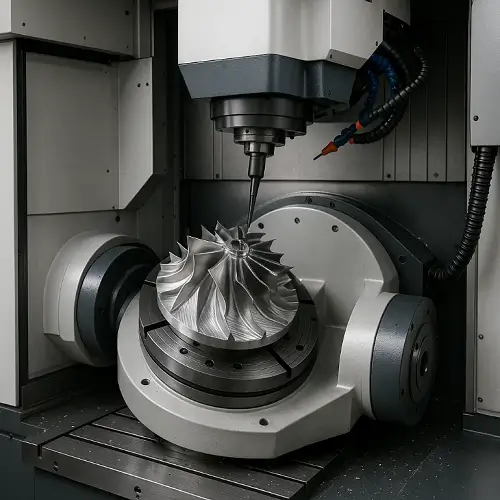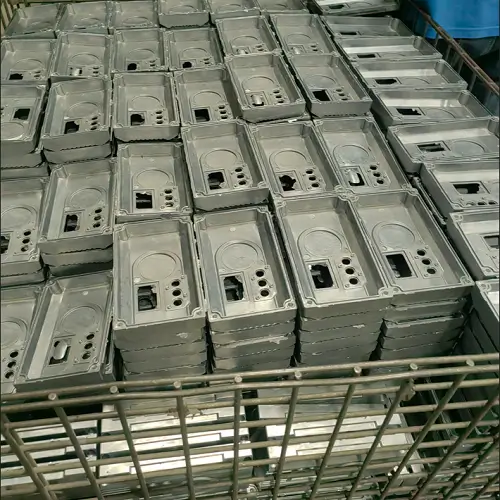
304 and 316 stainless steel are two of the most common grades used for CNC machined parts. Both materials offer good corrosion resistance, strength, clean appearance, and long service life, but they are not the same in machining, cost, or working environment.
For most general CNC machined parts, 304 stainless steel is a practical and cost-effective choice. For parts exposed to saltwater, chlorides, chemical cleaning, marine environments, or more aggressive corrosion conditions, 316 stainless steel is usually the better option. The right choice depends on how the part will be used, what corrosion exposure it will face, what tolerance needs to be held, and how much machining cost the project can accept.
From a CNC machining point of view, both 304 and 316 require more care than aluminum or mild steel. They cut slower, generate more heat, and can work-harden if the tool rubs instead of cutting cleanly. 316 is usually slightly more difficult and more expensive to machine because of its alloy content and stronger corrosion performance. For a broader view of stainless steel grades and machining behavior, see our guide to stainless steel CNC machining.
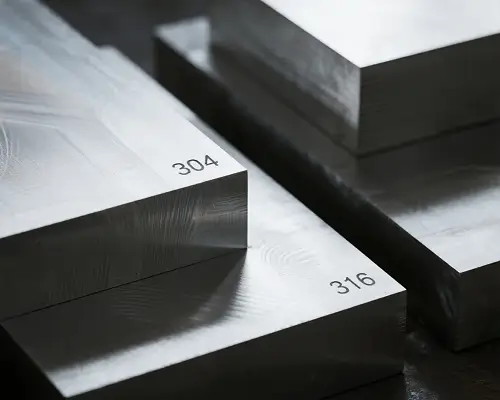
What Is 304 Stainless Steel?
304 stainless steel is the most widely used austenitic stainless steel grade. It contains chromium and nickel, which give the material good corrosion resistance, toughness, and formability. 304 is commonly used when a part needs general corrosion resistance but does not need the stronger chloride resistance of 316.
In CNC machining, 304 stainless steel is used for brackets, housings, shafts, fittings, covers, plates, food equipment parts, medical-related components, fixtures, and general industrial parts. It offers a good balance between material cost, availability, corrosion resistance, and mechanical performance.
304 is not the easiest stainless steel to machine. It can work-harden during cutting, especially when the cutting tool is dull or the feed rate is too light. Stable workholding, sharp carbide tools, enough coolant, and proper cutting parameters are important for clean machining.
For many indoor parts, general equipment components, food equipment parts, and non-marine applications, 304 stainless steel is often enough.
What Is 316 Stainless Steel?
316 stainless steel is also an austenitic stainless steel, but it contains molybdenum. That molybdenum improves resistance to chloride corrosion, which is the main reason 316 is often selected for marine, chemical, medical, outdoor, and harsh-environment parts.
316 stainless steel is commonly used for pump components, valve parts, marine hardware, chemical equipment parts, medical components, food processing equipment, fittings, shafts, housings, and corrosion-resistant CNC machined parts.
The stronger corrosion resistance comes with tradeoffs. 316 usually costs more than 304 as raw material, and it can be slightly more difficult to machine. It tends to generate heat, wear tools, and form tough burrs when the machining process is not controlled well.
If the part will be exposed to saltwater, chlorides, cleaning chemicals, or aggressive outdoor environments, 316 stainless steel is usually worth the higher cost.
304 vs 316 Stainless Steel: Main Differences
The biggest difference between 304 and 316 stainless steel is corrosion resistance. 316 contains molybdenum, which gives it better resistance to chloride attack. This matters in marine environments, chemical equipment, coastal use, medical cleaning, and applications where corrosion failure would be expensive.
304 stainless steel is usually more cost-effective and easier to source. It performs well in many general environments, especially indoors or in mild outdoor conditions. 316 is selected when the part needs better corrosion resistance, even if the material and machining cost are higher.
| Factor | 304 Stainless Steel | 316 Stainless Steel |
|---|---|---|
| Stainless type | Austenitic | Austenitic |
| Corrosion resistance | Good | Better, especially against chlorides |
| Machinability | Medium | Medium to difficult |
| Material cost | Lower than 316 | Higher than 304 |
| Common use | General CNC parts, brackets, housings, food equipment | Marine parts, chemical parts, medical parts, outdoor components |
| Best for | General corrosion resistance and cost control | Stronger corrosion resistance in harsh environments |
For CNC machined parts, the choice is not only about corrosion resistance. Machining time, tool wear, surface finish, burr control, tolerance, and finishing requirements also affect the final cost.
Is 304 or 316 Easier to Machine?
304 stainless steel is usually slightly easier to machine than 316, but neither grade is as easy to cut as aluminum or free-machining materials. Both grades can work-harden, create tough chips, and generate heat near the cutting edge.
316 stainless steel often feels more demanding during machining because it has stronger corrosion-resistant alloying content and can be more gummy under poor cutting conditions. Tool wear may be higher, cycle time may be longer, and burr control may need more attention.
That does not mean 316 is a poor machining material. 316 machines well when the process is planned correctly. The tool needs to stay sharp. The feed should be steady enough to avoid rubbing. Coolant should control heat and chip flow. Workholding should be rigid enough to prevent vibration.
For simple parts, the cost difference may not be large. For deep holes, tight bores, thin walls, small threads, sealing faces, or cosmetic surfaces, the difference between 304 and 316 can become more noticeable.
Corrosion Resistance: Where 316 Performs Better
Corrosion resistance is the main reason to choose 316 over 304. In normal indoor environments, 304 stainless steel often performs well. In chloride-rich environments, 316 is safer.
Saltwater, coastal air, cleaning chemicals, food processing fluids, and some industrial chemicals can attack stainless steel surfaces. 304 may still perform acceptably in some of these conditions, but 316 gives better protection because of its molybdenum content.
For marine parts, outdoor fittings, chemical equipment, medical cleaning environments, and corrosion-sensitive assemblies, 316 is often the better choice. For dry indoor machinery, general brackets, covers, and structural parts, 304 may be enough.
The surface condition also matters. Machining marks, embedded iron contamination, scratches, heat tint, or poor finishing can reduce corrosion performance. For corrosion-sensitive parts, passivation after machining may be required.
Strength and Mechanical Performance
304 and 316 stainless steel have similar mechanical behavior in many CNC machined part applications. Both are strong, tough, and suitable for structural and functional components. In many designs, the decision between 304 and 316 is based more on corrosion exposure than strength.
If the part needs much higher strength, 304 and 316 may not be the best choices. In that case, 17-4 PH stainless steel may be worth considering. 17-4 PH can be heat treated for higher strength and is often used in aerospace, medical, pump, valve, and precision machinery applications.
For most general CNC machined parts, 304 and 316 provide enough strength. The drawing should still define critical dimensions, wall thickness, threads, bores, and load-bearing features clearly so the machining plan can match the part function.
Surface Finish and Post-Processing
304 and 316 can both produce clean machined surfaces, but stainless steel surface finish depends heavily on the cutting process. Dull tools, poor chip evacuation, vibration, or heat buildup can leave visible tool marks, tearing, burrs, or discoloration.
If the part needs a cosmetic surface, sealing face, sliding surface, or medical-related finish, the surface finish requirement should be stated on the drawing. Polishing, bead blasting, brushing, electropolishing, or passivation may be needed depending on the application.
Passivation is especially common for stainless steel parts that need better corrosion performance after machining. It helps remove free iron contamination and improves the passive surface condition. 316 may resist corrosion better than 304, but poor surface condition can still reduce its performance.
CNC Machining Cost: 304 vs 316
304 stainless steel is usually more cost-effective than 316. The raw material cost is generally lower, availability is good, and machining is slightly easier in many cases. For projects where general corrosion resistance is enough, 304 can help control cost.
316 stainless steel usually costs more because of its alloy content and corrosion resistance. CNC machining cost can also be higher because 316 may require slower cutting, stronger tool control, more coolant attention, and more deburring.
The final cost difference depends on the part design. A simple 316 spacer may still be straightforward to machine. A complex 304 housing with deep pockets, tight bores, thin walls, and many threaded holes can cost more than a simple 316 part. Material grade matters, but geometry, tolerance, surface finish, and quantity also affect pricing.
If cost is a concern, the first question should be whether the part truly needs 316. If the working environment is mild, 304 may be the better choice. If corrosion risk is high, using 304 to save money may lead to failure later.
When Should You Choose 304 Stainless Steel?
304 stainless steel is a strong choice when the part needs general corrosion resistance, good strength, clean appearance, and reasonable cost. It is often used for indoor machinery, equipment brackets, plates, covers, shafts, housings, fixtures, food equipment parts, and general CNC machined components.
Choose 304 when the part is not exposed to strong chlorides, saltwater, aggressive cleaning chemicals, or harsh corrosion conditions. It is also useful when the project needs stainless steel performance but does not justify the higher cost of 316.
For many CNC machining projects, 304 is the default stainless steel grade because it balances performance, cost, and availability.
When Should You Choose 316 Stainless Steel?
316 stainless steel is the better choice when corrosion resistance matters more than cost. It is commonly used for marine components, chemical equipment, outdoor parts, medical-related components, food processing parts, pump components, valve parts, and fittings exposed to cleaning fluids or chloride environments.
Choose 316 when the part may face saltwater, coastal air, chemical exposure, repeated washing, or corrosive fluids. In these conditions, the higher material and machining cost can be justified by better service life.
If a part failure would be expensive, unsafe, or difficult to replace, 316 may be the safer material choice.
304 vs 316 for CNC Machined Parts
For CNC machined parts, the decision between 304 and 316 should be based on the working environment first, then machining cost and part function.
A general equipment bracket used indoors can usually be made from 304. A shaft or fitting exposed to saltwater should usually use 316. A food equipment component may use either grade depending on cleaning method and corrosion exposure. A medical-related part may require 316, 17-4 PH, or another stainless steel grade depending on strength, cleaning, and surface requirements.
The drawing should define the stainless steel grade clearly. If the grade is not fixed, the supplier should understand the part application before quoting. This helps avoid selecting 316 when 304 is enough, or selecting 304 when the environment actually requires 316.
Quick Selection Guide
Use 304 stainless steel when the part needs general corrosion resistance, good strength, clean appearance, and lower cost. This is the practical choice for many brackets, housings, plates, covers, fixtures, shafts, and general CNC machined parts.
Use 316 stainless steel when the part will face saltwater, chloride exposure, cleaning chemicals, marine use, medical cleaning, outdoor corrosion, or harsh industrial fluids. The cost is higher, but the corrosion resistance is stronger.
Use another stainless steel grade when neither 304 nor 316 fits the requirement. 303 may be better for machinability. 17-4 PH may be better for high strength. Martensitic stainless steels may be better for hardened wear parts. For a wider grade comparison, review our full guide to stainless steel CNC machining.
What to Provide Before Requesting a Quote
A quote for 304 or 316 stainless steel CNC machining needs more than the material name. The supplier needs to understand how the part will be used, which surfaces are critical, what tolerances must be held, and whether finishing or passivation is required.
The most useful files are a 3D CAD model and a 2D drawing. The CAD model helps with programming and machining planning. The drawing defines the stainless steel grade, quantity, tolerances, threads, critical bores, surface finish, passivation needs, heat treatment requirements, inspection notes, and functional surfaces.
If you are not sure whether 304 or 316 is better, explain the working environment. A part used indoors, near saltwater, in food equipment, in medical equipment, or in a chemical system may need different stainless steel grades. Clear application information helps the supplier recommend a practical material choice before machining.
Conclusion
304 and 316 stainless steel are both widely used for CNC machined parts, but they are not selected for the same reason. 304 is a practical general-purpose stainless steel grade with good corrosion resistance, good availability, and lower cost. 316 offers better resistance to chlorides, marine environments, chemicals, and harsher corrosion conditions.
For CNC machining, 304 is usually slightly easier and more cost-effective to machine. 316 is usually more expensive, but its corrosion resistance can justify the cost when the working environment demands it. The right material should balance corrosion resistance, machinability, strength, surface finish, tolerance, and long-term part performance.
JeekRapid can review your CAD file, 2D drawing, material grade, tolerance notes, surface finish requirements, passivation needs, quantity, and inspection requirements before machining. If you are not sure whether 304 or 316 stainless steel is suitable for your part, JeekRapid can provide practical machining feedback before production begins.
Upload your CAD files and drawings to request a stainless steel CNC machining quote from JeekRapid.