Author name: jeek

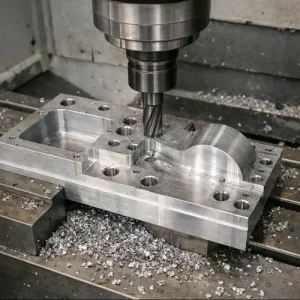
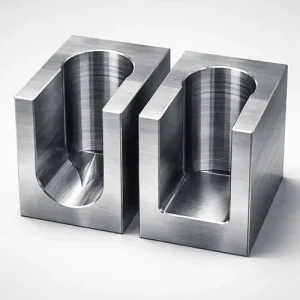
Comparison of drill point bottom and flat bottom blind holes in CNC machined aluminum parts

Blind Hole Bottom Shape in CNC Machining: Why It Matters

Blind holes often look simple on a drawing. A diameter is specified, a depth is added, and the feature seems complete. In real machining, that is where many problems begin. A blind hole is not just a hole that stops before breaking through the part. It is a hole with a bottom condition, and that …
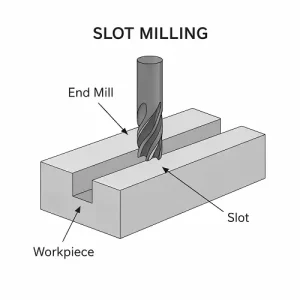
CNC slot milling diagram showing an end mill cutting a straight slot in a metal workpiece

CNC Slot Milling: Process, Cutters, Types, and Design Guide

Slot milling is a CNC milling operation used to cut straight or curved slots, grooves, and channels into a workpiece. Depending on the slot shape and access, the operation may use an end mill, slot drill, side milling cutter, T-slot cutter, or another form tool.

A wide, shallow slot in aluminum may be straightforward. A …

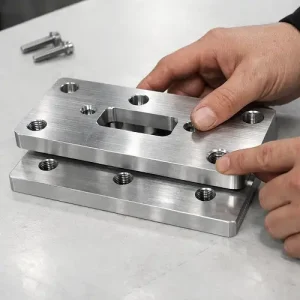
CNC machined aluminum part showing both counterbored and countersunk holes in one application

Counterbore vs Countersink in CNC Machining: Which One Should You Use?

Counterbores and countersinks both create a recess around the entrance of a hole, but they support different fasteners. A counterbore is cylindrical with a flat bottom and is normally used with socket-head screws or bolts. A countersink is conical and is used with flat-head screws when the head must sit flush with or below the …

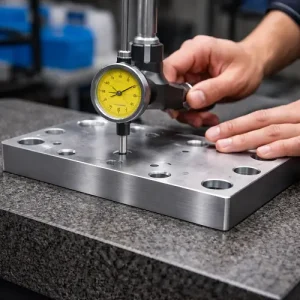
Dial indicator checking flatness on a CNC machined aluminum plate on a granite surface plate

CNC Machining Flatness: Definition, Causes, Measurement, and Control

Flatness problems in CNC machining usually do not show up as obvious dimensional errors. A part can pass checks for length, width, thickness, and hole location, then still rock on a base plate, leak across a sealing face, or sit unevenly during assembly. When that happens, people often go back to the dimensional report first. …

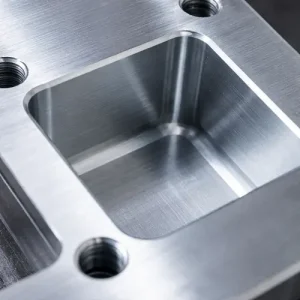
Machined aluminum pocket showing sharp internal corners with visible internal corner radius

Sharp Internal Corners in CNC Machining: Design Limits and Practical Solutions

Sharp internal corners look clean in CAD. In real CNC machining, they are usually one of the first features that gets reviewed before a part is quoted or programmed. That is not because the machine cannot hold size. It is because standard milling tools are round, and round tools leave radius in inside corners.

This …

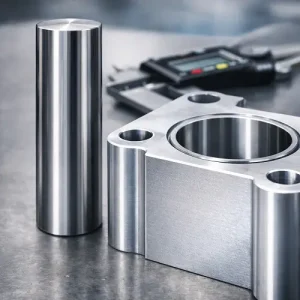
Technician performing fine polishing on CNC machined shaft under controlled workshop lighting

Why Polishing Changes Tolerance in Precision Machining

Polishing is often scheduled as a finishing step. In precision machining, it is still material removal. When material comes off the surface, geometry moves. Sometimes it moves only a few microns, but tight tolerance parts operate in microns.

Consider a simple example. A shaft at Ø20.000 ±0.01 mm has a total tolerance width of 20 …

CNC machined part undergoing controlled machining after process planning and tolerance definition

CNC Machining Explained: Machines, Materials, Tolerances, and Practical Engineering Decisions

CNC machining is often described as a cutting process, but in real production, machining results depend on how machines, materials, tolerances, and process planning are handled together. Parts drift out of tolerance, fail inspection, or become unnecessarily expensive not because CNC machining lacks capability, but because these factors are treated in isolation.

On the shop …

CNC machining center automatically cutting a metal part with consistent toolpaths and no manual intervention

CNC Machining vs Conventional Machining: What’s the Difference?

CNC machining and conventional machining are two common ways to produce metal and plastic parts, but they differ fundamentally in how cutting is controlled. In CNC machining, tool movement follows predefined digital instructions, while conventional machining relies on continuous manual control. This difference affects accuracy, consistency, setup effort, and how easily parts can be produced …

Scroll to Top