April 2026

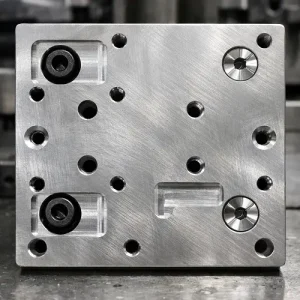
CNC machined aluminum part showing both counterbored and countersunk holes in one application

Counterbore vs Countersink in CNC Machining: Which One Should You Use?

Counterbore and countersink are both common hole features in CNC machining, but they are not interchangeable. Both are used to prepare a hole for a fastener head, and that is where many drawings stop. On real machined parts, the choice affects much more than appearance. It affects how the screw head is supported, whether the …

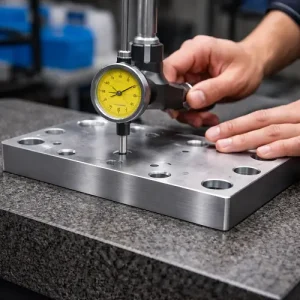
Dial indicator checking flatness on a CNC machined aluminum plate on a granite surface plate

CNC Machining Flatness: Definition, Causes, Measurement, and Control

Flatness problems in CNC machining usually do not show up as obvious dimensional errors. A part can pass checks for length, width, thickness, and hole location, then still rock on a base plate, leak across a sealing face, or sit unevenly during assembly. When that happens, people often go back to the dimensional report first. …

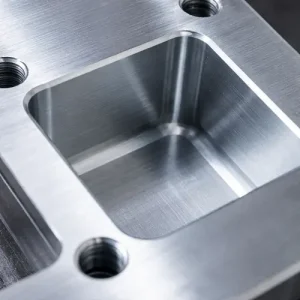
Machined aluminum pocket showing sharp internal corners with visible internal corner radius

Sharp Internal Corners in CNC Machining: Design Limits and Practical Solutions

Sharp internal corners look clean in CAD. In real CNC machining, they are usually one of the first features that gets reviewed before a part is quoted or programmed. That is not because the machine cannot hold size. It is because standard milling tools are round, and round tools leave radius in inside corners.

This …

Scroll to Top