December 2025

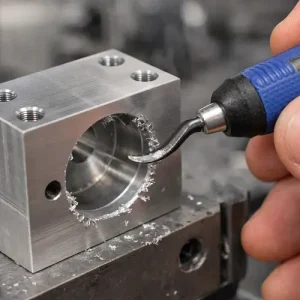
CNC machined aluminum part shown next to engineering drawing and measurement tools during production review

Burrs in CNC Machining: Causes, Risks, and Proven Solutions

If a part “looks fine” but still won’t assemble, burrs are usually the reason. Dimensions can be on print and surface finish acceptable, but edge condition causes assembly failure. A small exit burr can stop a press-fit, a micro burr on a sealing land can cause a slow leak, and a sliver of copper burr …
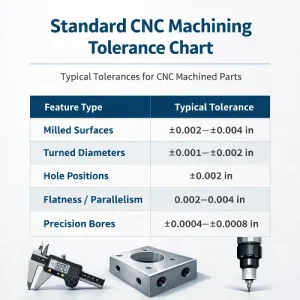
Standard CNC machining tolerance chart for precision parts

CNC Machining Tolerances: Standards, Charts, and Inspection Methods

On real CNC jobs,CNC Machining tolerances show up when parts stop fitting, when inspection starts rejecting pieces that look “fine,” or when cost suddenly jumps for no obvious reason. Most of the time, the root cause is the same: tolerances were chosen without thinking through how the part will actually be machined and measured.

If …

CNC machining aluminum thin-wall parts during milling

Challenges of CNC Machining Thin-Wall Parts

Thin-wall machining appears in far more CNC projects than many people expect. Thin edges, ribs, and reduced wall sections are rarely added for appearance. In most cases, they exist because the part must fit into a tight assembly, meet weight targets, or satisfy functional constraints.

The real question is not whether thin walls exist in …

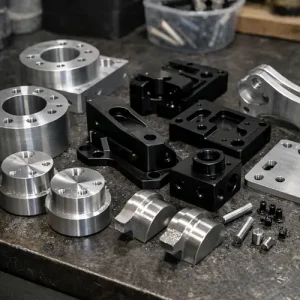
Low-volume CNC machined parts showing complex geometry, surface finish, and secondary operations

What Drives the Cost of Low-Volume CNC Machining

When requesting a quote for low-volume CNC machining, many buyers have the same reaction: the quantity is small, so why isn’t the price low?
This is a common question—and a reasonable one. The answer lies in how cost behaves in small batch production, where preparation and process control matter far more than part count.

Low-volume …

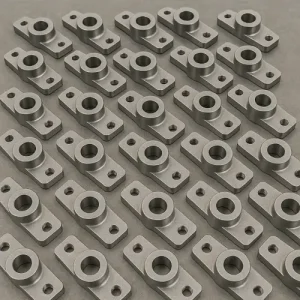
Low-volume CNC machined parts for functional testing and pilot production

Low-Volume CNC Machining for Functional Parts and Prototypes

Low-volume CNC machining typically refers to short production runs made from real engineering materials, often ranging from a few pieces to a few hundred parts. The exact quantity is rarely fixed. What defines “low-volume” is the context: the design is still evolving, functional validation is ongoing, or the program is not yet stable enough to …

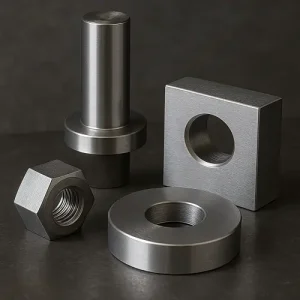
Precision steel CNC machined part with clean surface finish

Steel CNC Machining: Grades, Machinability, and Practical Design Considerations

Steel remains one of the most widely specified materials in CNC machining, not because it is easy to cut, but because it delivers dependable strength, wear resistance, and long-term stability. From structural brackets to high-load mechanical components, steel is often chosen when aluminum simply does not offer enough margin.

That said, steel CNC machining is …

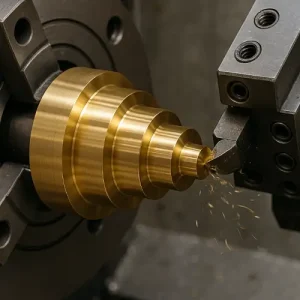
Turned copper components produced on a CNC lathe

CNC Machining Copper: Material Types, Properties, and Tolerance Control

Anyone who has machined copper knows it doesn’t behave like most metals. A cut can look clean one moment and start smearing the next. The same traits that make copper valuable—high conductivity, rapid heat transfer, and consistent electrical performance—also make it sensitive to tool sharpness, chip flow, and small shifts in clamping.

If you’ve worked …

Scroll to Top