
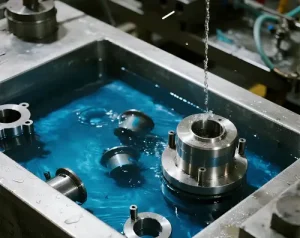
What Is Passivation? Process, Principles, and Applications Explained
…

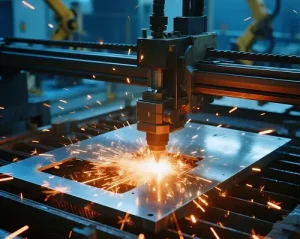
The term blech mit laser schneiden—German for “laser cutting sheet metal”—is becoming more common not just in German-speaking countries but also among international manufacturers searching for precise and cost-effective cutting solutions. At JeekRapid, we started getting similar inquiries as early as 2022 from clients in Europe who needed prototype enclosures made from thin stainless steel. …

Snap fit joints are everywhere in product design because they make assembly fast and cheap. Think about phone cases, medical devices, or even household appliances — snap fits hold parts together without screws or glue. But making snap fits work reliably is not easy. If the fit is off by even a tiny amount, the …
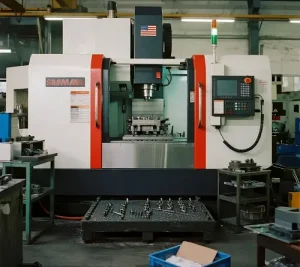
Early prototypes often check only form and fit—proportions, feedback, or concept approval. But when a product faces mechanical validation, mere appearance won’t suffice. At this stage, prototypes must endure real-world forces: stress, heat, torque, and precise mating tolerances.
A tiny misalignment or surface flaw can cause a test failure. To replicate production-level behavior quickly—without the …
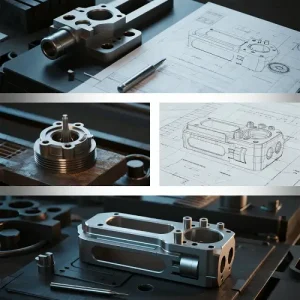
Transitioning from prototype to production is one of the most critical stages in any product development cycle. What works during prototyping doesn’t always translate smoothly into production, especially when it comes to balancing cost, speed, and precision. Missteps here can lead to delays, increased expenses, and compromised product quality.
CNC machining plays a vital role …
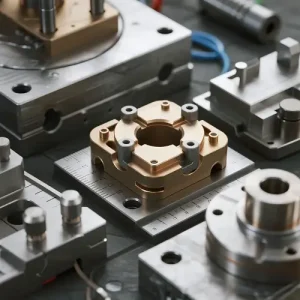
In the product development lifecycle, the transition from design to production often hinges on the reliability of early prototypes. Among various prototyping methods, CNC (Computer Numerical Control) machining remains the most dependable and widely adopted approach for engineering validation before mass production. This article explores the technical advantages of CNC prototyping and its crucial role …
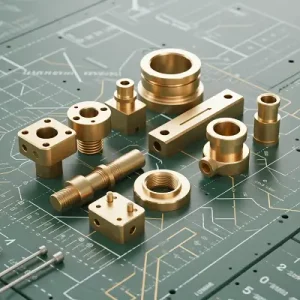
When manufacturing demands high dimensional accuracy, reliable conductivity, and consistent mechanical properties, custom brass parts are often the ideal choice. Brass’s machinability makes it compatible with complex part geometries, but to achieve repeatable, high-quality results, CNC turning remains the most efficient and cost-effective method for machined brass parts.It offers precision, speed, and flexibility—especially crucial …
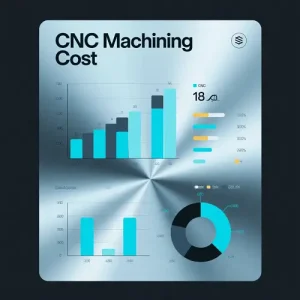
If you’re designing a part and wondering how much it would cost to produce via CNC machining, you’re not alone. Price is often the most critical factor—especially for prototypes, small-batch runs, or cost-sensitive applications.
This guide explains what really affects CNC machining cost, what you can do to reduce it, and how to get …

In precision manufacturing, selecting the right machining method is more than a technical choice—it’s a strategic one. Understanding when to use CNC milling versus turning can save time, reduce costs, and improve the performance of your final parts.
At Jeek Rapid, we often see clients unsure which process best suits their designs. This guide breaks …
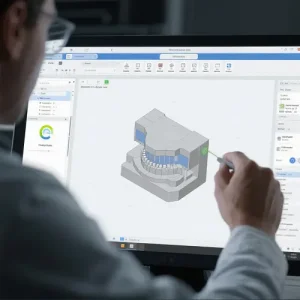
In prototype development, it’s easy to focus solely on performance and appearance. But when a design hits the production floor, manufacturability becomes the real test. A great concept can fail—not because it doesn’t work—but because it can’t be built efficiently.
That’s where Design for Manufacturability (DFM) plays a critical role. For CNC machining and low-volume …