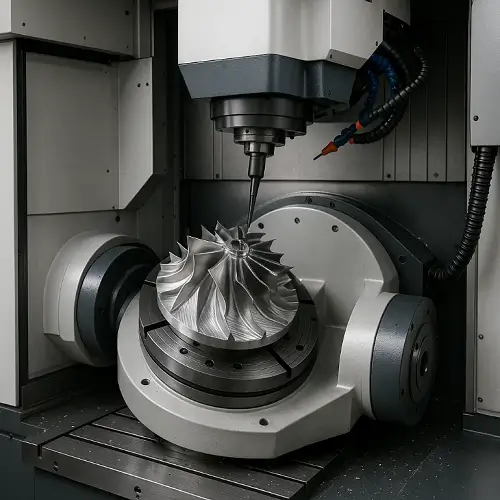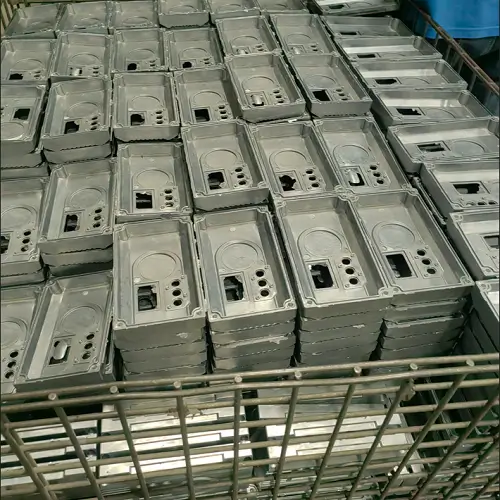
Low-volume CNC machining typically refers to short production runs made from real engineering materials, often ranging from a few pieces to a few hundred parts. The exact quantity is rarely fixed. What defines “low-volume” is the context: the design is still evolving, functional validation is ongoing, or the program is not yet stable enough to justify dedicated tooling.
When parts must perform, fit correctly, and reflect real material behavior while future changes are still likely, low-volume CNC machining becomes a practical manufacturing choice. It supports functional prototypes, pilot builds, replacement components, bridge production, and custom machined parts without locking the project into an expensive production process too early.
Most engineering teams recognize this stage immediately. CAD may look finished, but the first physical build often exposes a fastener clearance that feels too tight, a mating surface that needs refinement, or a tolerance that proves unrealistic during assembly. Low-volume CNC production keeps revisions manageable while allowing parts to be tested under real operating conditions.
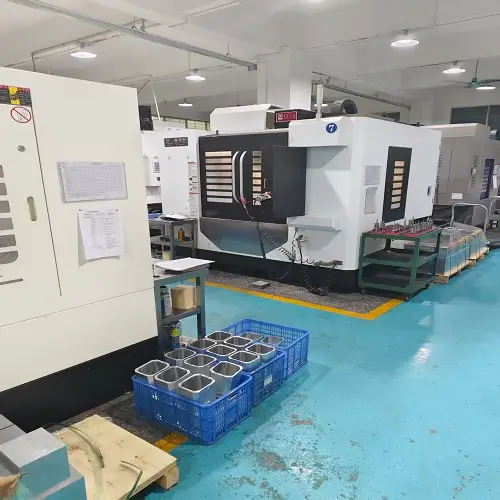
What Is Considered Low-Volume CNC Machining?
Low-volume CNC machining generally covers quantities from a few parts to several hundred pieces, although there is no universal limit. A batch of 30 parts may be considered low-volume when the design is still changing, while a run of 300 parts may also qualify when it serves as bridge production before a long-term manufacturing process is selected.
Program maturity matters more than a fixed quantity. Low-volume precision machining is commonly used for functional prototyping, regulatory or performance testing, pilot production, early customer builds, replacement parts, and short-run programs with uncertain demand.
Unlike processes that require dedicated molds or dies, CNC machining can move from an updated CAD model to a revised part without rebuilding production tooling. Programming, fixturing, setup, and inspection are still required, but design changes usually remain easier to manage.
Why Use Low-Volume CNC Machining for Functional Parts?
Functional parts require more than visual similarity. Components that carry loads, seal against fluids, align with purchased hardware, transfer heat, or fit into larger assemblies must behave predictably under real operating conditions.
One reason engineers choose low-volume CNC machining is that product designs continue to evolve. When a revision is required, geometry can often be updated through CAD and CAM changes without manufacturing a new mold or die. This gives engineering teams more freedom to correct dimensions, adjust features, and test another design version.
Tolerance validation is another important reason. Early drawings sometimes apply tight tolerances to many dimensions because the truly critical interfaces have not yet been confirmed. A small CNC production run can reveal which dimensions control assembly and performance. Critical features can then receive tighter control while non-critical dimensions are relaxed to reduce machining and inspection costs.
Material authenticity also matters. Testing a functional component in a material that does not match the intended production material can produce misleading results. CNC machining allows low-volume metal parts and engineering plastic parts to be produced from aluminum, carbon steel, stainless steel, titanium, brass, POM, nylon, PEEK, and other production-grade materials.
Low-Volume CNC Machining for Prototypes and Pilot Production
Many prototype programs begin with visual models. That approach works until the component must carry a load, maintain alignment, form a seal, hold a bearing, support a thread, or withstand heat and chemicals. At that point, appearance alone is no longer enough.
Low-volume CNC machining produces functional prototypes with controlled geometry, realistic surface contact, and consistent material properties. Problems such as binding, thread failure, distortion, poor seating, insufficient clearance, and interference after finishing can be discovered before the design moves into larger production quantities.
CNC prototypes also provide manufacturing feedback. Difficult tool access, deep pockets, sharp internal corners, thin walls, burr-sensitive edges, and unnecessarily tight tolerances become easier to recognize once the first parts have been machined and inspected.
Pilot production takes this process one step further. Instead of evaluating one prototype, the customer receives a small batch that can be used to check repeatability, assembly time, inspection requirements, packaging, and performance across multiple units.
Typical low-volume machined parts include housings, brackets, shafts, sleeves, manifolds, fixtures, heat sinks, adapters, mounting plates, replacement components, and precision assembly parts. The right machining process depends on part geometry, material, tolerance, quantity, surface finish, and inspection requirements.
What Affects Low-Volume CNC Machining Cost?
Low-volume CNC machining cost is influenced more by engineering effort and part complexity than by part size alone. Programming, toolpath planning, workholding, setup, tool selection, and inspection are required before stable production begins. These costs must be distributed across a smaller number of parts than they would be in mass production.
Part geometry directly affects machining time. Multiple setups, deep pockets, long tool reach, thin walls, small internal radii, difficult threads, or limited tool access can require slower cutting and more careful inspection. A compact part can therefore cost more than a physically larger but simpler component.
Material selection affects raw material price, cutting speed, tool wear, heat control, distortion risk, and scrap cost. Aluminum usually machines more efficiently than stainless steel or titanium, while engineering plastics require careful workholding and temperature control to maintain stable dimensions.
Secondary operations can also represent a substantial part of the quotation. Deburring, thread inserts, heat treatment, anodizing, plating, polishing, bead blasting, coating, marking, and detailed inspection all add processing and handling time. The most effective way to control low-volume CNC machining cost is to specify tolerances and finishes according to actual part function.
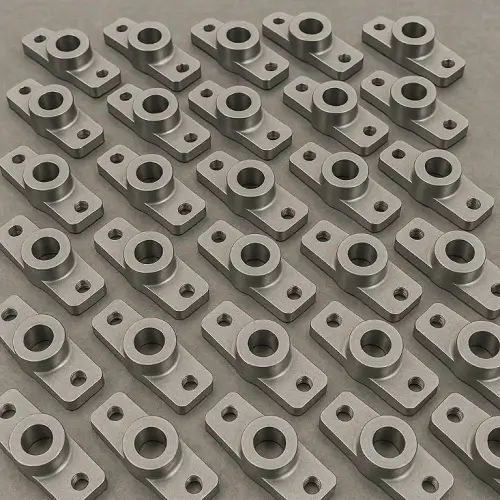
What Tolerances Can Low-Volume CNC Parts Hold?
Standard CNC machining tolerances are approximately ±0.01 mm (±0.0004 in) for suitable features and materials. Selected high-precision features may reach approximately ±0.005 mm (±0.0002 in), depending on feature size, geometry, material stability, workholding, tool access, finishing, and inspection method.
Not every feature should receive the tightest available tolerance. Excessively tight requirements can increase setup time, reduce cutting speed, require additional finishing operations, and increase inspection costs without improving part performance.
A practical tolerance strategy identifies the dimensions that control fit, alignment, sealing, movement, or assembly. Those features receive tighter control and an appropriate inspection method, while non-critical dimensions use economical general tolerances.
Surface finish, flatness, perpendicularity, position, roundness, and runout may be just as important as nominal size. A bore can meet its diameter limits and still create an assembly problem if it is tapered or out of round. A shaft may measure correctly but fail when excessive runout affects the assembled component.
JeekRapid can provide dimensional inspection, CMM reports, surface roughness measurement, material certificates, and traceability according to project requirements. The required inspection level should be identified before production because it affects both manufacturing planning and cost. Additional guidance is available in our CNC machining tolerances article.
When Does Low-Volume CNC Machining Stop Making Sense?
Low-volume CNC machining becomes less economical when geometry is stable, material selection is finalized, demand is predictable, and the same part must be produced repeatedly in much larger quantities.
At that point, unit cost may become more important than design flexibility. Injection molding, casting, extrusion, stamping, or another production process may offer a lower cost per part once tooling investment can be distributed across a stable production volume.
This transition does not mean CNC machining was the wrong choice. In many programs, CNC machining is what allows the design, tolerance strategy, material, and assembly requirements to be proven before tooling begins.
The decision should be based on production volume, material, geometry, tolerance, tooling cost, expected design changes, and delivery requirements. When a project is approaching this stage, comparing low-volume CNC machining versus injection molding can clarify whether flexibility or unit cost should take priority.
How Do Engineers Choose Between CNC and Other Production Methods?
CNC machining is normally the stronger option when parts must be produced from solid engineering materials, tight tolerances are required, quantities remain limited, or design revisions are still expected.
3D printing may be more suitable for early concept models, complex internal geometry, or very fast design iterations where final material properties and machined tolerances are not yet required. CNC machining becomes more useful when prototypes must behave like real production components.
Injection molding becomes more economical for repeat plastic parts after the design is stable and production volume can justify tooling. Casting, forging, extrusion, and sheet metal fabrication may also be appropriate when part geometry, material, and quantities match those processes.
Many successful programs use more than one process. A project may begin with 3D-printed concept models, move into low-volume CNC machining for functional validation and pilot production, and later transition into tooling-based manufacturing when the design and demand become stable.
Get a Low-Volume CNC Machining Quote
Low-volume CNC machining is not limited to one-off prototypes, nor is it intended to replace every high-volume production method. It is a flexible manufacturing strategy for projects that require functional parts, real materials, controlled tolerances, and manageable design changes.
JeekRapid provides low-volume CNC machining for functional prototypes, pilot builds, replacement parts, custom metal and plastic components, and short-run production. Upload your CAD files and 2D drawings for a free DFM review within 24 hours and a project-specific quotation.
FAQs
What is considered low-volume CNC machining?
Low-volume CNC machining usually refers to short production runs ranging from a few pieces to several hundred parts. The exact quantity depends on design maturity, tooling requirements, expected revisions, and future production demand.
Is low-volume CNC machining only used for prototypes?
No. It is also used for pilot production, early customer builds, replacement parts, bridge production, regulatory testing, and short-run manufacturing where dedicated tooling is not economical.
What materials are used for low-volume CNC machining?
Common materials include aluminum, carbon steel, stainless steel, titanium, brass, copper, POM, nylon, polycarbonate, PTFE, and PEEK. Material selection should be based on mechanical performance, temperature, chemical resistance, dimensional stability, and cost.
Does low-volume CNC machining support tight tolerances?
Yes. Standard tolerances are approximately ±0.01 mm (±0.0004 in), while selected critical features may reach approximately ±0.005 mm (±0.0002 in). Achievable tolerance depends on the material, geometry, workholding, feature size, finishing, and inspection method.
When should a project move from CNC machining to molding?
The transition usually makes sense when the design is finalized, material and tolerance requirements are proven, repeat demand is stable, and the expected production volume can justify tooling investment.